Ueda Kochu “Twin Egrets”
- Home
- Our collection
- hanging scroll
- Japanese Painting
- Maruyama-Shijo School
- Ueda Kochu “Twin Egrets”
Ueda Kochu “Twin Egrets”
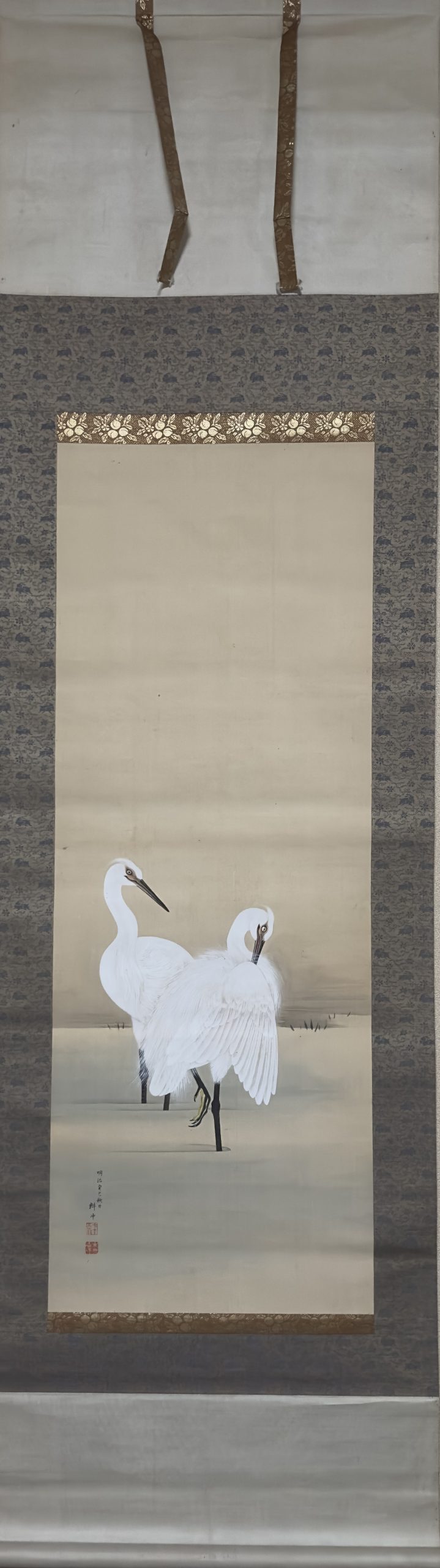
Enlarge image by clicking on the thumbnail.
| IItem No. | |
|---|---|
| Title | “Twin Egrets” |
| Overall size | 198.0cm×56.5cm |
| Artwork size | 110.4cm×40.0cm |
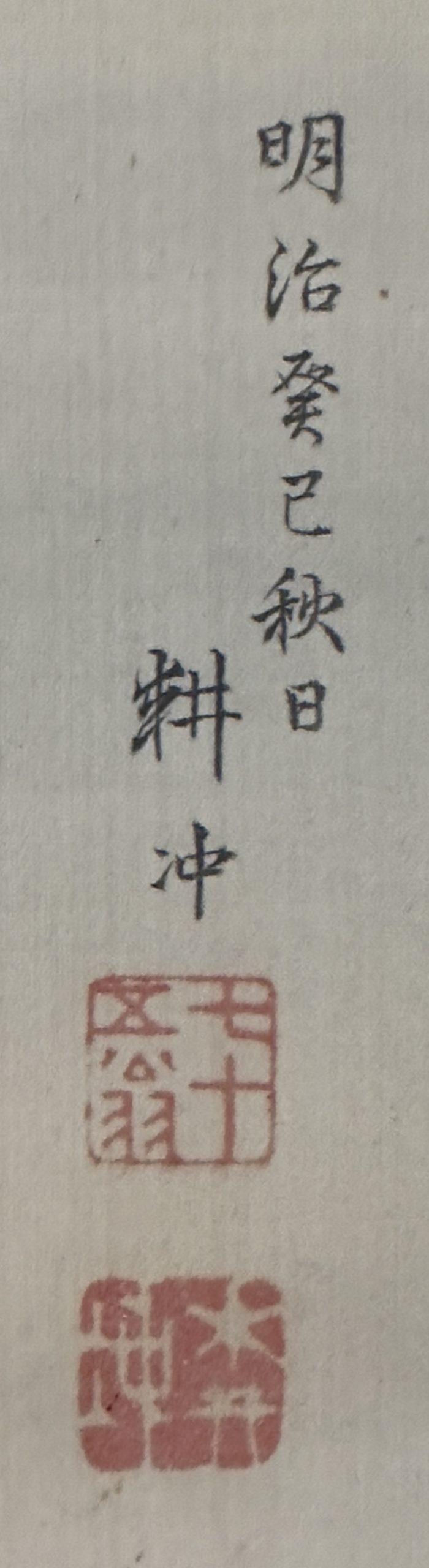
| Artist | Ueda Kochu(1819〜1911) |
| Date Created | Meiji 26(1893) |
| Price | ¥450,000(excluding tax) |
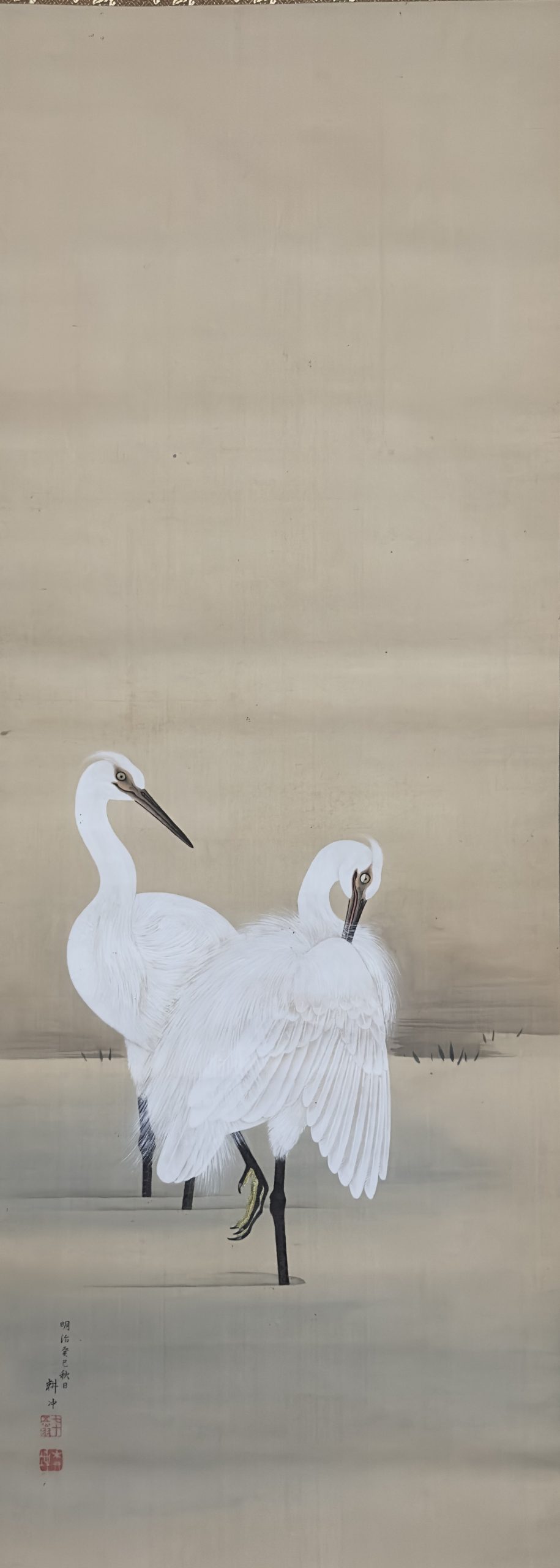
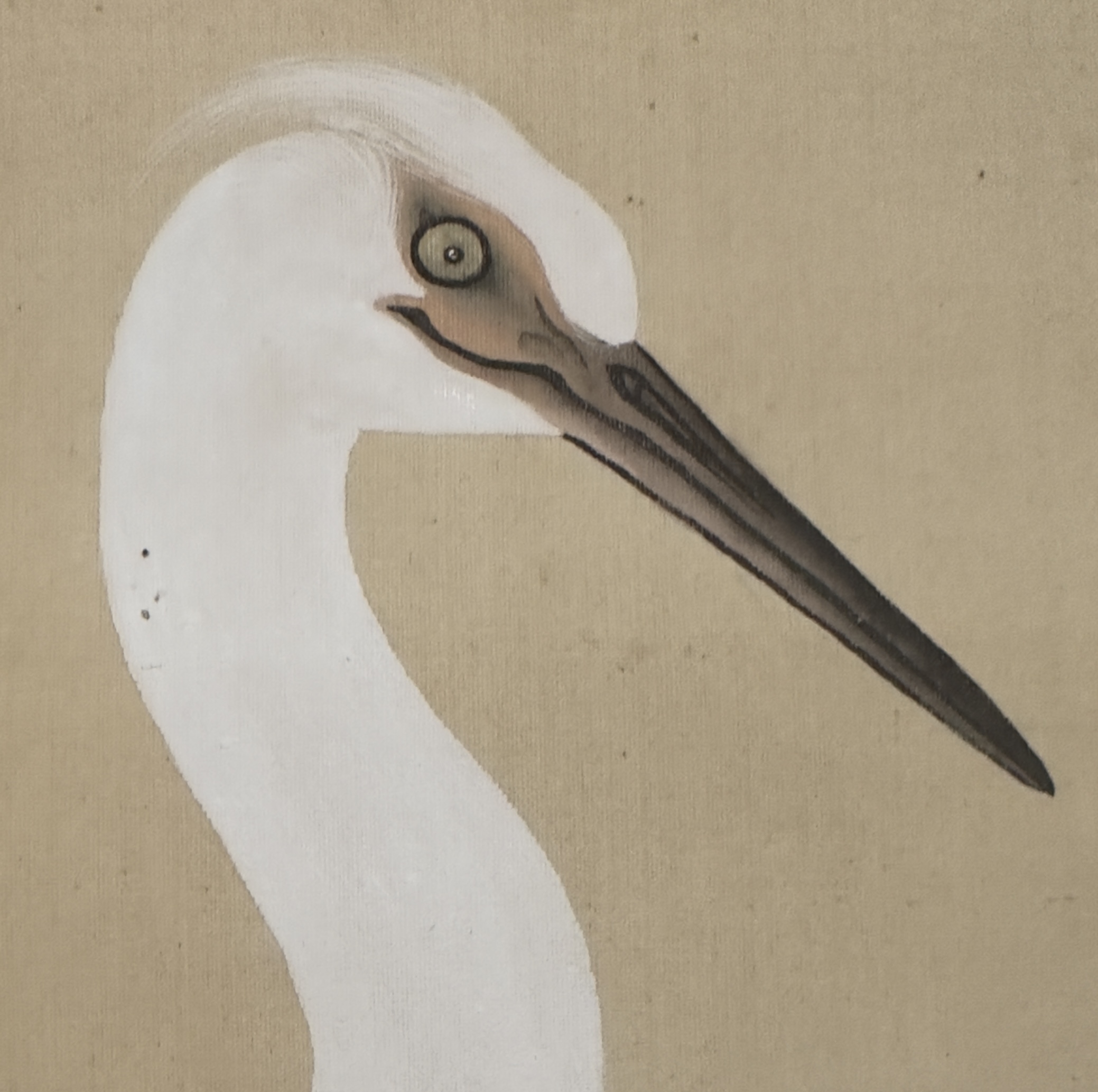
Two white egrets with beautiful fur are depicted. They are probably a pair.
The artist’s excellent observation skills can be seen in his depiction of the physical characteristics of the egrets, which are so accurately depicted that they could be mistaken for the real thing.
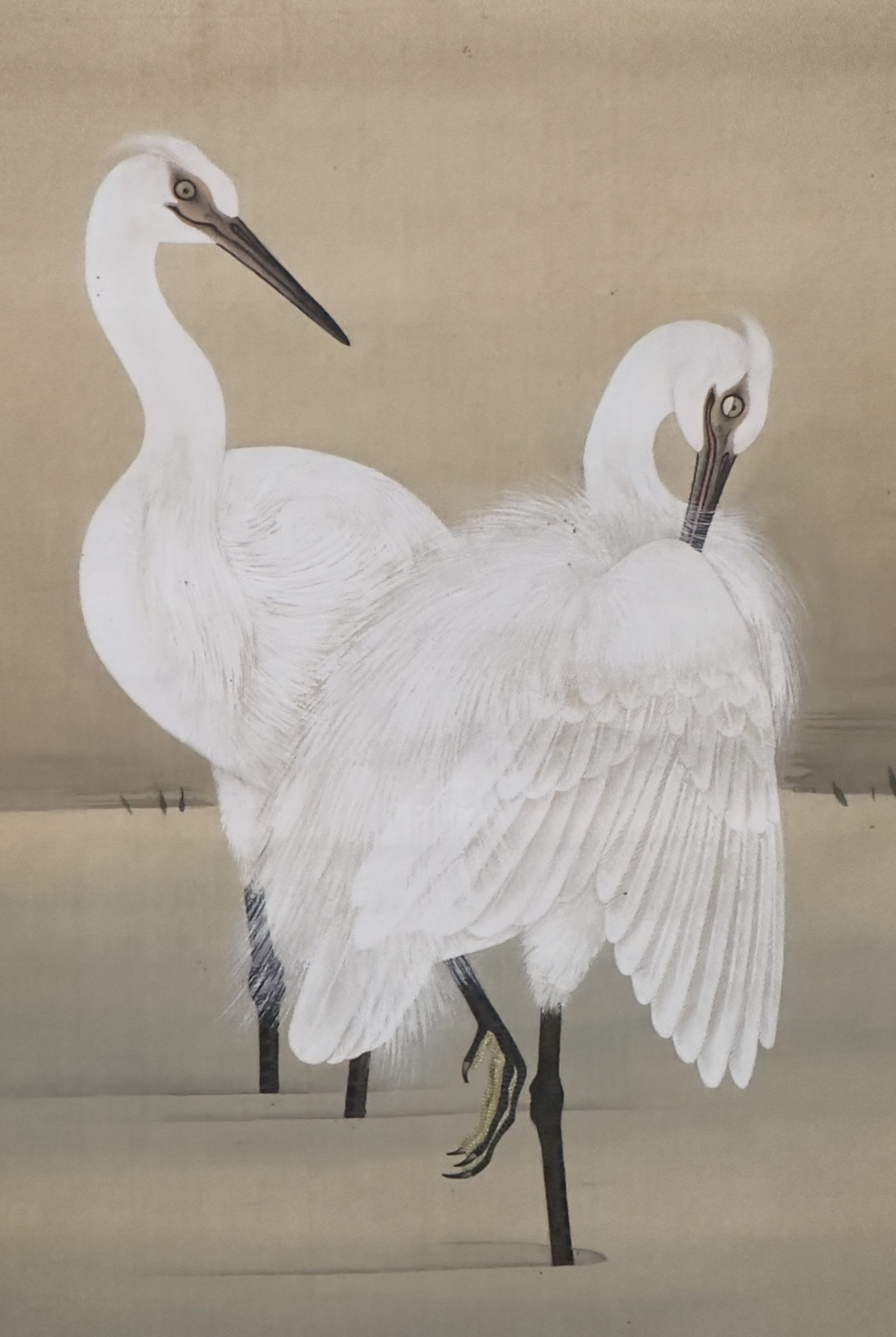
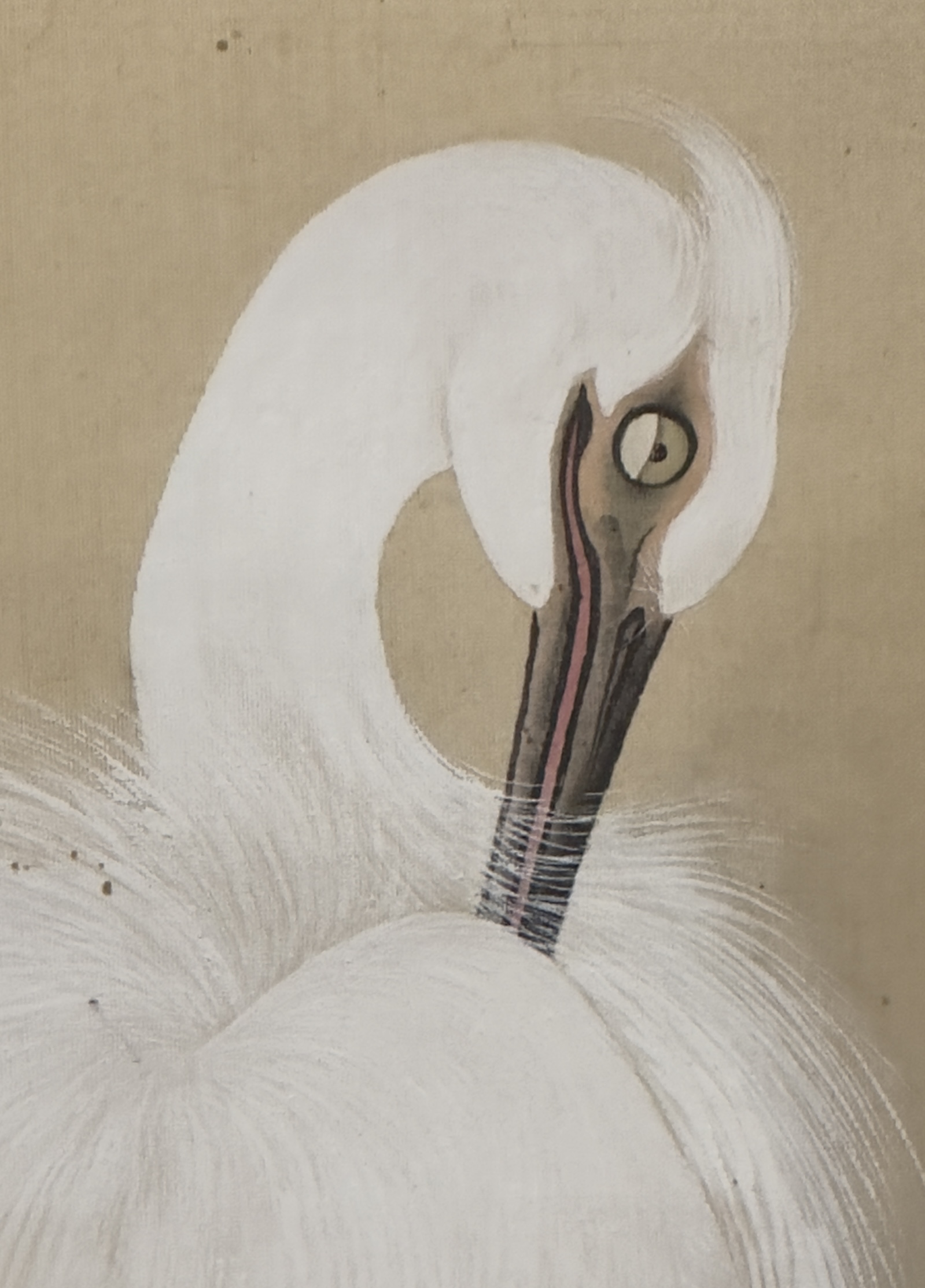
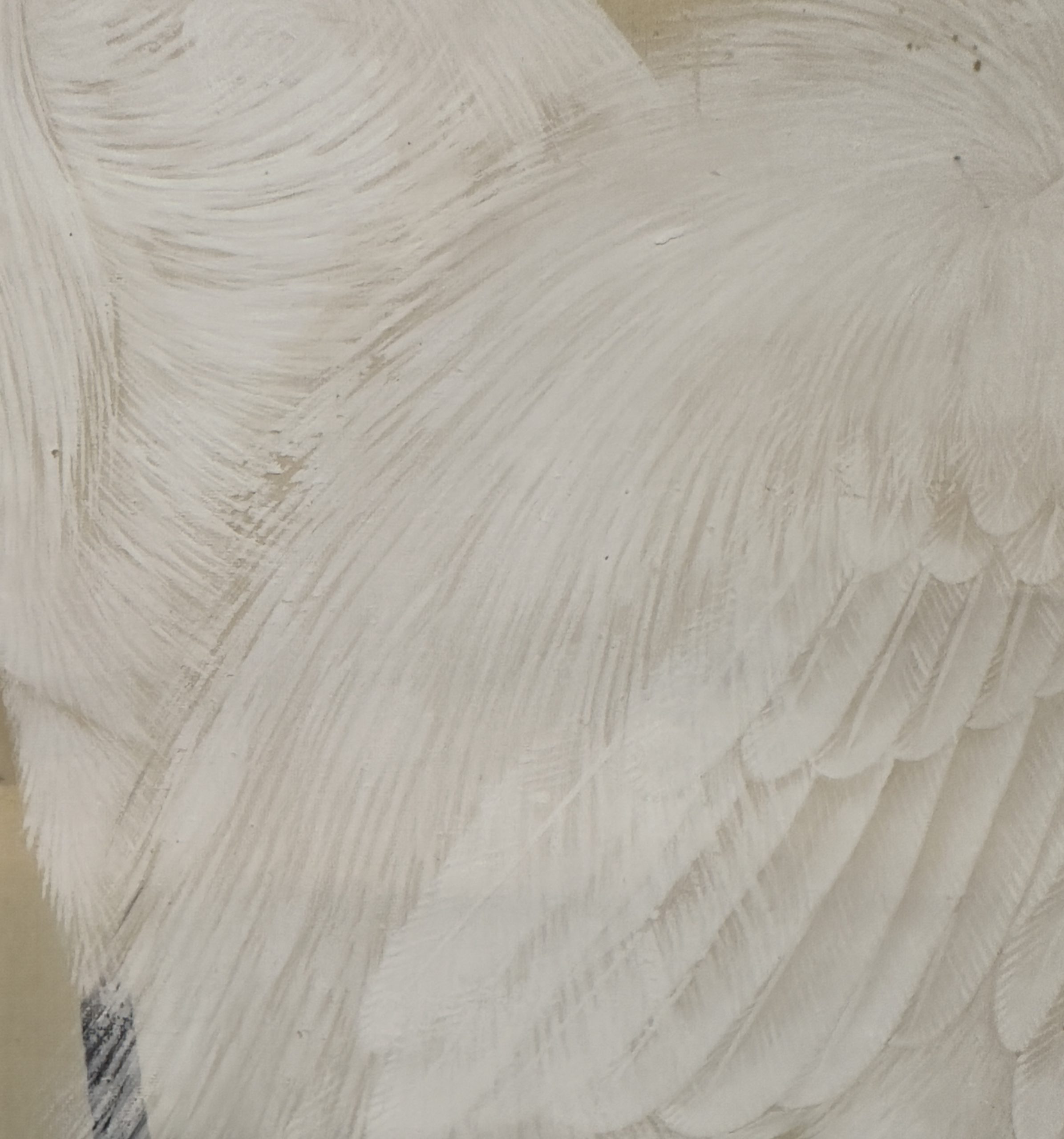
Both birds are strikingly white and fluffy. By drawing countless fine white lines, the artist has created a light and fluffy texture that makes you want to touch them.
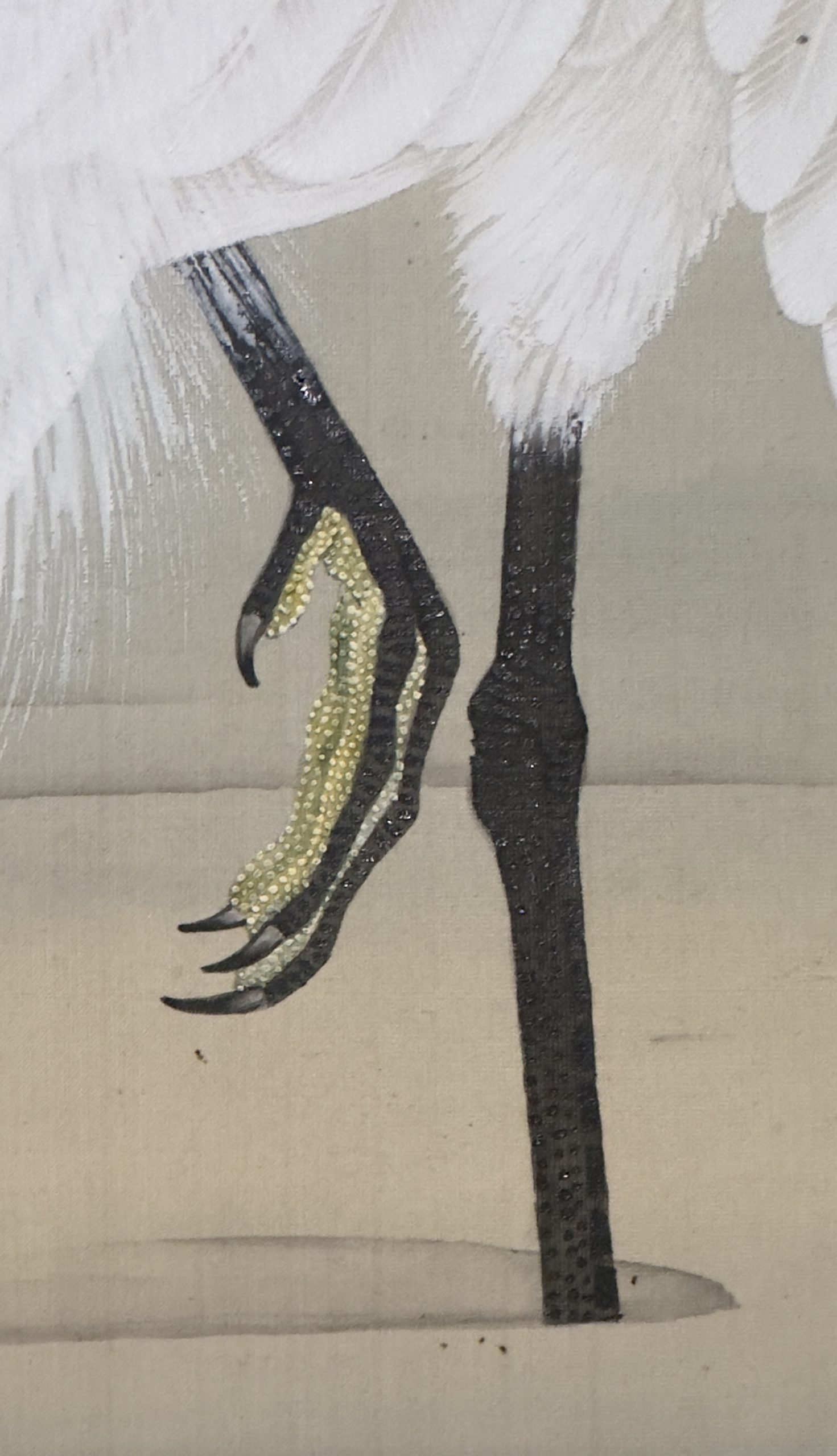
The legs look as if they are painted in solid color, but up close, black dots are placed vertically on top of the black ground to create a bumpy texture.
The eyes of the egret on the left, stretching its neck, are painted with white dots and shine brightly. Perhaps it has spotted its prey. The natural gradation of the black ink from the tip of the heron’s beak to the tip of its neck is also beautifully rendered.
On the other hand, the egret on the right is bending its neck and scratching its wings. If you look at the bent leg, you will notice that the fingertips are yellow. This is a characteristic of the little egrets that live in Japan. Also, there is a bit of hair extending from the back of the heads of both birds. Little egrets grow long decorative feathers during the breeding season.
Based on the above characteristics, the egret depicted in this work is considered to be a little egret.
______________________
Ueda Kochu (1819-1911) was a painter active from the end of the Edo period to the Meiji era. The son of Kofu Ueda (1758-1831), a painter of the Shijo school, he studied painting in Osaka under Kōin Nagayama (1765-1849).
He is known to have excelled in flower-and-bird paintings. His skill can be seen in works such as “Hawk Hunting and Old Pine Tree in Snow” at Osaka Temmangu Shrine.
As an antique, it may have some scratches or blemishes. We recommend that you visit our store to check the condition.
If you wish, we will send you detailed photos of the item, so please feel free to contact us.