Kusumi Morikage “Sei Shonagon”
- Home
- Our collection
- hanging scroll
- Japanese Painting
- Kano school
- Kusumi Morikage “Sei Shonagon”
Kusumi Morikage “Sei Shonagon”
Enlarge image by clicking on the thumbnail.
| IItem No. | |
|---|---|
| Title | |
| Overall size | 110.5×55.8cm |
| Artwork size | 29.4×44.0cm |
| Artist | Kusumi Morikage |
| Date Created | 17th century |
| Price | Contact us. |
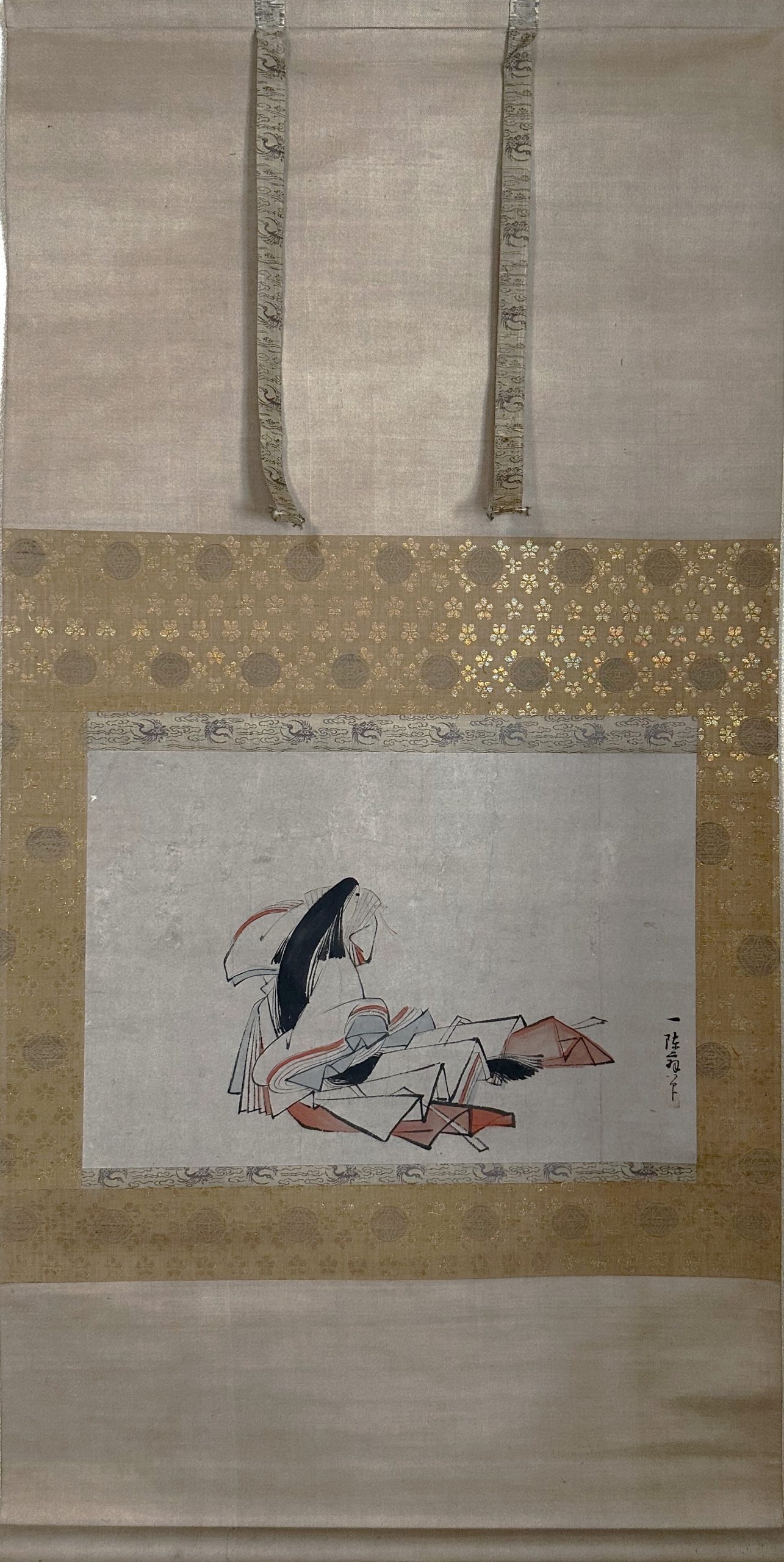
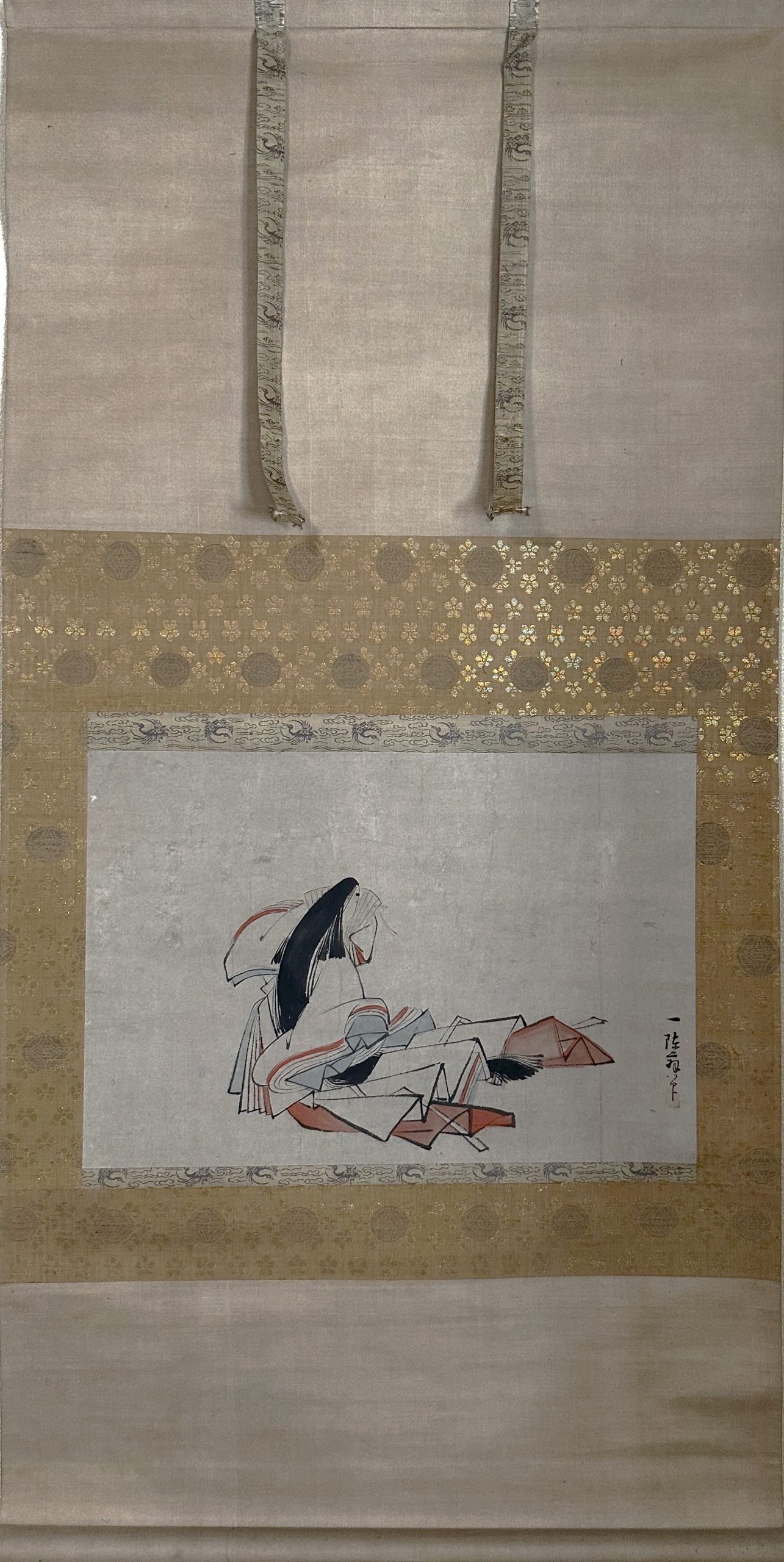
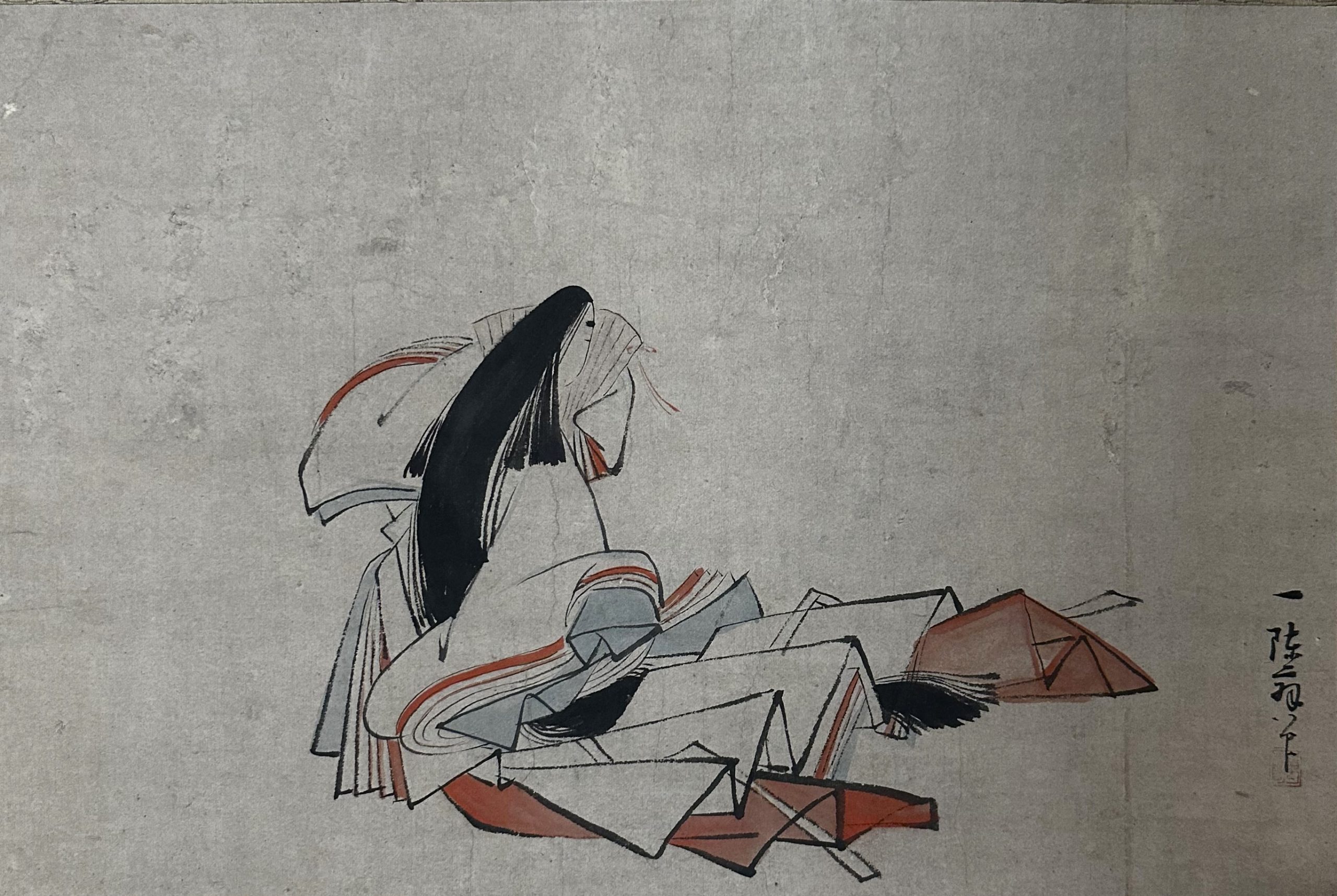
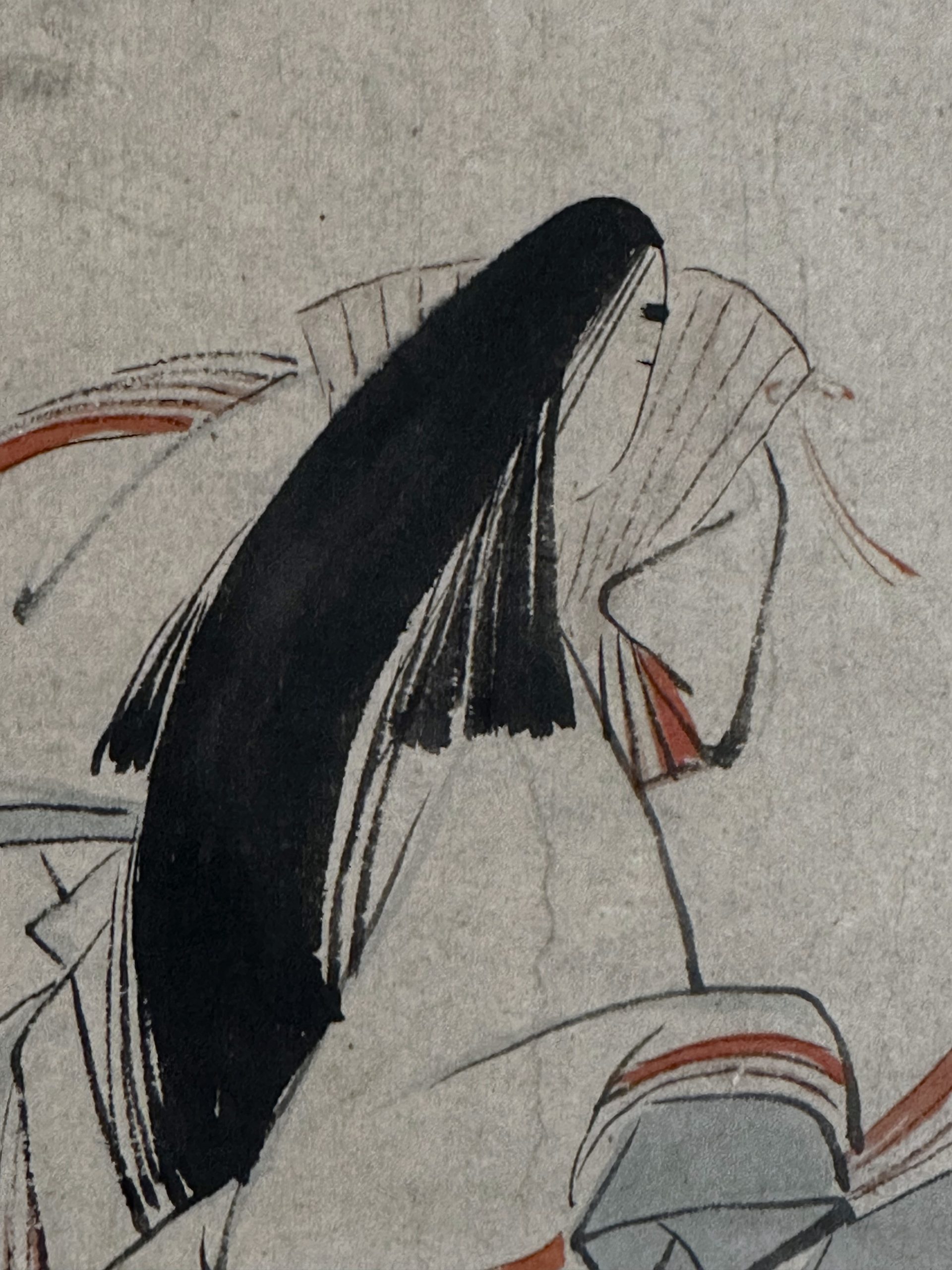
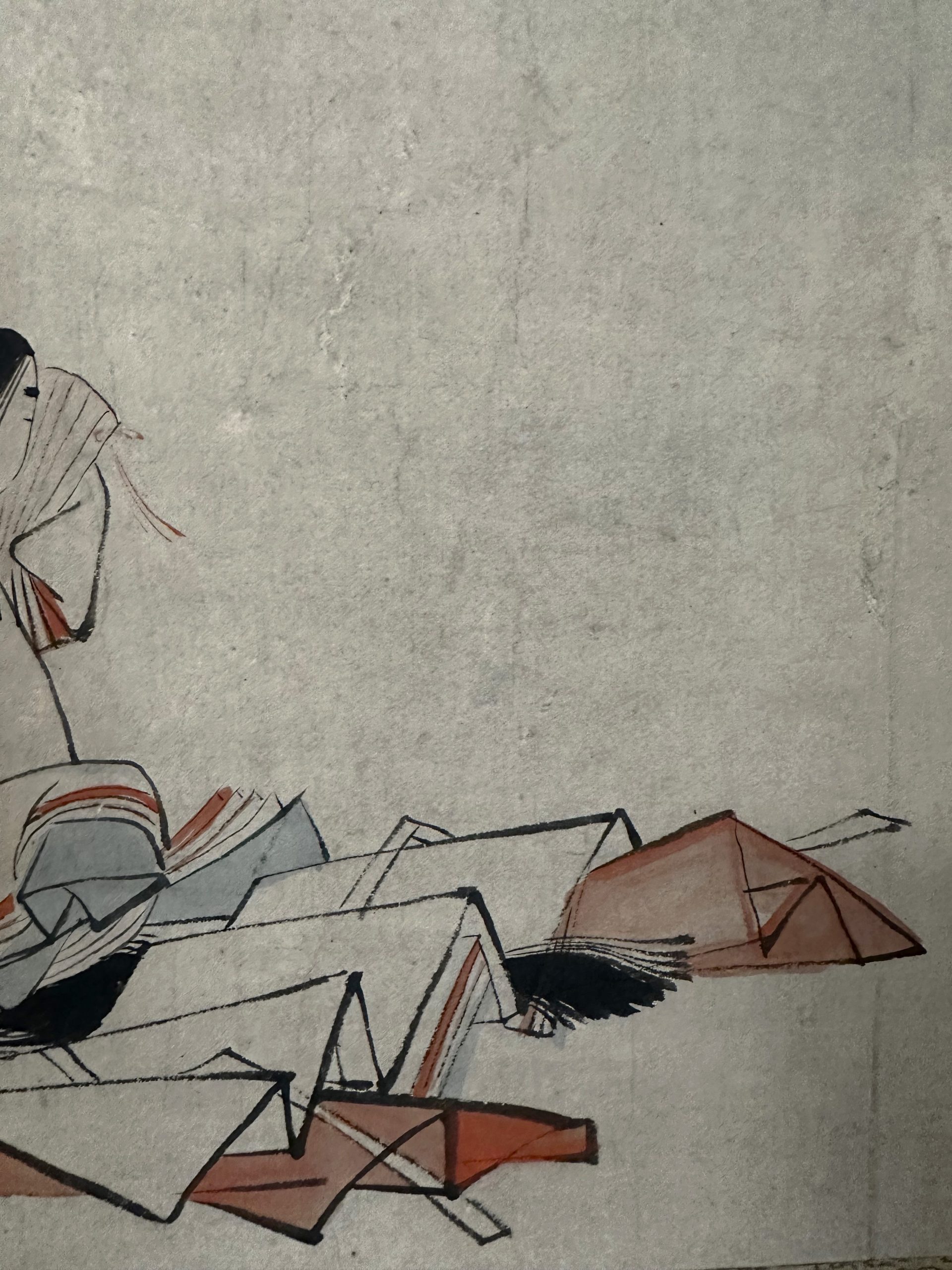
A woman in Heian costume stands with her back to us. Her face is hidden by a cypress fan held in her left hand, giving her a graceful appearance.
Her rich black hair hangs down her back and flows under her sleeves to the hem. The straight lines of the layered costume and the curves of the black hair flowing like water accentuate each other’s beauty.
The elegant style of this painting, which uses light colors, shows the influence of Kano Tan’yu, the artist’s master. On the other hand, Morikage’s unique expression shines through in the light touch of his dry brush and his skillful handling of the thin and thin brush strokes.
This work is said to be a painting of Sei Shonagon, but it may also be a depiction of Ono no Komachi, one of the Six Immortal Poets and the Thirty-six Immortal Poets, who was called the most beautiful woman of all time. Several Morikage works depicting Ono no Komachi in a similar style to this work are known to exist.
In any case, the woman depicted here hides her beauty with a fan and continues to face us with an enigmatic profile.
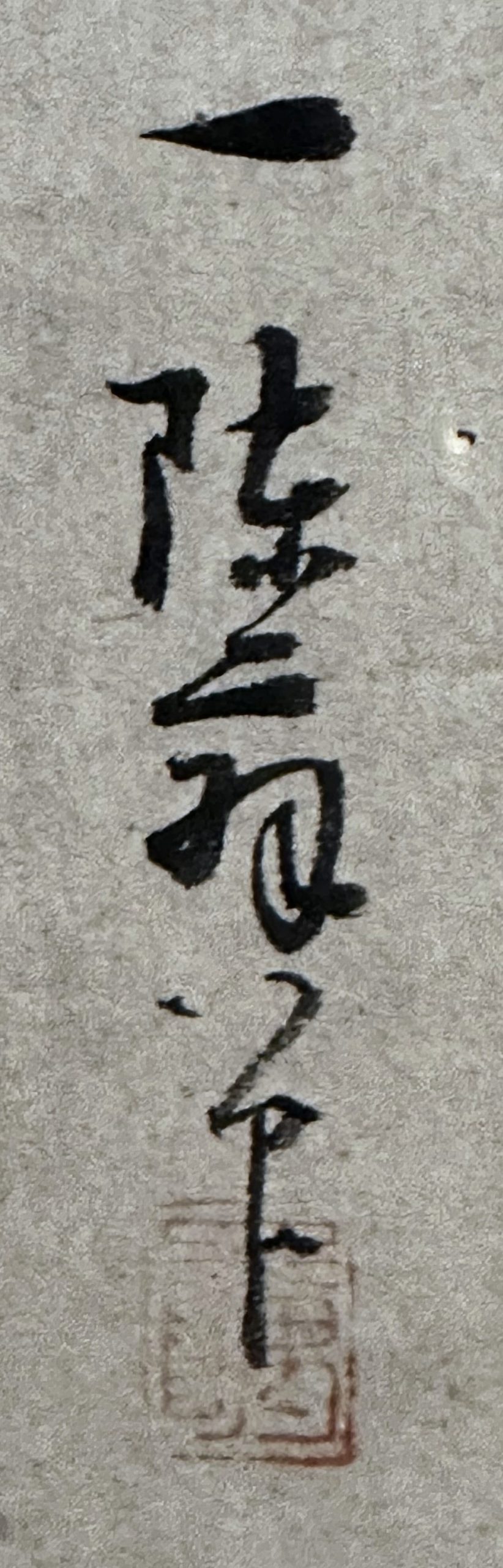
The inscription “一陳翁” can be seen in the lower right corner of this painting. Morikage was known to have used “守景” exclusively for his signatures, although he also had other titles such as “無下斎,” “無礙斎,” and “一陳翁” .
Currently, the only known example of a standard work by Morikage that bears the inscription “一陳翁” is “Landscape” in the collection of the Museum of Fine Arts, Boston.
Although the date of Morikage’s death is not known, this work, with the inscription “一陳翁,” was probably made in his later years. It is an extremely rare work that shows Morikage’s painting technique, which has not diminished with age.
Kusumi Morikage (b. unknown) was a painter of the Kano school active in the early Edo period. He was called one of the Four Heavenly Kings under Kano Tan’yu (1602-1674), but was later excommunicated, and developed his own style of painting.
As an antique, it may have some scratches or blemishes. We recommend that you visit our store to check the condition.
If you wish, we will send you detailed photos of the item, so please feel free to contact us.