“The Plains of Musashi”
- Home
- Our collection
- folding screen
- “The Plains of Musashi”
“The Plains of Musashi”
Enlarge image by clicking on the thumbnail.
| IItem No. | |
|---|---|
| Title | “The Plains of Musashi” |
| Overall size | |
| Artwork size | |
| Artist | Unknown |
| Date Created | Early 17th century |
| Price | Contact us. |
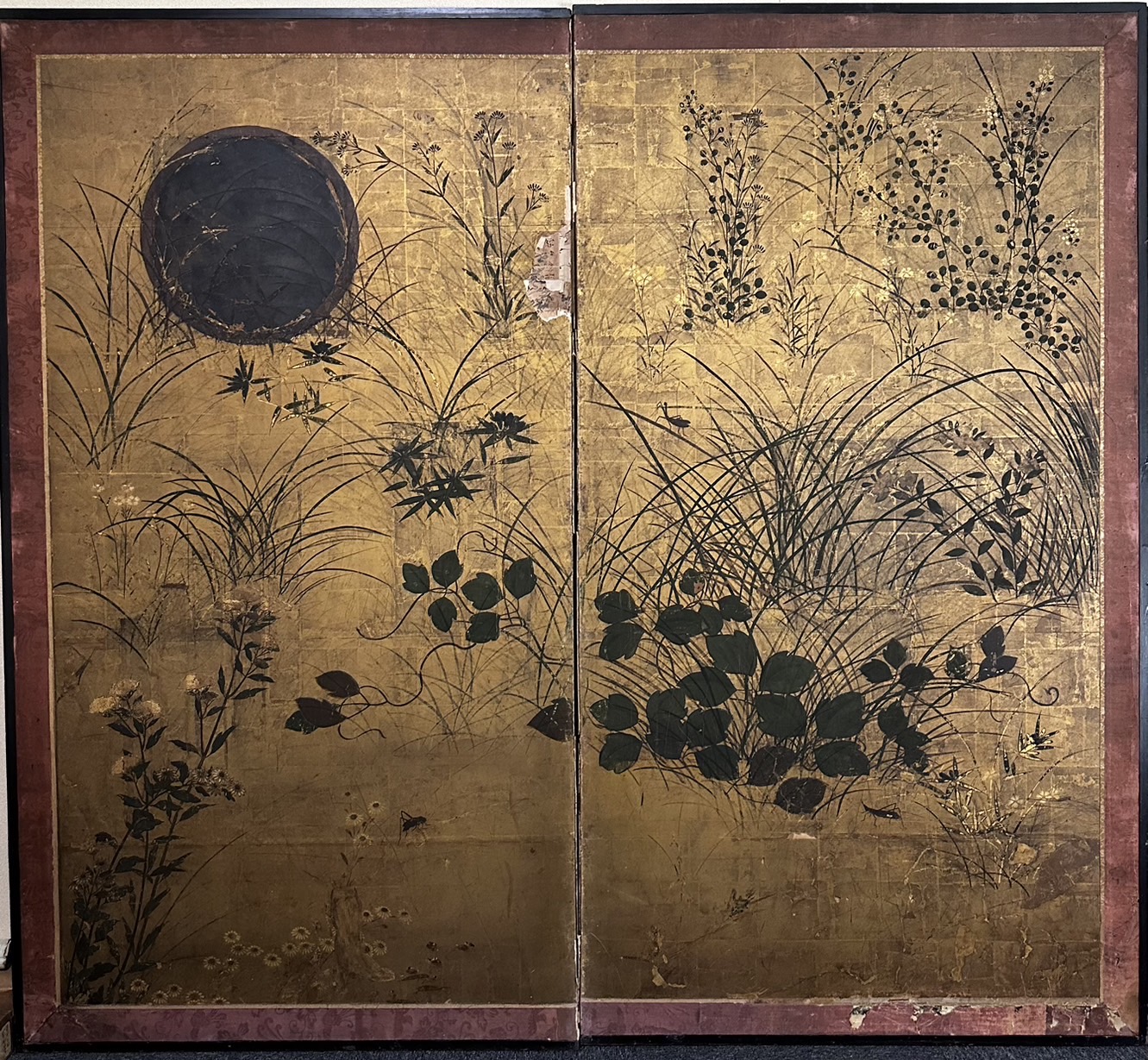
「武蔵野は月の入るべき山もなし 草より出でて草にこそ入れ」
(Musashino wa tsuki no irubeki yama mo nashi kusa yori idete kusa ni koso haire)
This poem, which describes the landscape of the Musashino Plateau (a plain stretching from Tokyo to southern Saitama Prefecture), with its grassy vegetation, became popular in the Edo period as an ancient poem originating from the Manyoshu (Anthology of Myriad Leaves).
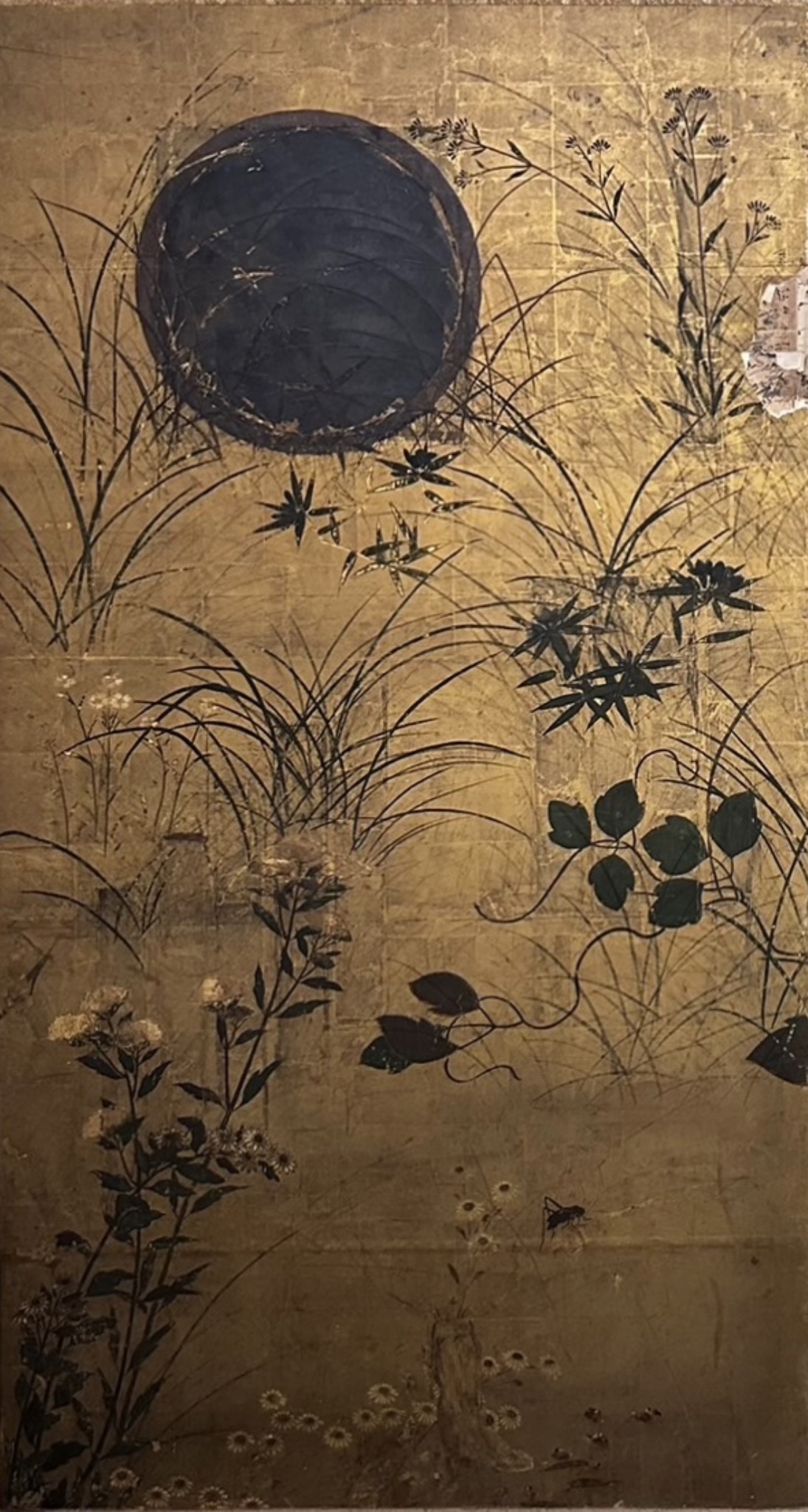
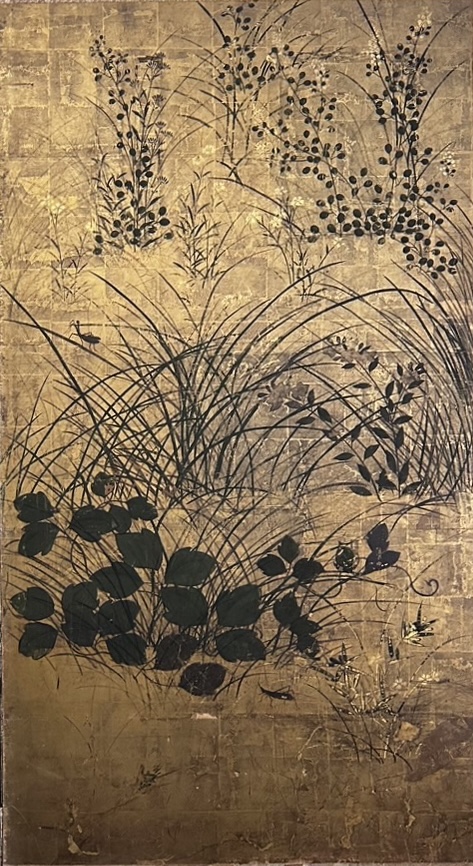
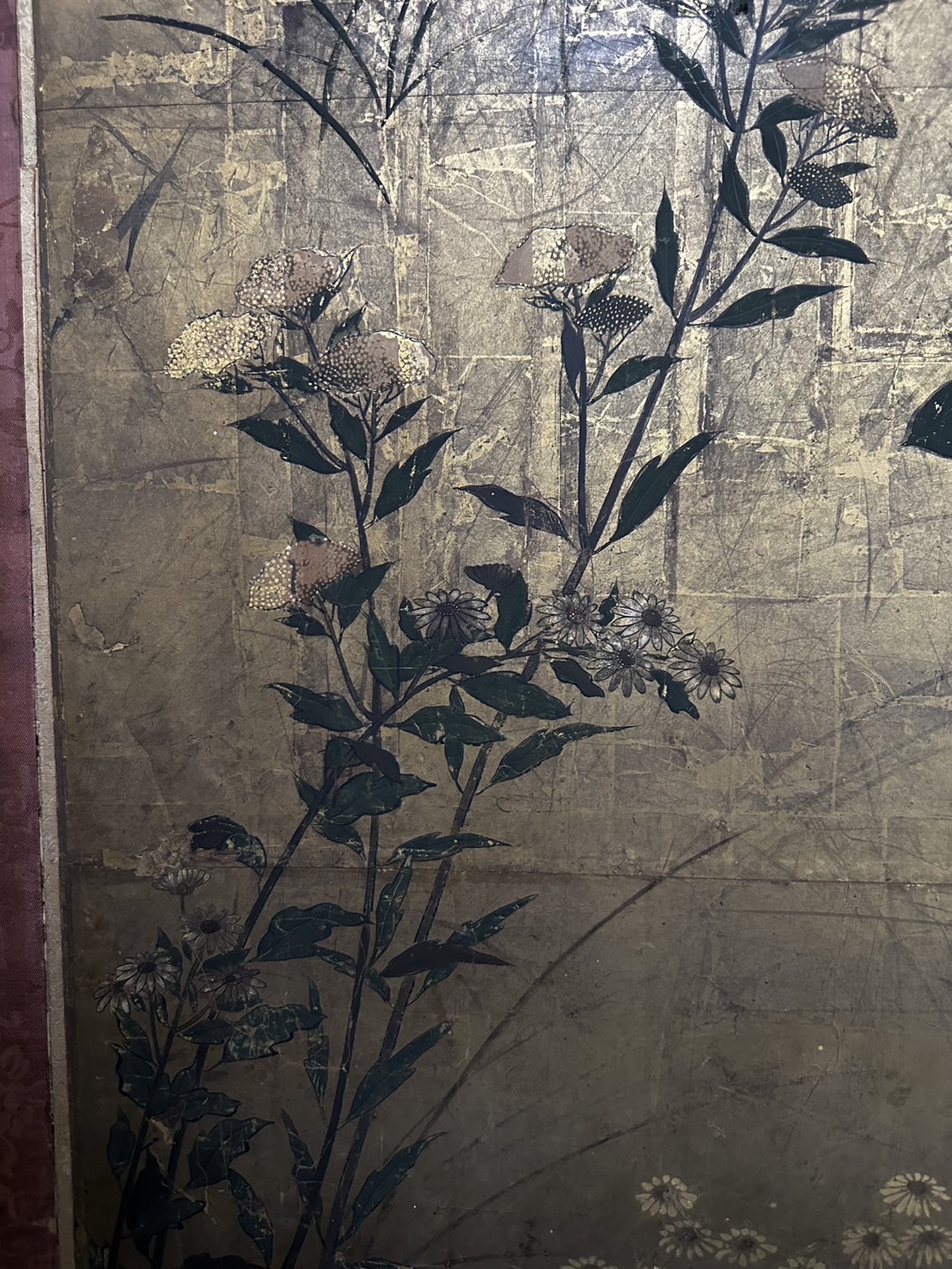
Musashino has long been a favorite subject for poetry, and in the Edo period (1603-1867), it became especially popular as the subject of byobu-e (folding screen paintings). This folding screen was probably produced between the Keicho and Kan’ei periods (early 17th century), and is a valuable example of a Musashino painting before the composition became more stylized.
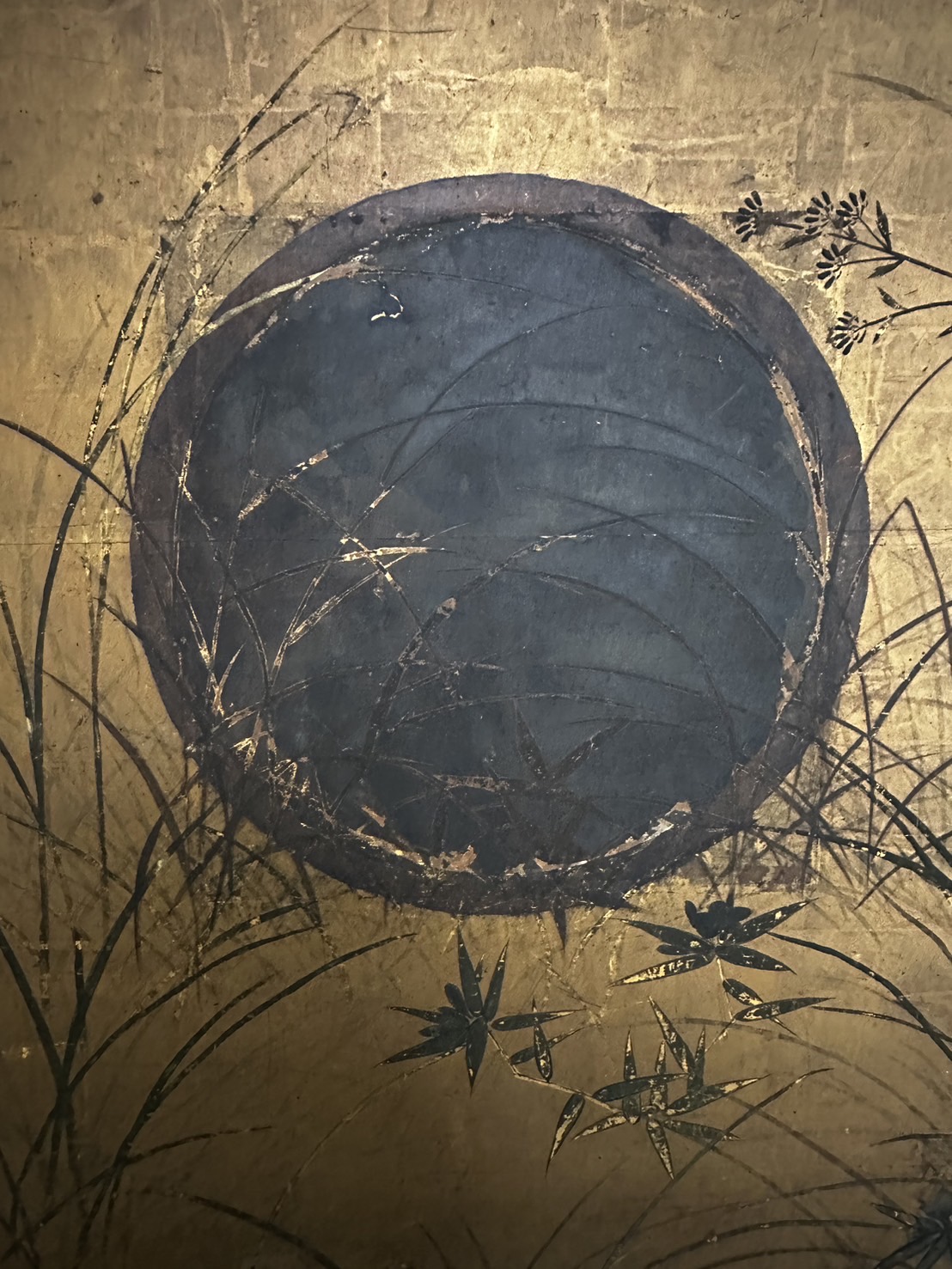
A large moon is setting among the thickly growing autumn grasses, including wild chrysanthemums, bellflowers, and hagi (bush clovers). The rhythm of the naturally arranged flowers and grasses is pleasing, and the balance between realism and decoration is skillfully achieved. If you listen carefully in front of this delicately painted screen of Musashino, you can almost hear the sound of the wind caressing the grasses and the soft sounds of insects.
As an antique, it may have some scratches or blemishes. We recommend that you visit our store to check the condition.
If you wish, we will send you detailed photos of the item, so please feel free to contact us.