Kano Katanobu “Clums”
- Home
- Our collection
- hanging scroll
- Japanese Painting
- Kano school
- Kano Katanobu “Clums”
Kano Katanobu “Clums”
Enlarge image by clicking on the thumbnail.
| IItem No. | |
|---|---|
| Title | Clums |
| Overall size | |
| Artwork size | |
| Artist | By Kano Katanobu (1768~1846) |
| Date Created | After kyowa 2(1802) |
| Price | ¥250,000(excluding tax) |
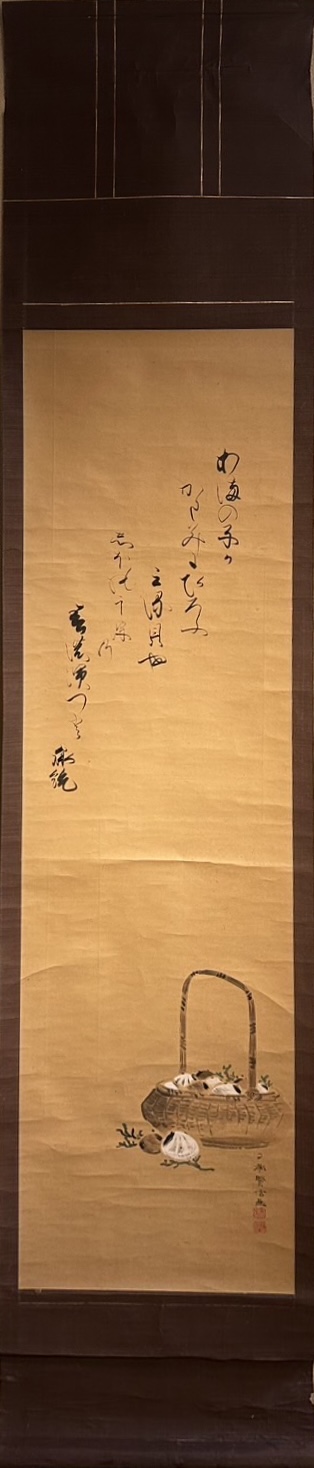
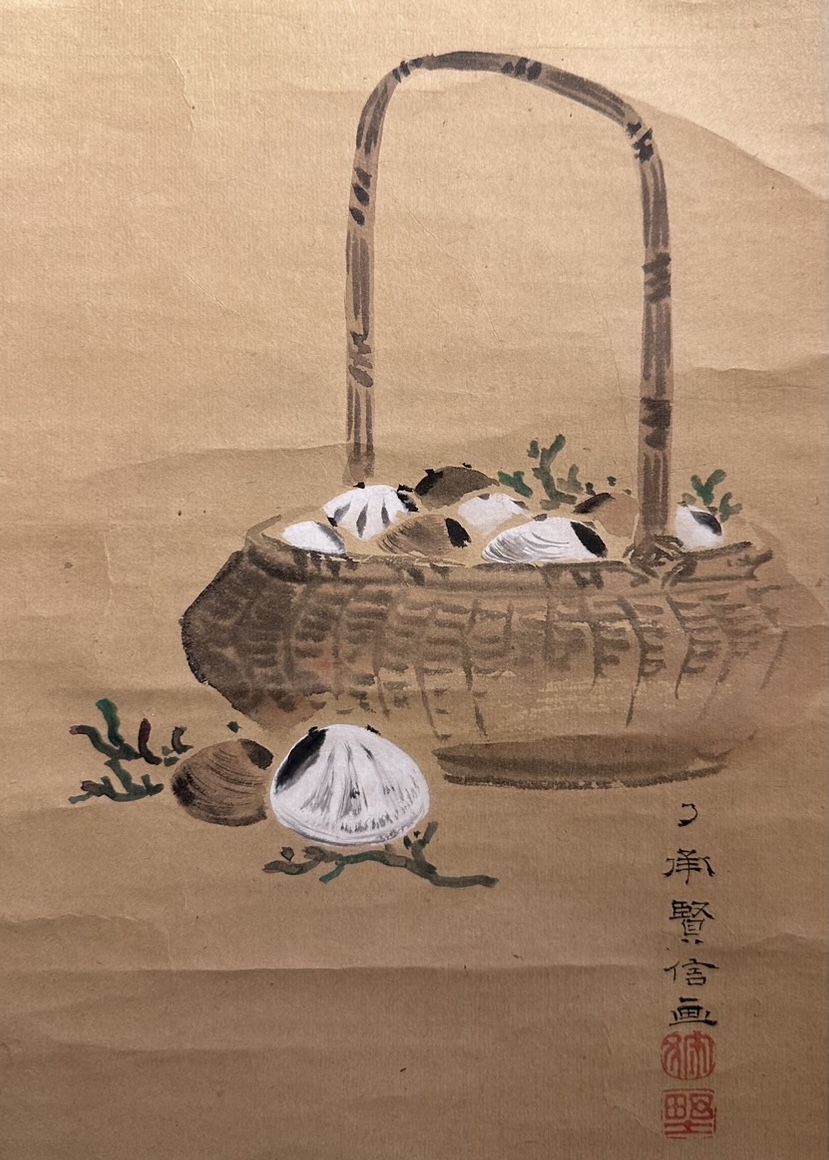
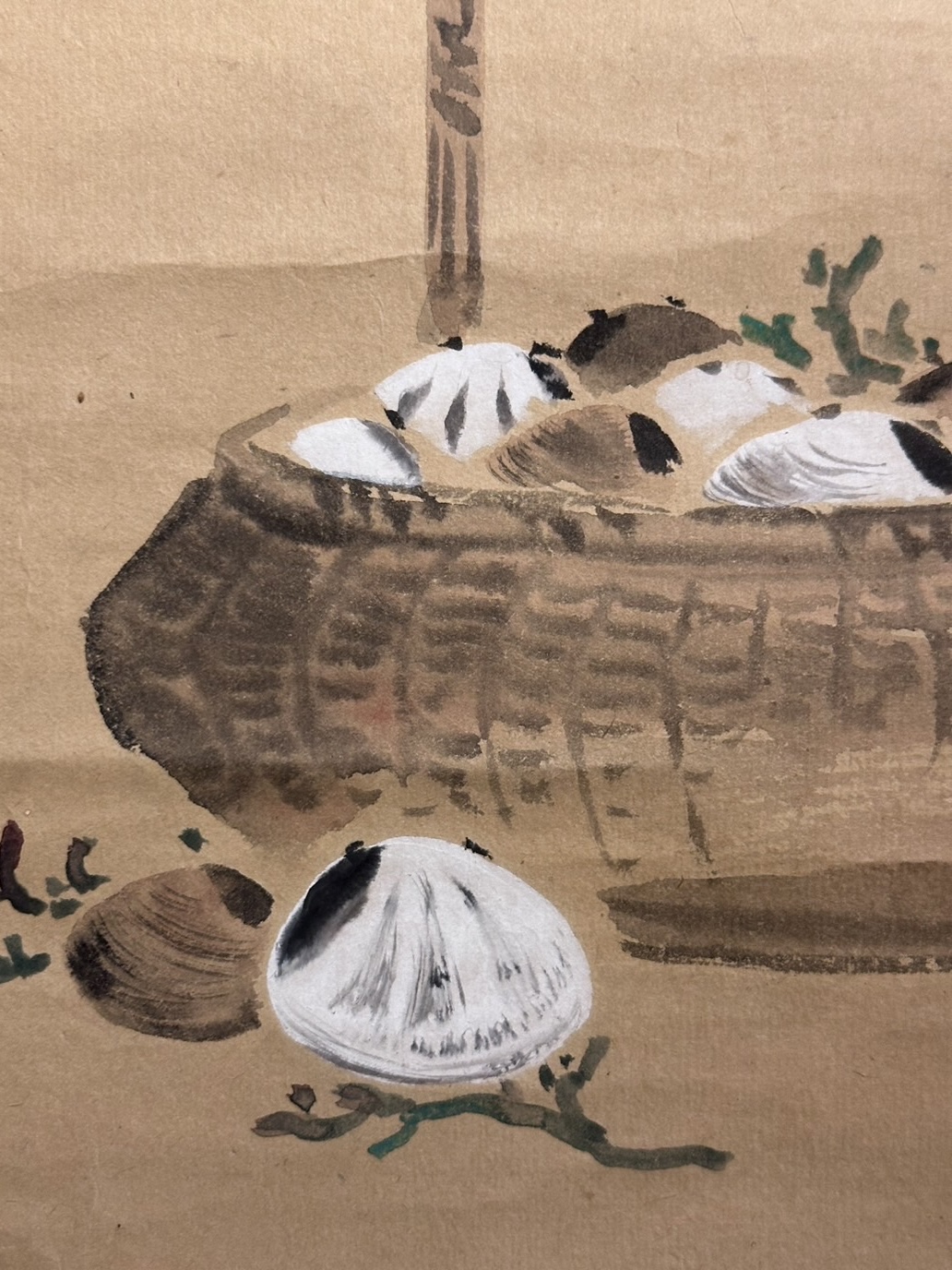
This painting depicts a woven basket full of bivalves.
The dark green seaweed seen here and there is probably sea pine (miru). Sea pine is a type of seaweed that got its name because of its branching, spreading shape, which resembles a pine tree.
It is not very familiar to the modern dinner table, but it was a very popular marine product, as it was mentioned in the Manyoshu (Anthology of Myriad Leaves) as early as …… and was used as a pattern in the Heian period (794-1185).
The entire painting uses “Mokkotsu”(technique without outlines), skillfully expressing the natural texture of the shells and the freshness of the seaweed.
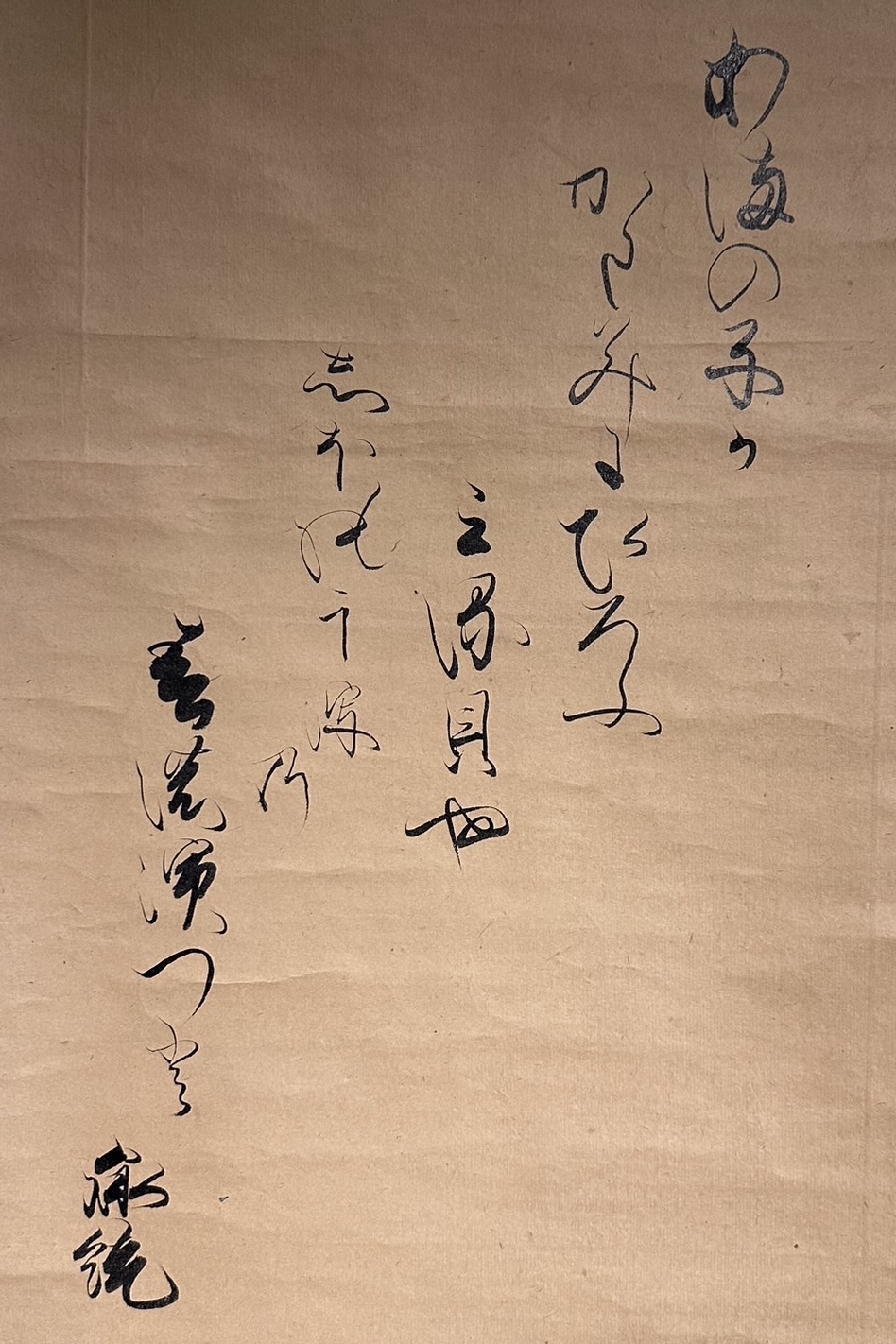
The inscription at the top of the screen reads, “Ama no ko ga katami ni hirofu Mirugai ya shiho no higata no haru no hamatsuto.” This tanka means that the mill clams, which divers are picking up in turn, are a specialty of the spring tidal flats.
The Chinese character for “Tsuto” is “土産” (souvenir), which refers to a local product as a gift.
Shellfish are in season in spring. A basket full of “hamatsuto” from the sea foreshadows the coming of spring in this seasonal piece.
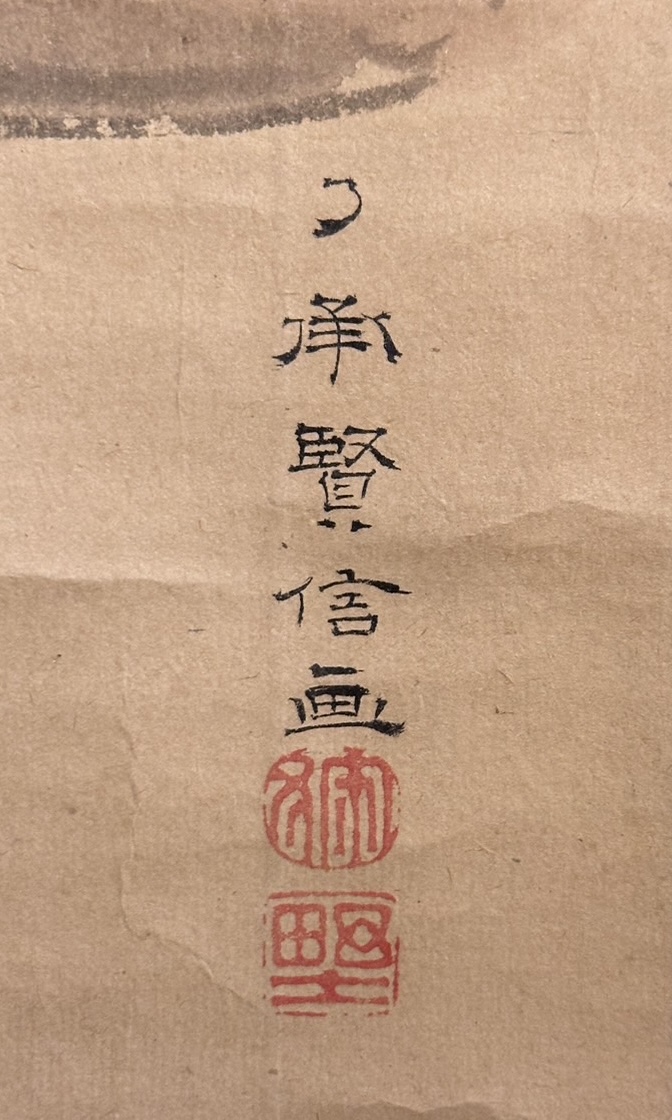
Kano Katanobu (1768-1846) was a Kano school surface painter of the late Edo period. He was adopted by Baisho Shigenobu of the Fukagawa Mizuba Kano family and succeeded to the family after his father’s death. The signature on this work indicates that it was painted after 1802, when he changed his name to “Ryosho”.
As an antique, it may have some scratches or blemishes. We recommend that you visit our store to check the condition.
If you wish, we will send you detailed photos of the item, so please feel free to contact us.