Kano Naganobu “Chrysanthemums and Flowing Water”
- Home
- Our collection
- hanging scroll
- Japanese Painting
- Kano school
- Kano Naganobu “Chrysanthemums and Flowing Water”
Kano Naganobu “Chrysanthemums and Flowing Water”

Enlarge image by clicking on the thumbnail.
| IItem No. | |
|---|---|
| Title | “Chrysanthemums and Flowing Water”/Color on silk |
| Overall size | 189.0㎝×30.1㎝ |
| Artwork size | 113.0㎝×26.9㎝ |
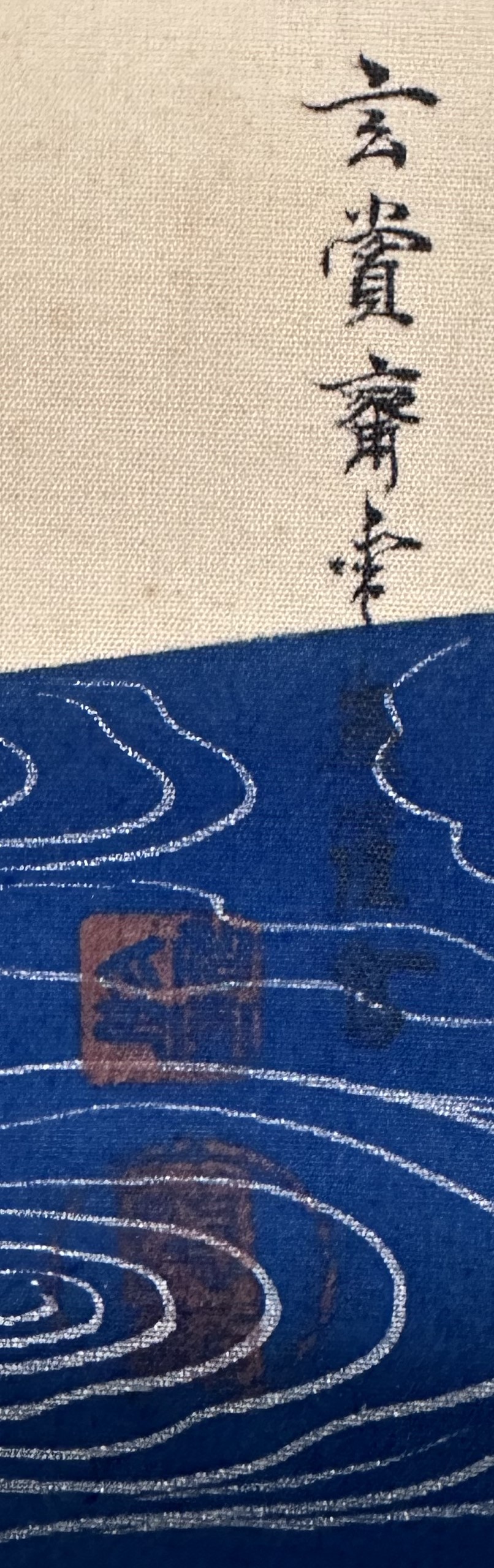
| Artist | By Kano Naganobu (1775-1828) |
| Date Created | After 1802 |
| Price | ¥500,000(excluding tax) |
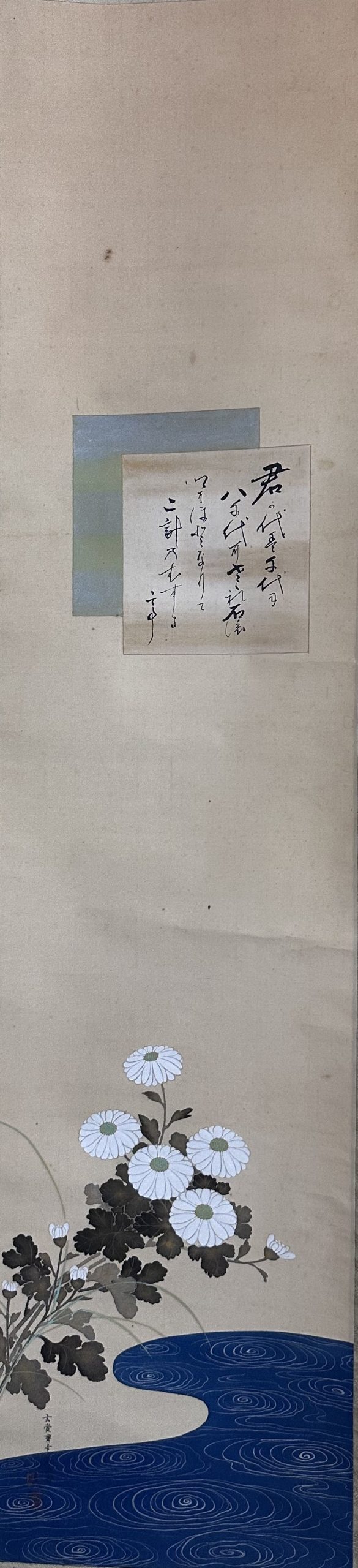
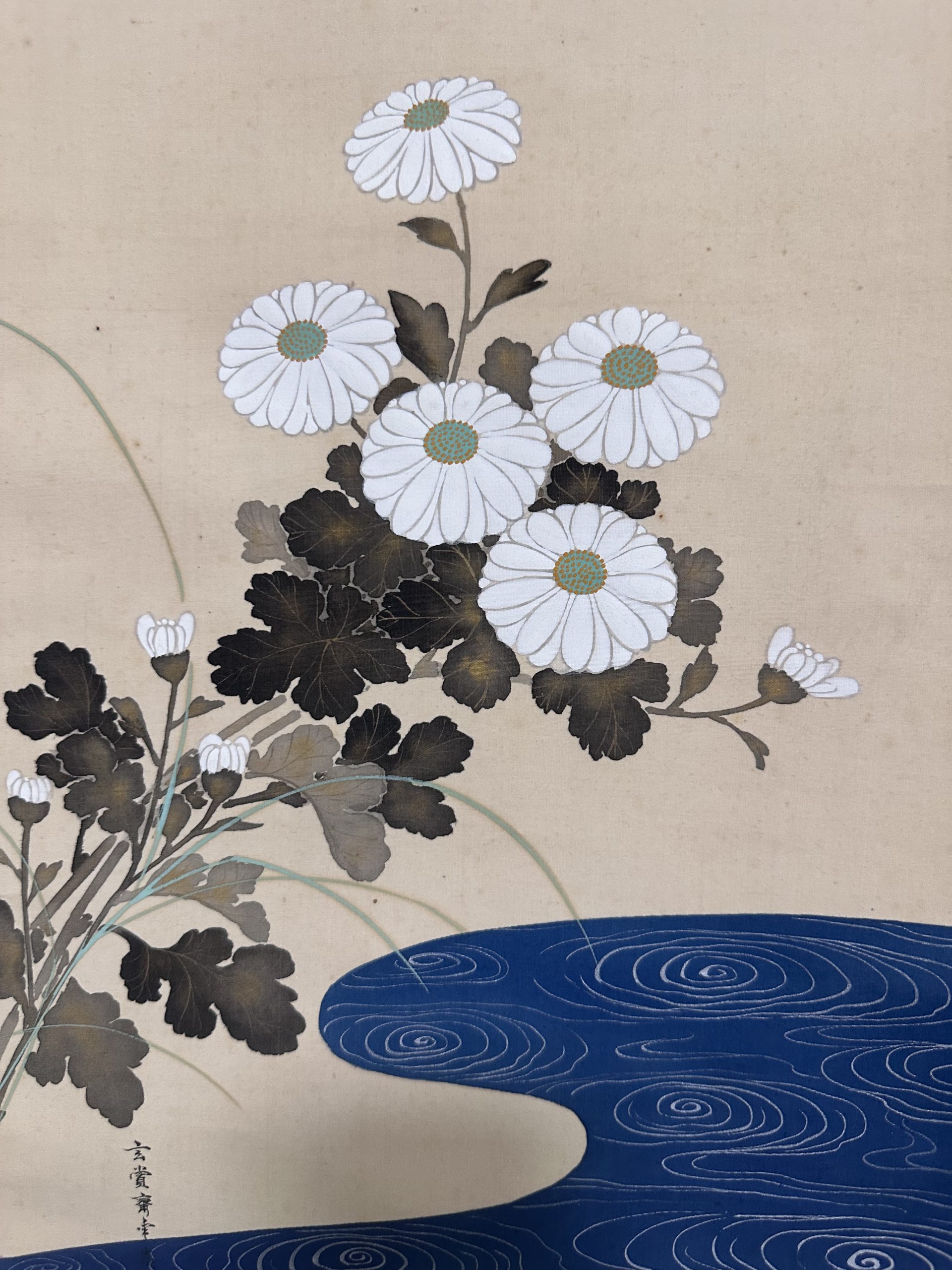
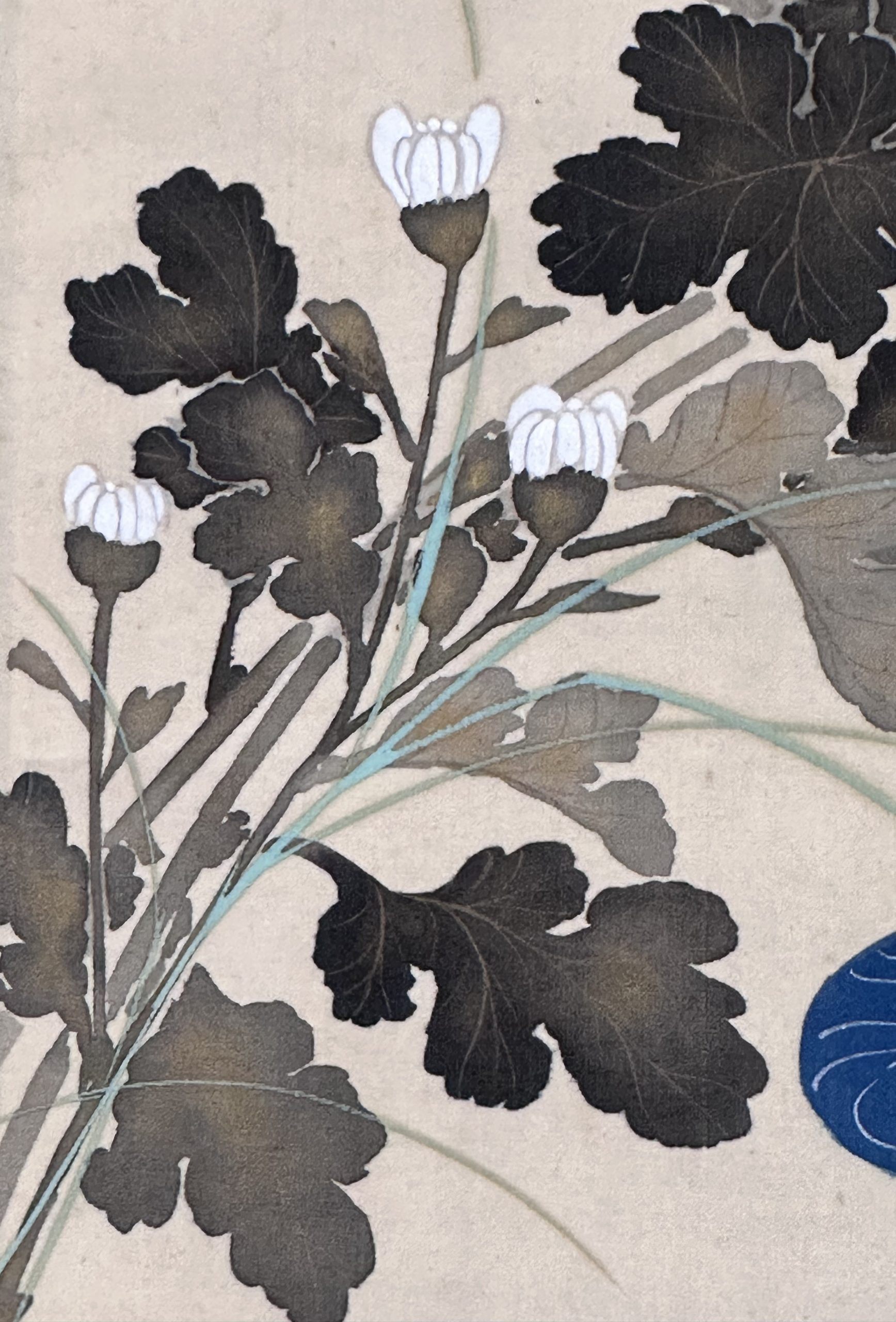
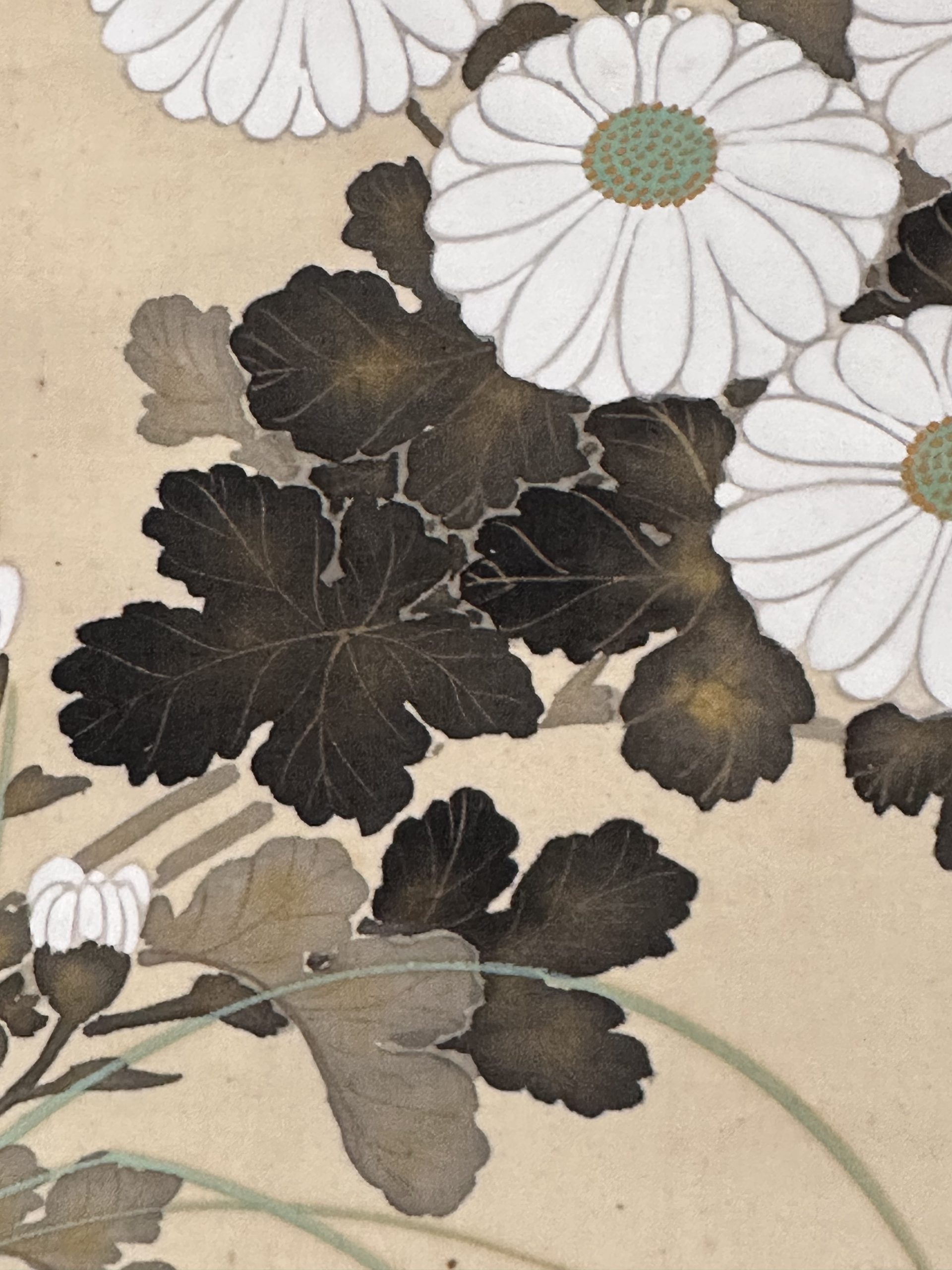
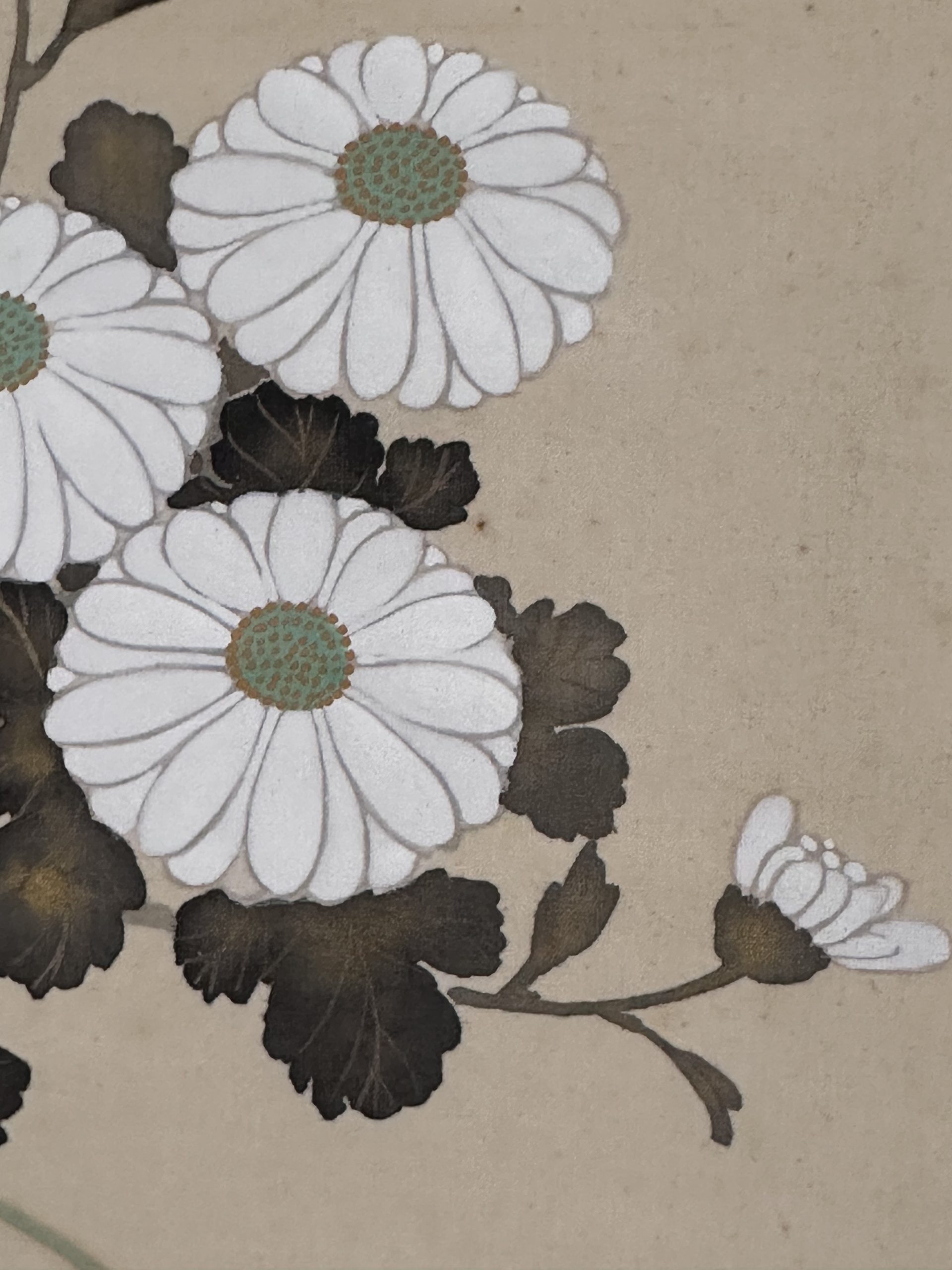
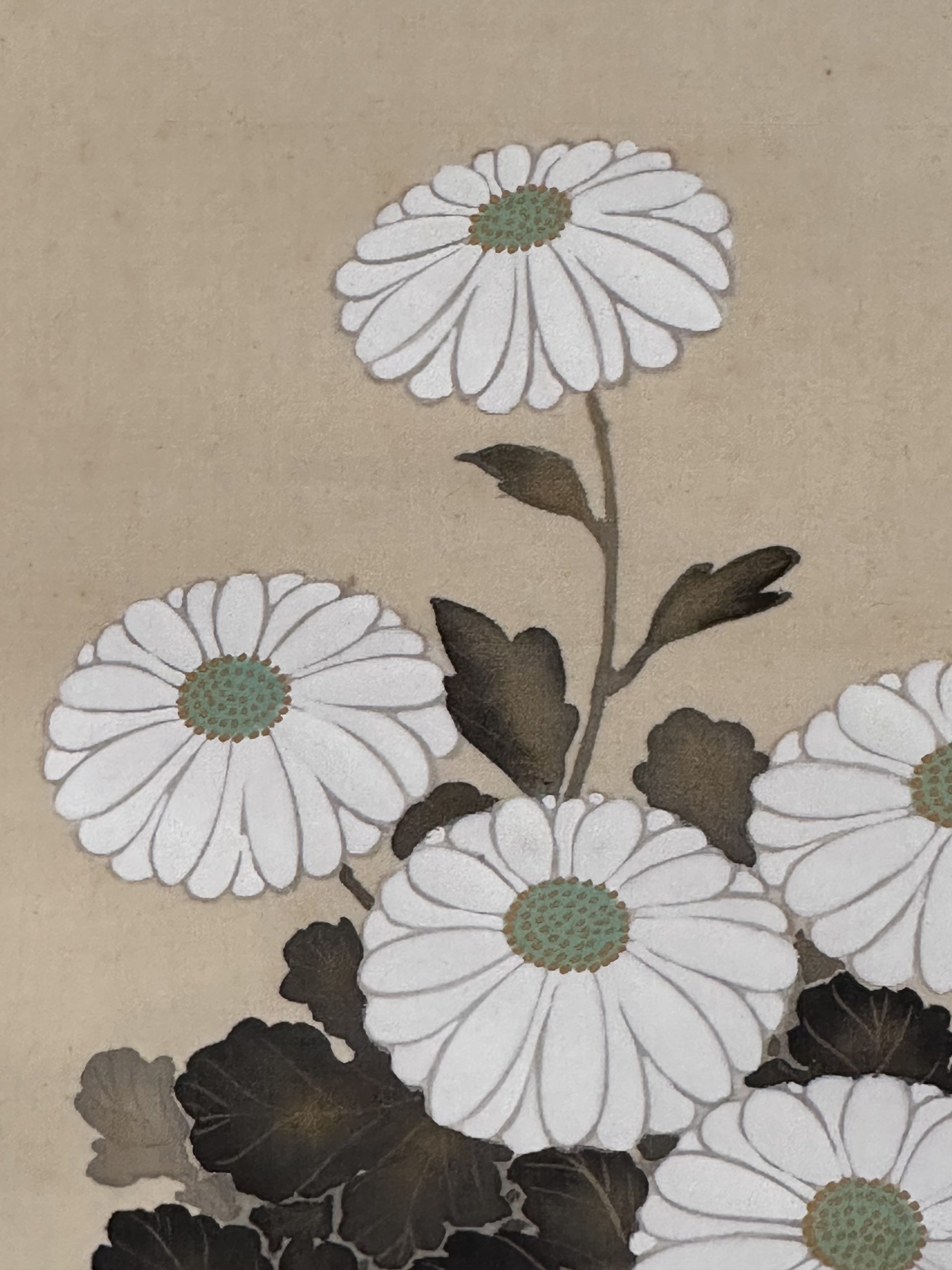
A single white chrysanthemum blooms beside gently undulating water. The contrast between the dazzling navy blue and dazzling white is beautiful and gives the work an elegant and refined impression. The leaves of the chrysanthemum are sprinkled in places with gold mud, beautifully expressing the natural texture of the chrysanthemum.
The painter’s skill is evident in the skillful combination of realism and decoration. The highlight of this work is the unexpectedness of the fact that Naganobu of the Kano School painted a bold, decorative painting reminiscent of the Rimpa school.
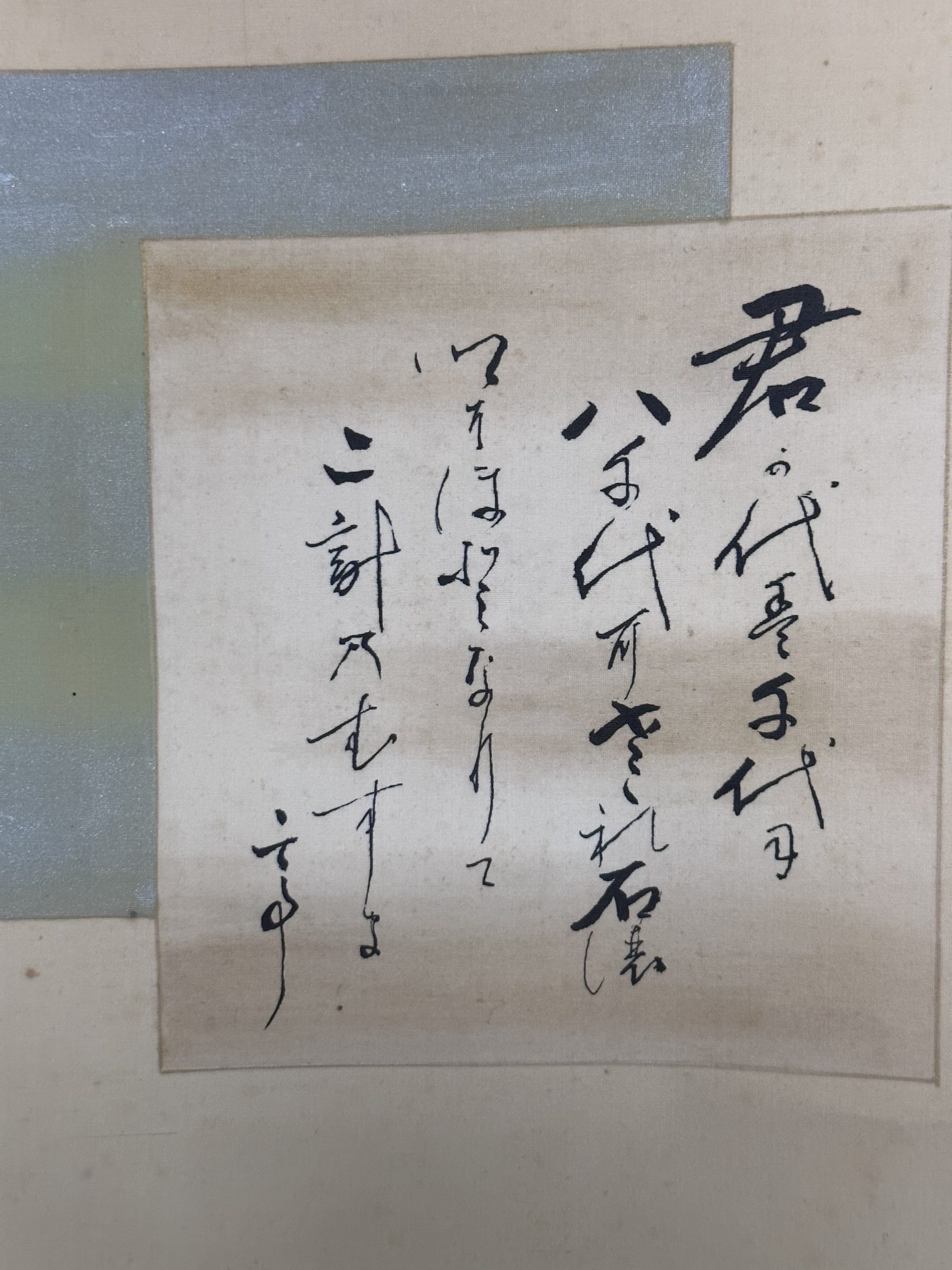
The combination of flowing water and chrysanthemums, as in this work, has long been favored as a motif for prolonging one’s life. The upper part of the painting is accompanied by an inscription in the form of colored paper.
“君か代は千代に八千代にさゝれ石のいはほとなりてこけのむすまて”
(Kimigayo wa chiyo ni yachiyo ni sazareishi no Iwao to narite koke no musumade)
In the Japanese national anthem “Kimigayo,” the word “kimigayo” means “reign of the emperor. In a broader sense, however, it can also be thought of as a wish for the long life of the recipient of this song.
This is a very festive work, with motifs of longevity that have been handed down from the ancient times in both Japan and China.
Kano Naganobu (1775-1828) was the eighth head of the Kano family in Kobikicho, and served the shogunate for two generations, Ieharu and Ienari. He created a style of painting that incorporated the techniques of the Nagasaki School and Nanpin School, as well as Yamato-e, and established the golden age of the Kano School in Kobikicho.
As an antique, it may have some scratches or blemishes. We recommend that you visit our store to check the condition.
If you wish, we will send you detailed photos of the item, so please feel free to contact us.