Kano Tomonobu “Fei Zhang Fang“
- Home
- Our collection
- hanging scroll
- Japanese Painting
- Kano school
- Kano Tomonobu “Fei Zhang Fang“
Kano Tomonobu “Fei Zhang Fang“
| IItem No. | |
|---|---|
| Title | “Fei Zhang Fang“/Ink on paper |
| Overall size | |
| Artwork size | |
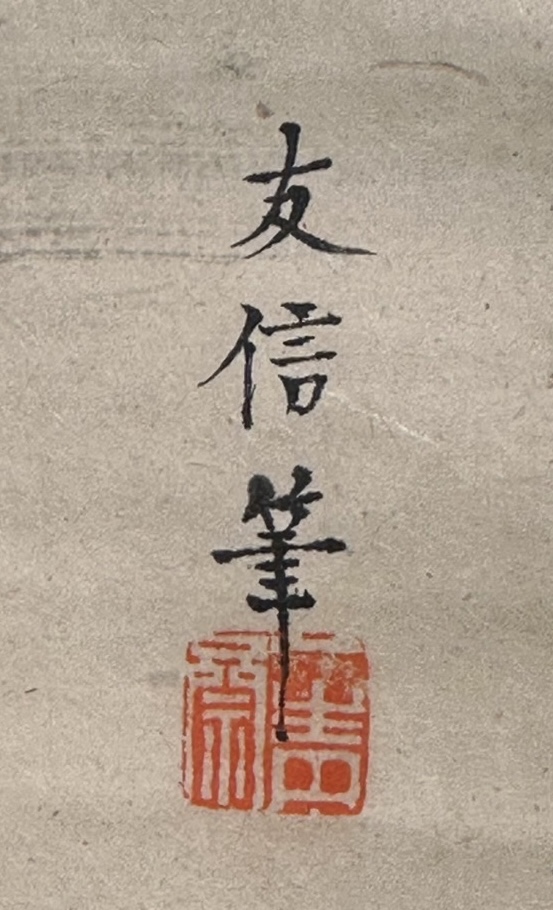
| Artist | Kano Tomonobu (1843-1912) |
| Date Created | late 19th ~early 20th century |
| Price | Contact us. |
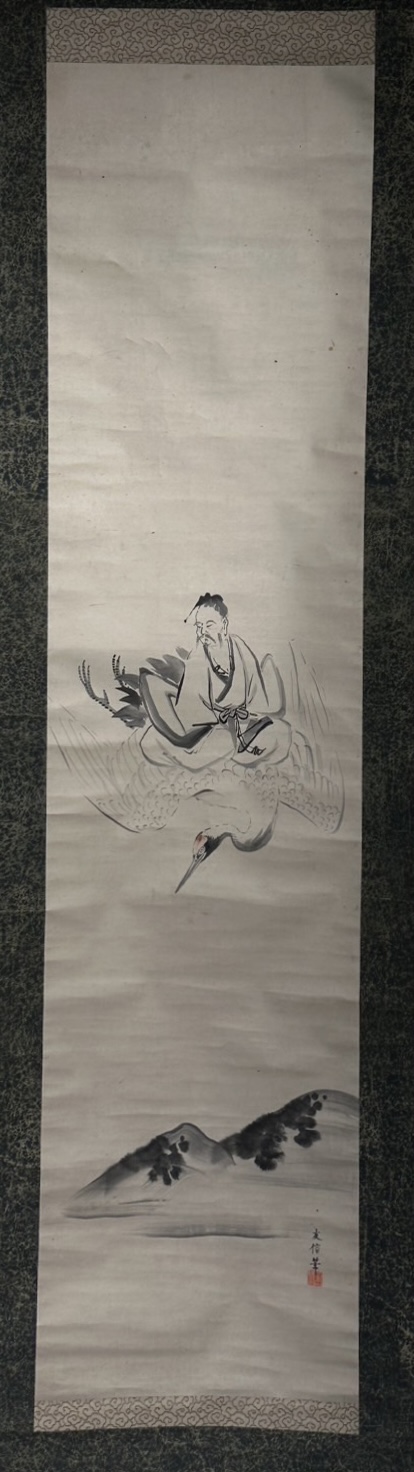
Fei zhang fang is a character from the ancient Chinese book, “神仙伝”(The Tale of the Immortals). He was an official in the Later Han Dynasty who happened to become an apprentice to a hermit and went through a rigorous training to become a hermit himself. Although he failed in his training, he returned home with long life and spiritual power, and performed miracles such as curing illnesses and seeking rain.
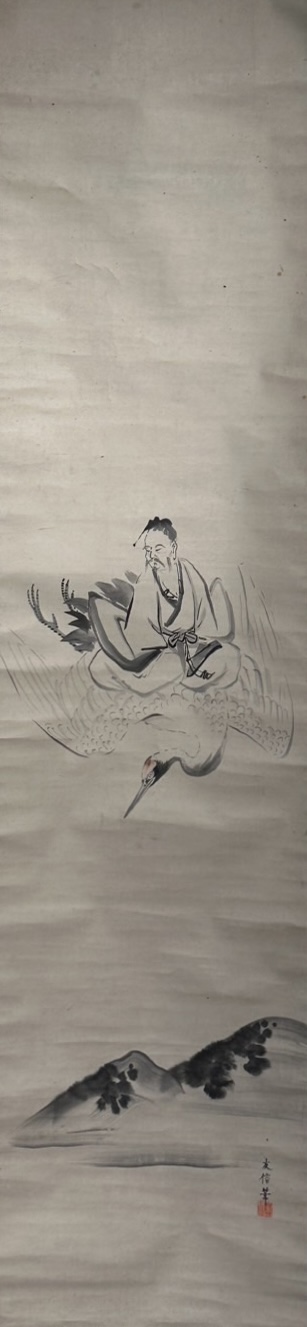
In early modern Japan, the figure of Fei zhang fang riding on the back of a crane, as shown in this work, was often depicted in paintings.
Two hundred years before this work, Kano Tsunenobu (1636-1713), a member of the Kano school of the early Edo period (1603-1867), depicted Fei zhang fang reading a scroll while riding on a crane. It is believed that this painting by Tsunenobu was circulated as a powderized version and gave birth to many other paintings of Fei zhang fang in later generations.
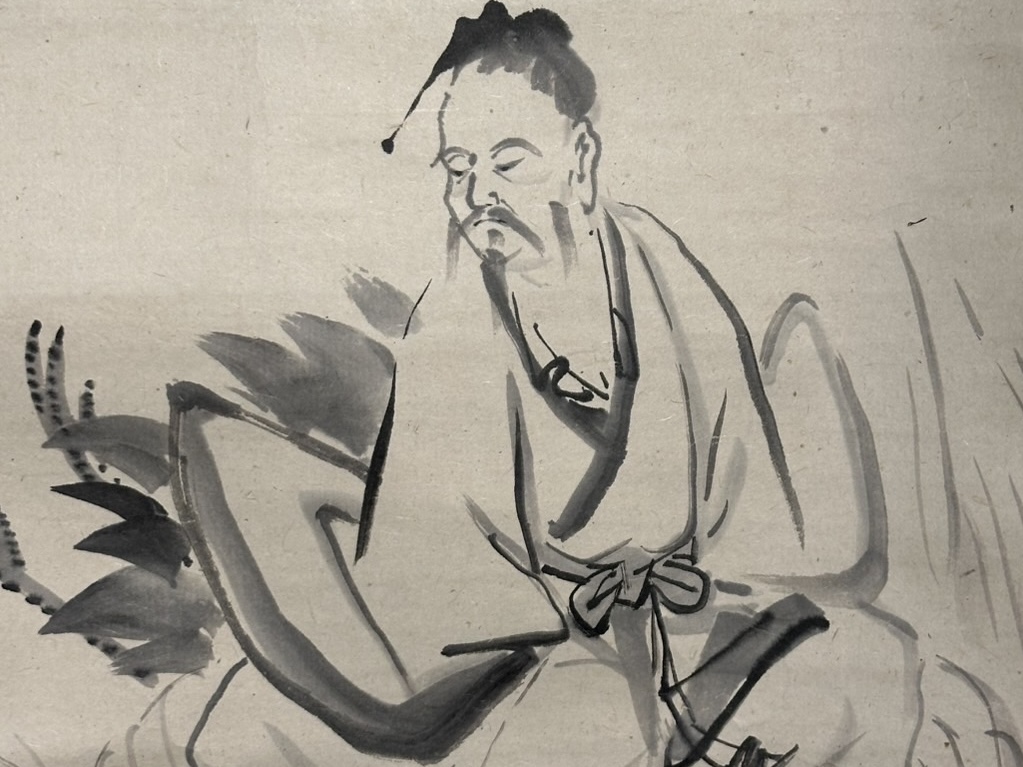
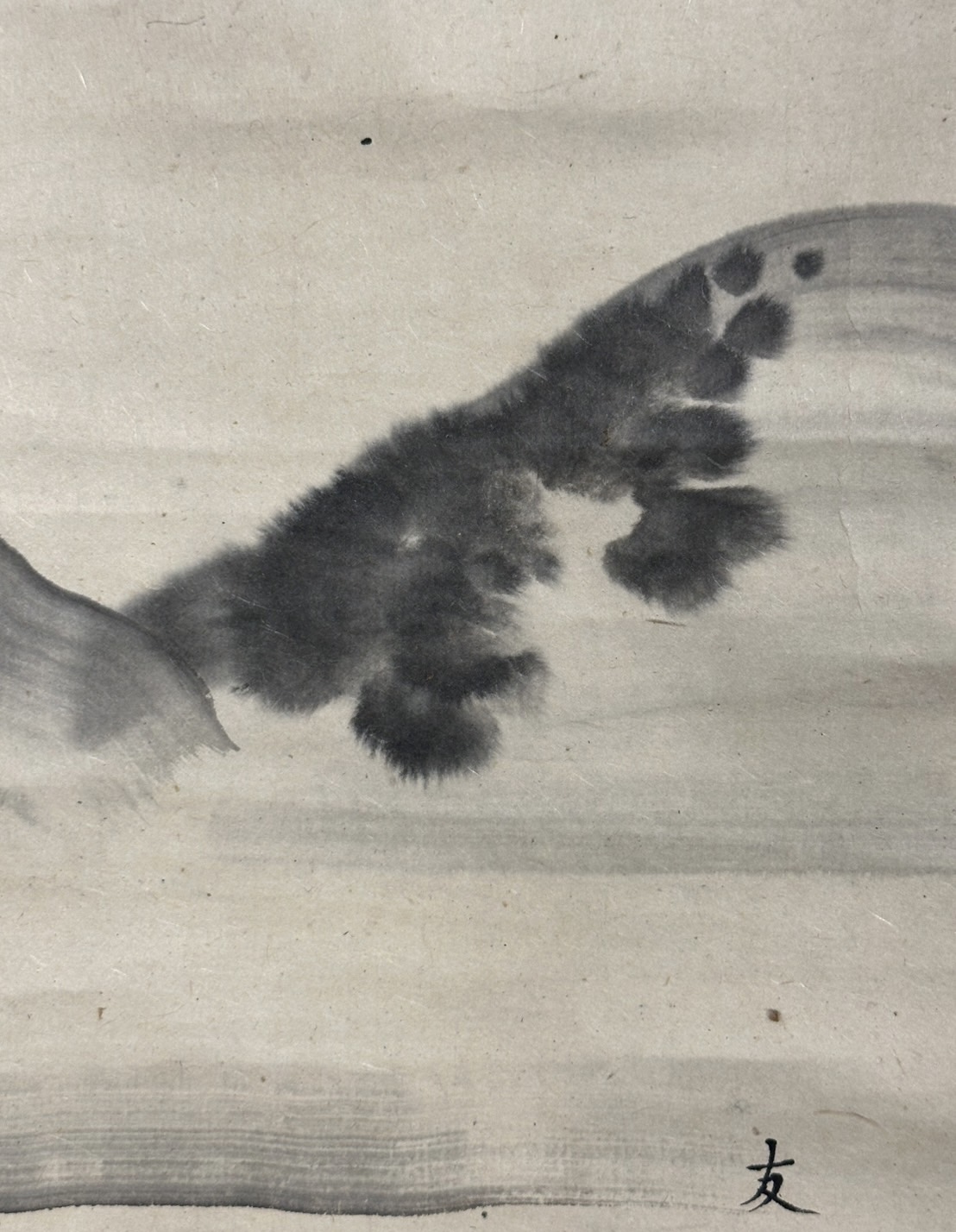
In this work, the figure of Fei zhang fang looks down on the world below from the back of a crane in a simple ink-based rendering.Although the motifs in the painting are minimal, the subtle facial expressions of the figures and the use of blotting and graffiti to change the expression of the mountain surface make this a work of great interest.
___________________
Kano Tomonobu (1843-1912) was a painter of the Hamacho Kano family during the late Edo and Meiji periods. He studied under Kano Shosen-in Masanobu from an early age, and at a young age was appointed as an Oku-Eshi (interior painter) by the shogunate.
After the Meiji Restoration, he cooperated with Fenollosa’s research on Japanese art, taught at the Tokyo School of Fine Arts, and exhibited at the World’s Columbian Exposition in Chicago, among other vigorous activities.
As an antique, it may have some scratches or blemishes. We recommend that you visit our store to check the condition.
If you wish, we will send you detailed photos of the item, so please feel free to contact us.