Kano Yoshinobu “Dragon and Tiger”
- Home
- Our collection
- hanging scroll
- Japanese Painting
- Kano school
- Kano Yoshinobu “Dragon and Tiger”
Kano Yoshinobu “Dragon and Tiger”
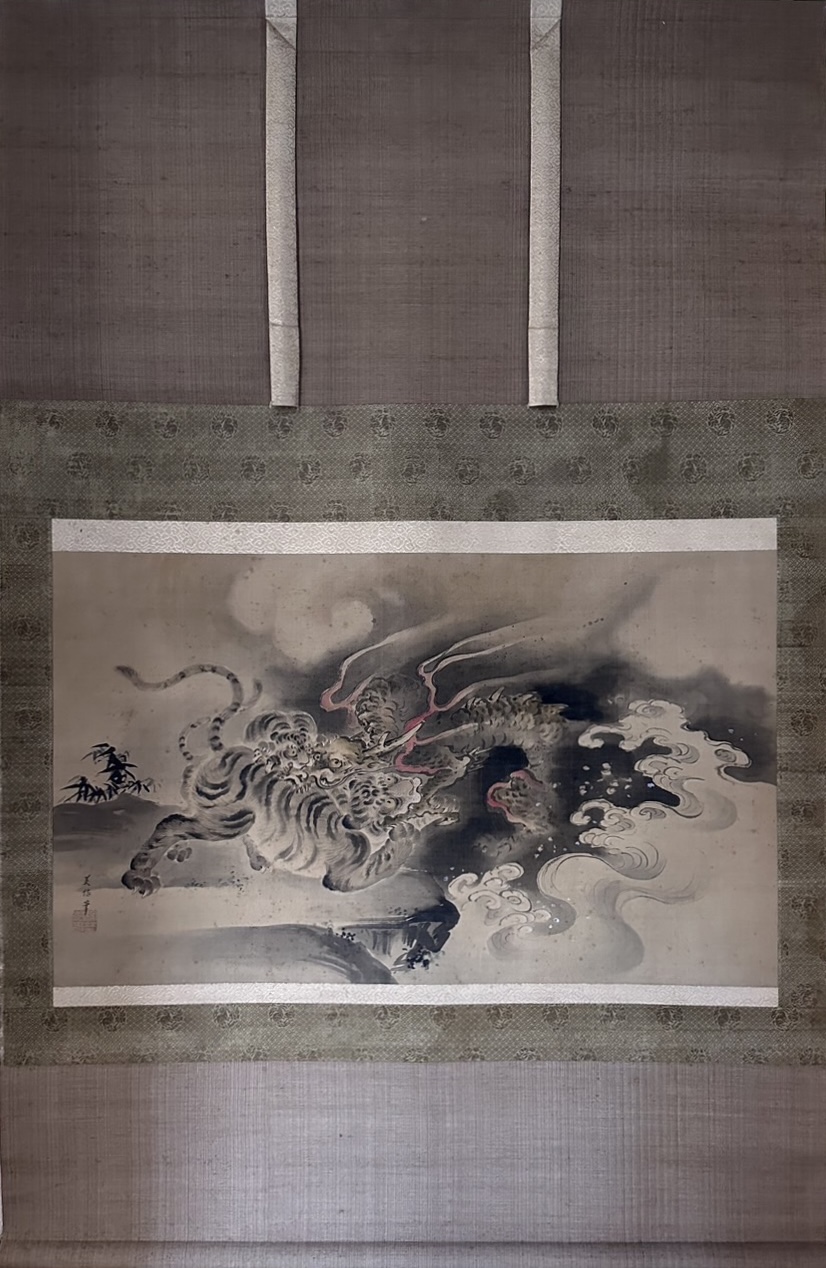
Enlarge image by clicking on the thumbnail.
| IItem No. | |
|---|---|
| Title | Dragon and Tiger |
| Overall size | |
| Artwork size | |
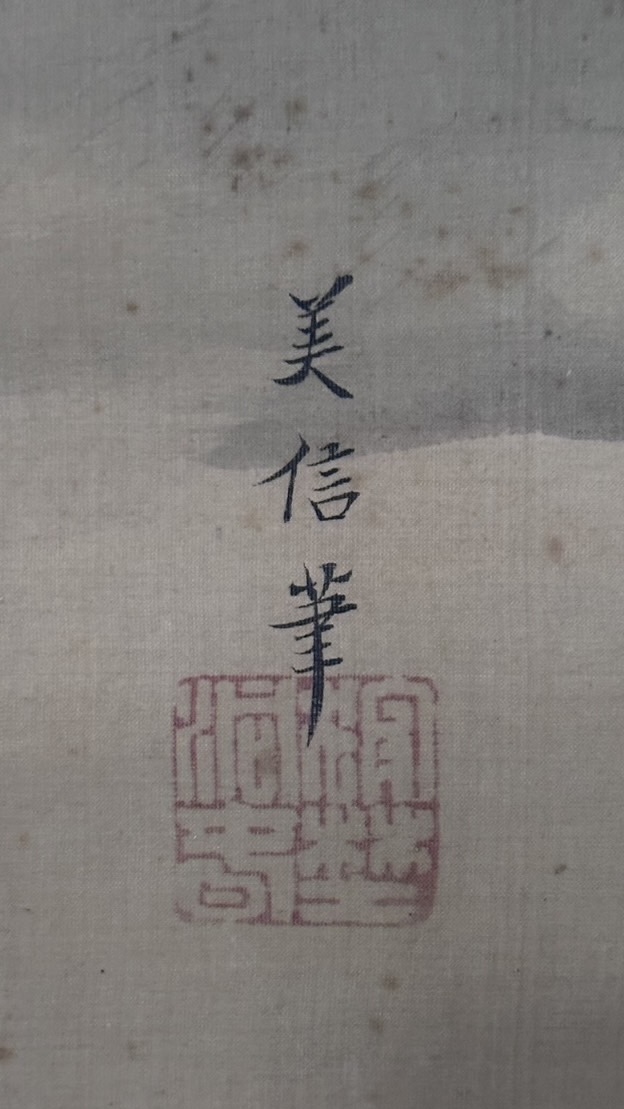
| Artist | By Kano Yoshinobu(1747〜1797) |
| Date Created | Late 19th century |
| Price | Contact us |
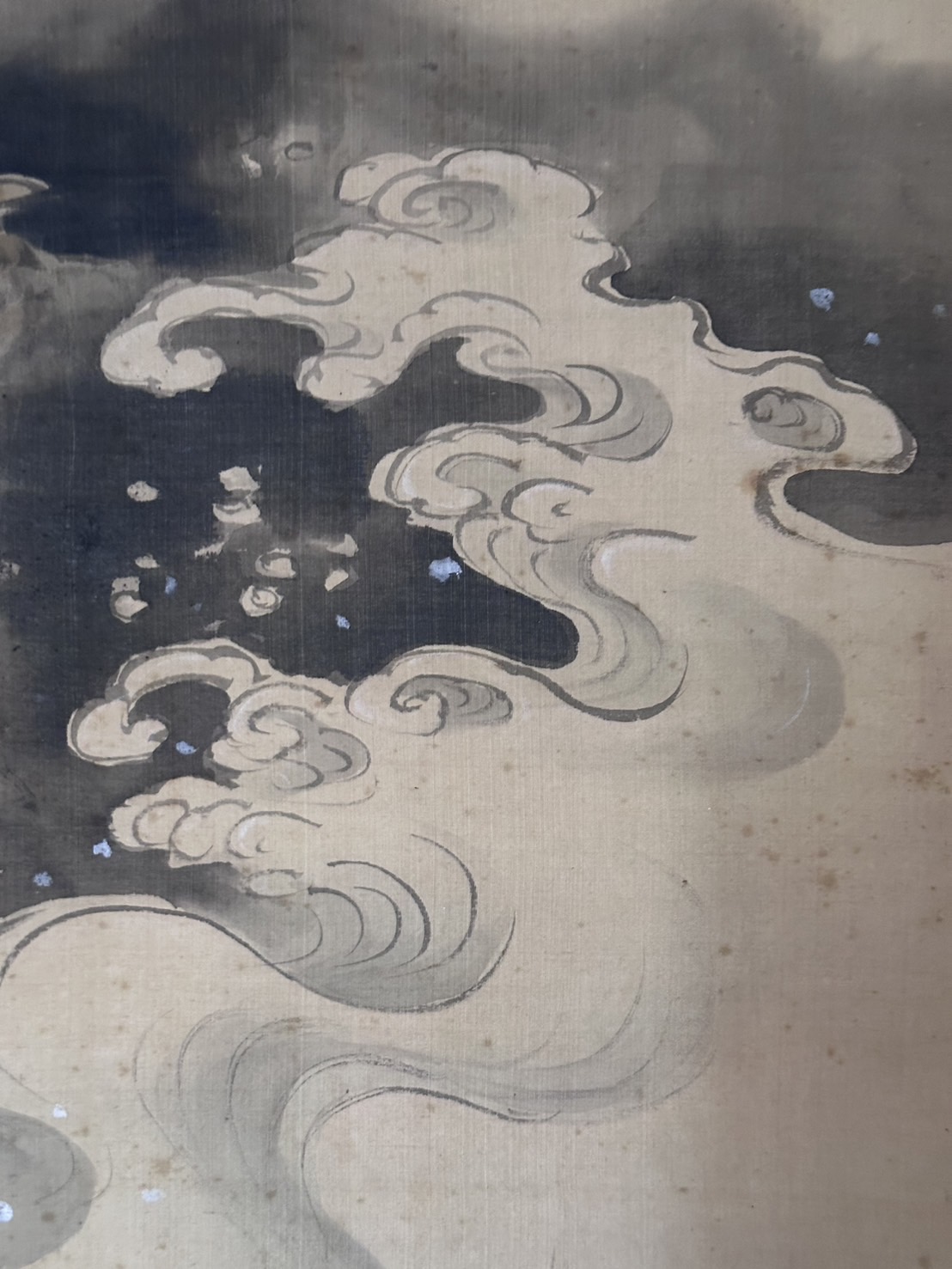
A dragon is emerging with a splash and accompanied by black clouds.
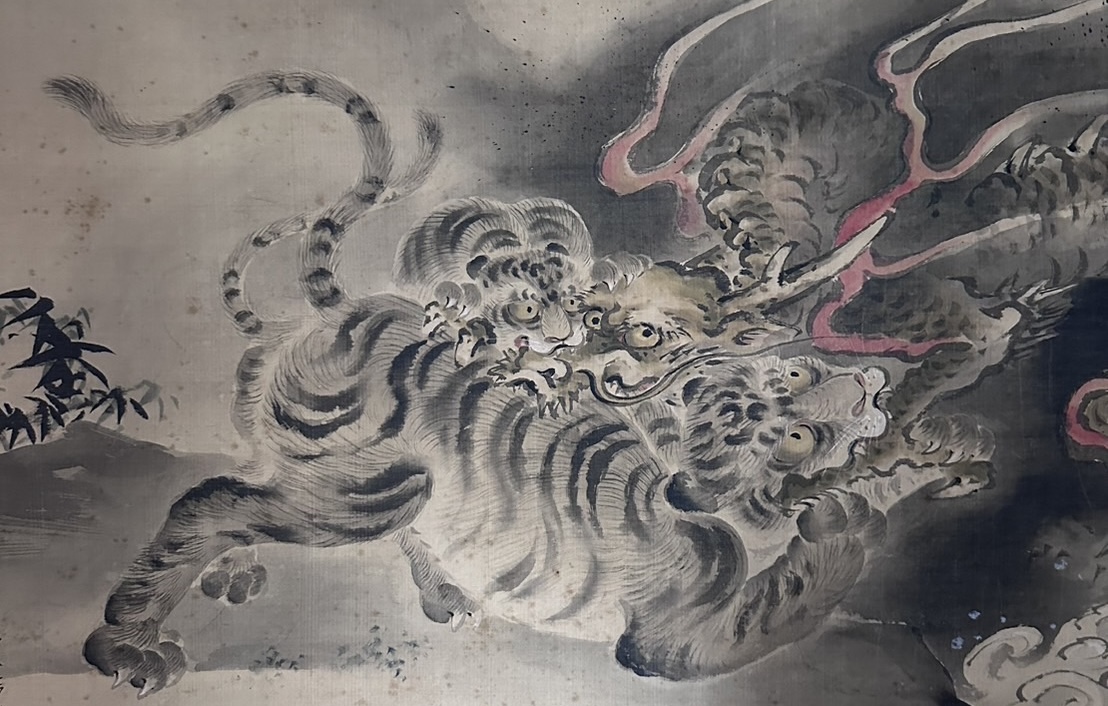
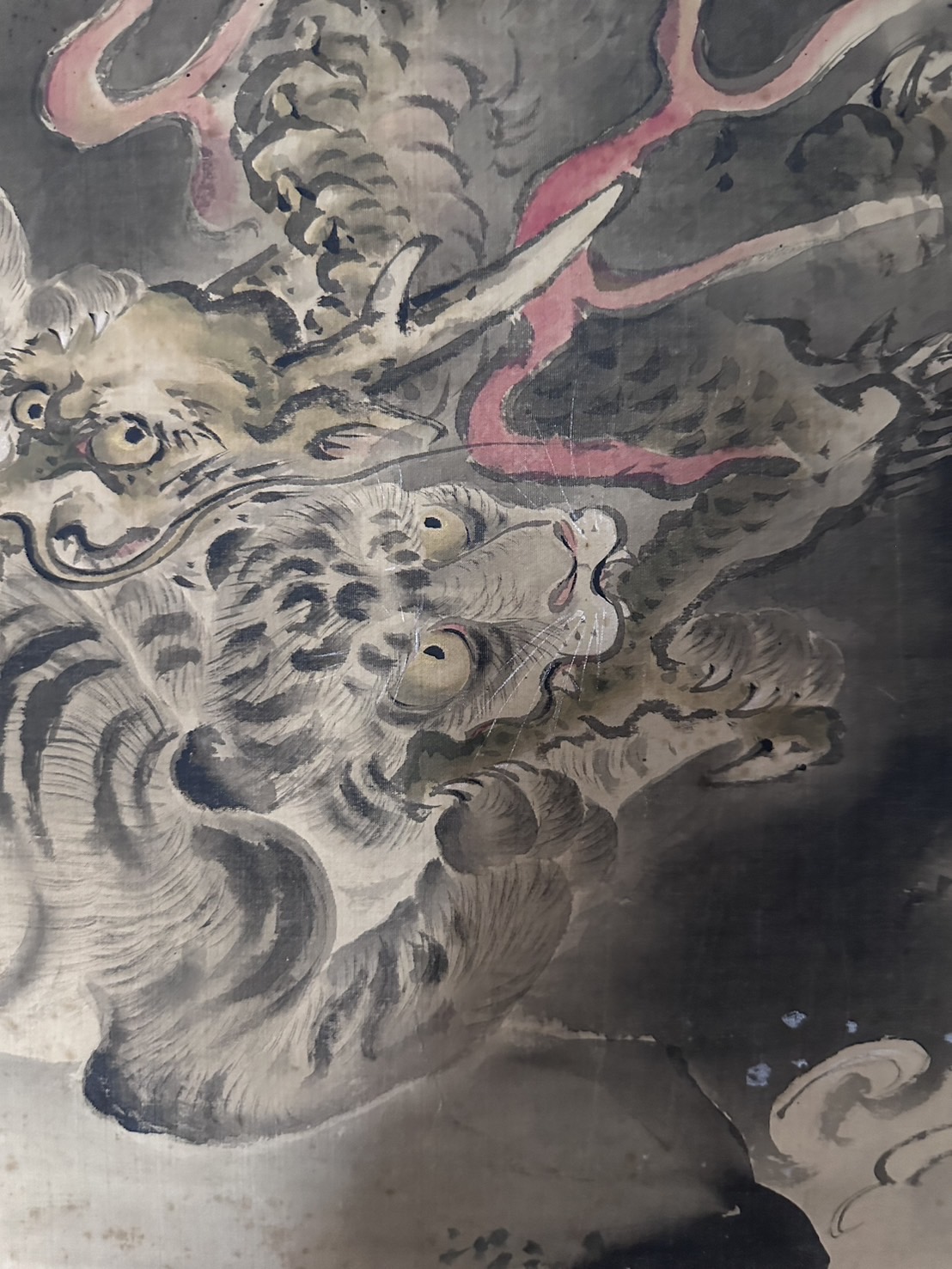
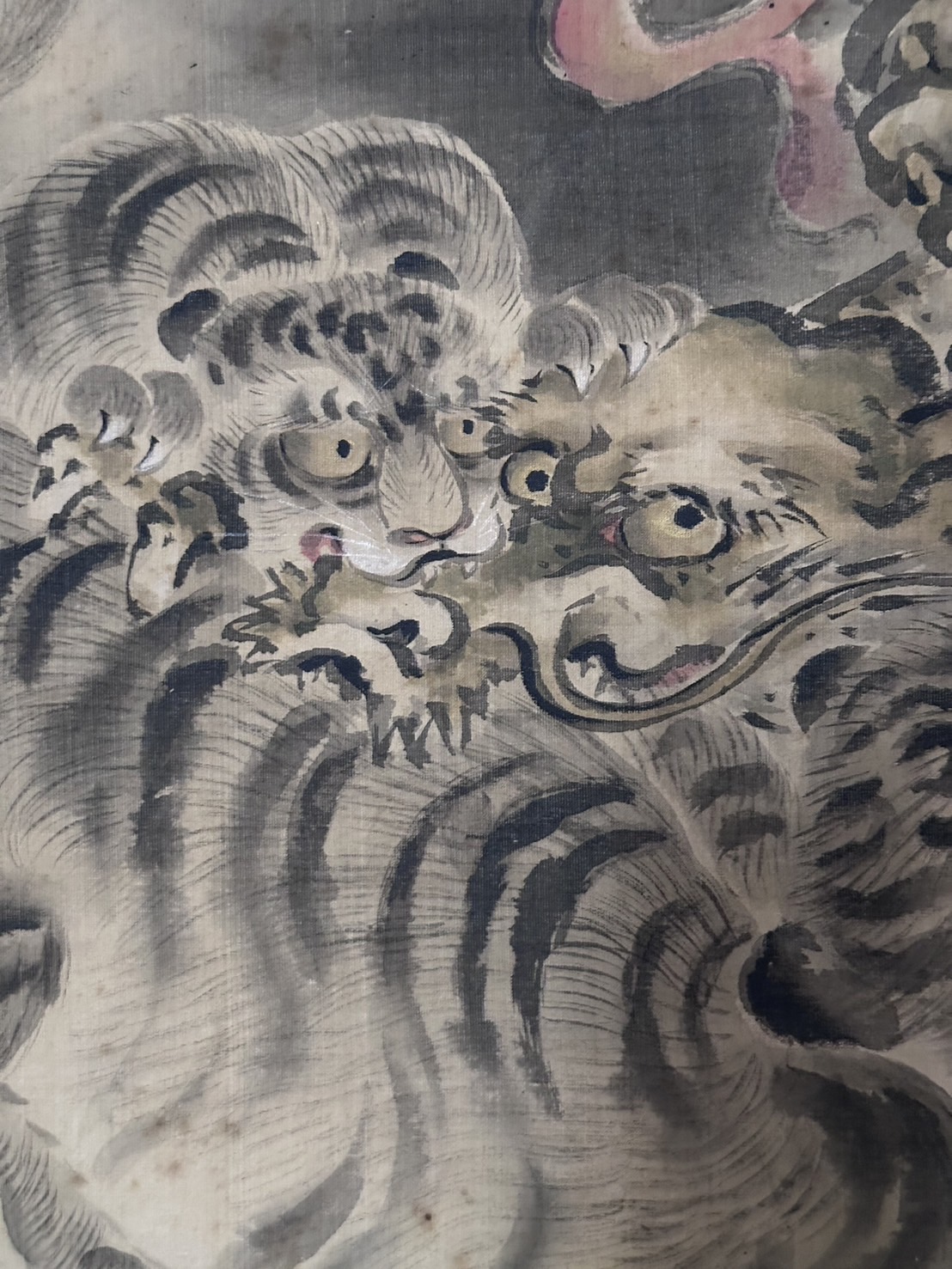
Confronted by the dragon, the two tigers bite at it. The muscles are supple and leaping, and the two pairs of eyes are shining brightly. Their figures are filled with robust vitality.
The dragon, not to be outdone, raises its fangs on the tiger’s back. Both are in the center of the image. How will the match end?
The origin of the dragon-tiger combination dates back to ancient China, where it is derived from a passage in the 8th century BC Confucian book “I Ching,” which states, “When the dragon chants at the clouds, clouds arise; when the tiger roars, winds arise.
In Japan, since the Muromachi period (1336-1573), dragons and tigers have been favored by warlords and Zen monks as symbols of valiant champions, and have been painted in many cases.
Yoshinobu’s skill can be seen in the way he maneuvered the complex composition into a coherent whole and in his skillful handling of the shades of black ink.Despite the small size of the painting, it is a masterpiece that radiates a profound presence.
Kano Yoshinobu (1747-1797) was a painter of the Kano school in the mid-Edo period. At a young age, he succeeded to the fourth generation of the Surugadai Kano family, the foremost Omote Eishi (foremost painter), and in 1785, he was appointed Hogen (the second highest rank for Buddhist priests).
As an antique, it may have some scratches or blemishes. We recommend that you visit our store to check the condition.
If you wish, we will send you detailed photos of the item, so please feel free to contact us.