Kano Nakanobu “Bouquet of Peonies and Chrysanthemums”
- Home
- Our collection
- hanging scroll
- Japanese Painting
- Kano school
- Kano Nakanobu “Bouquet of Peonies and Chrysanthemums”
Kano Nakanobu “Bouquet of Peonies and Chrysanthemums”
Enlarge image by clicking on the thumbnail.
| IItem No. | |
|---|---|
| Title | “Bouquet of Peonies and Chrysanthemums”(color on) |
| Overall size | 198.2cm × 57.3cm |
| Artwork size | 105.5cm × 43.4cm |
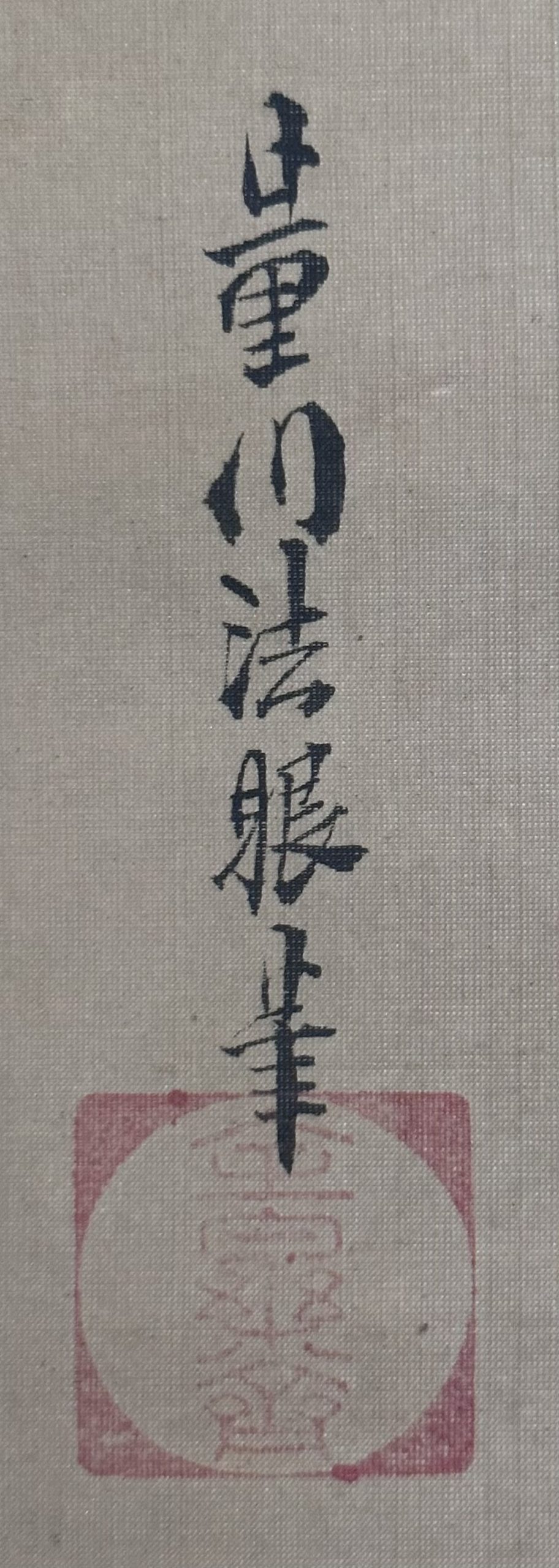
| Artist | By Kano Nakanobu |
| Date Created | After 1844 |
| Price | ¥1,200,000 |
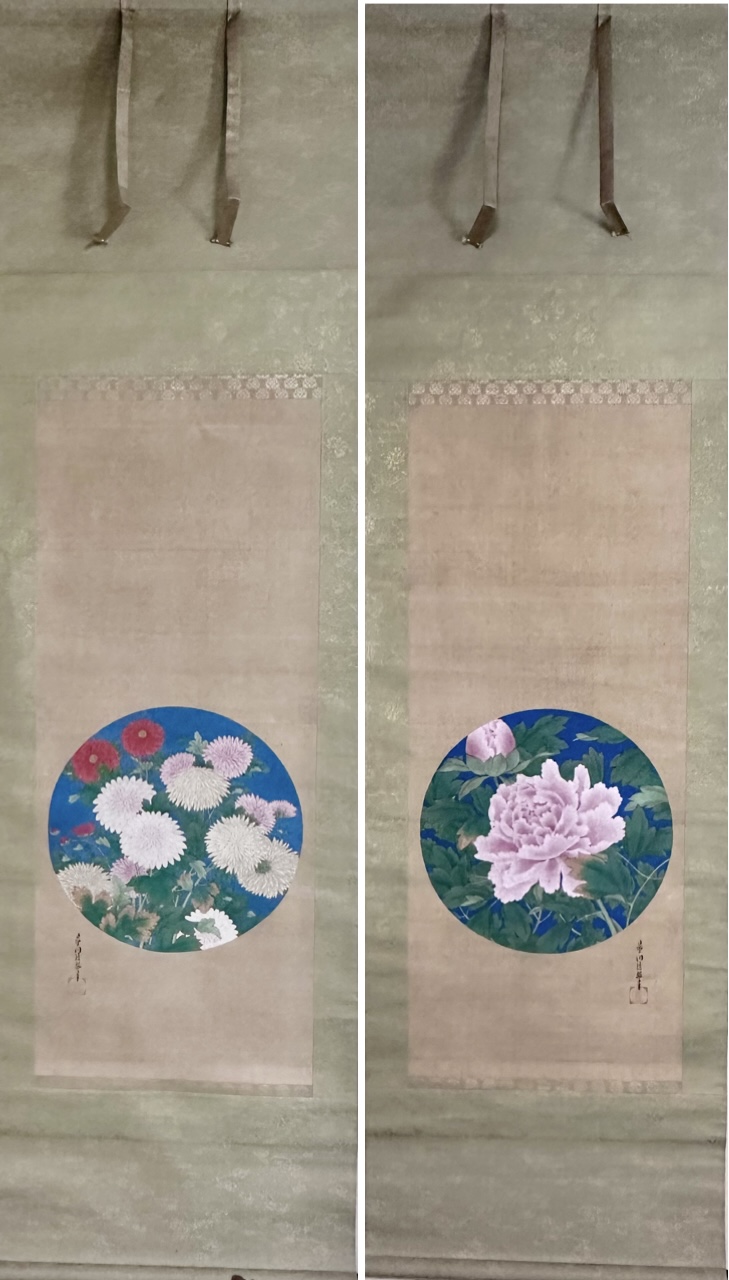
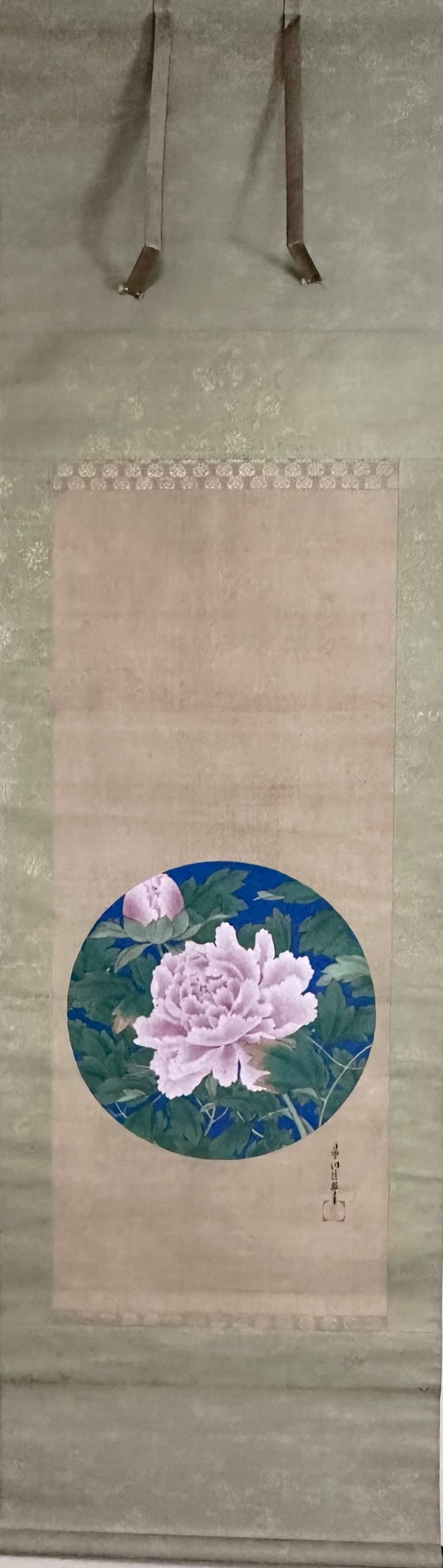
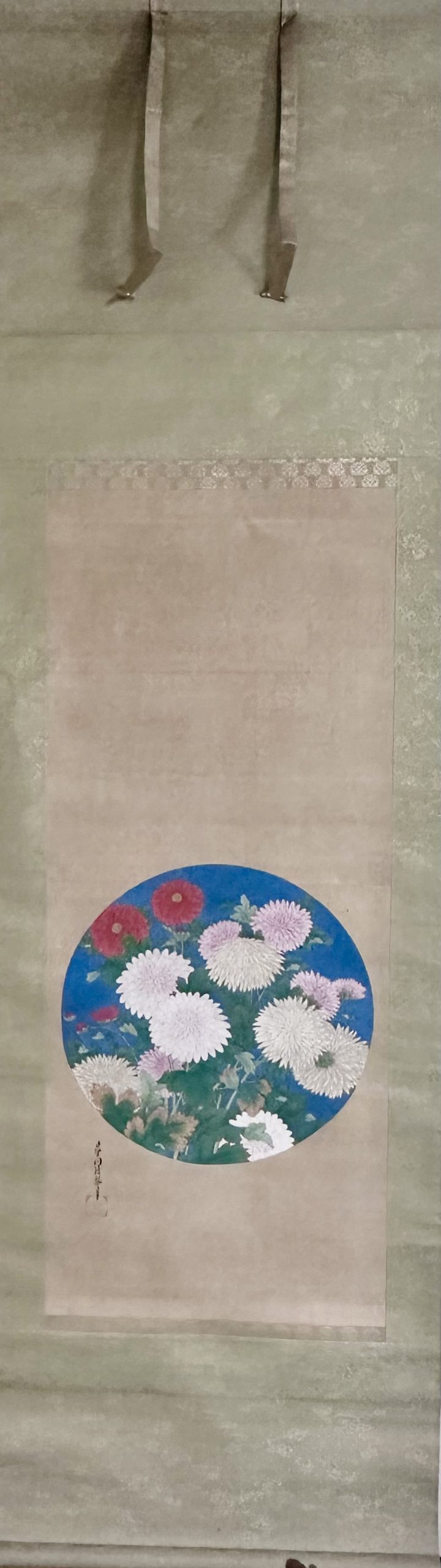
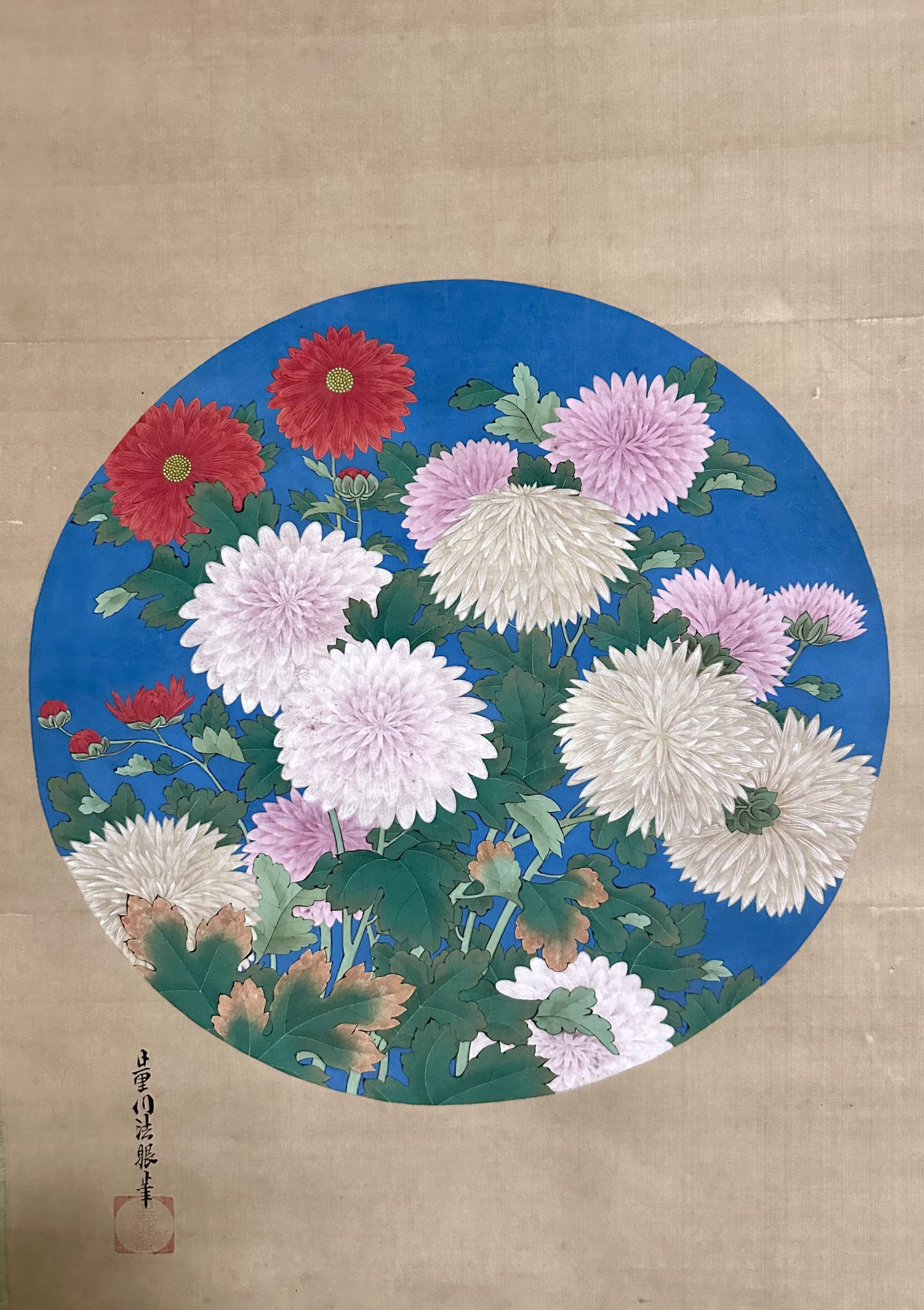
This pair of hanging scrolls depicts peonies representing wealth and chrysanthemums representing longevity.
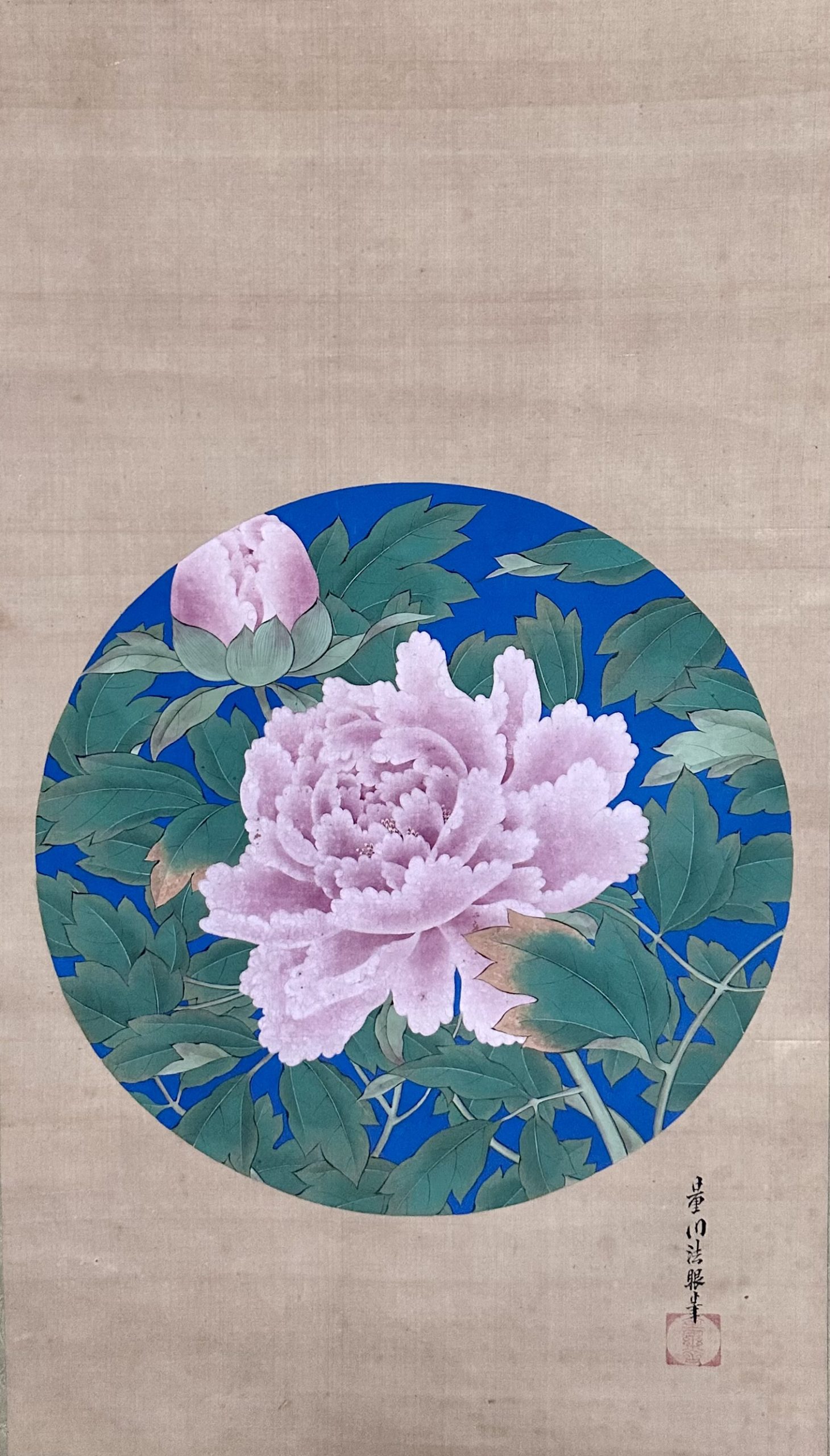
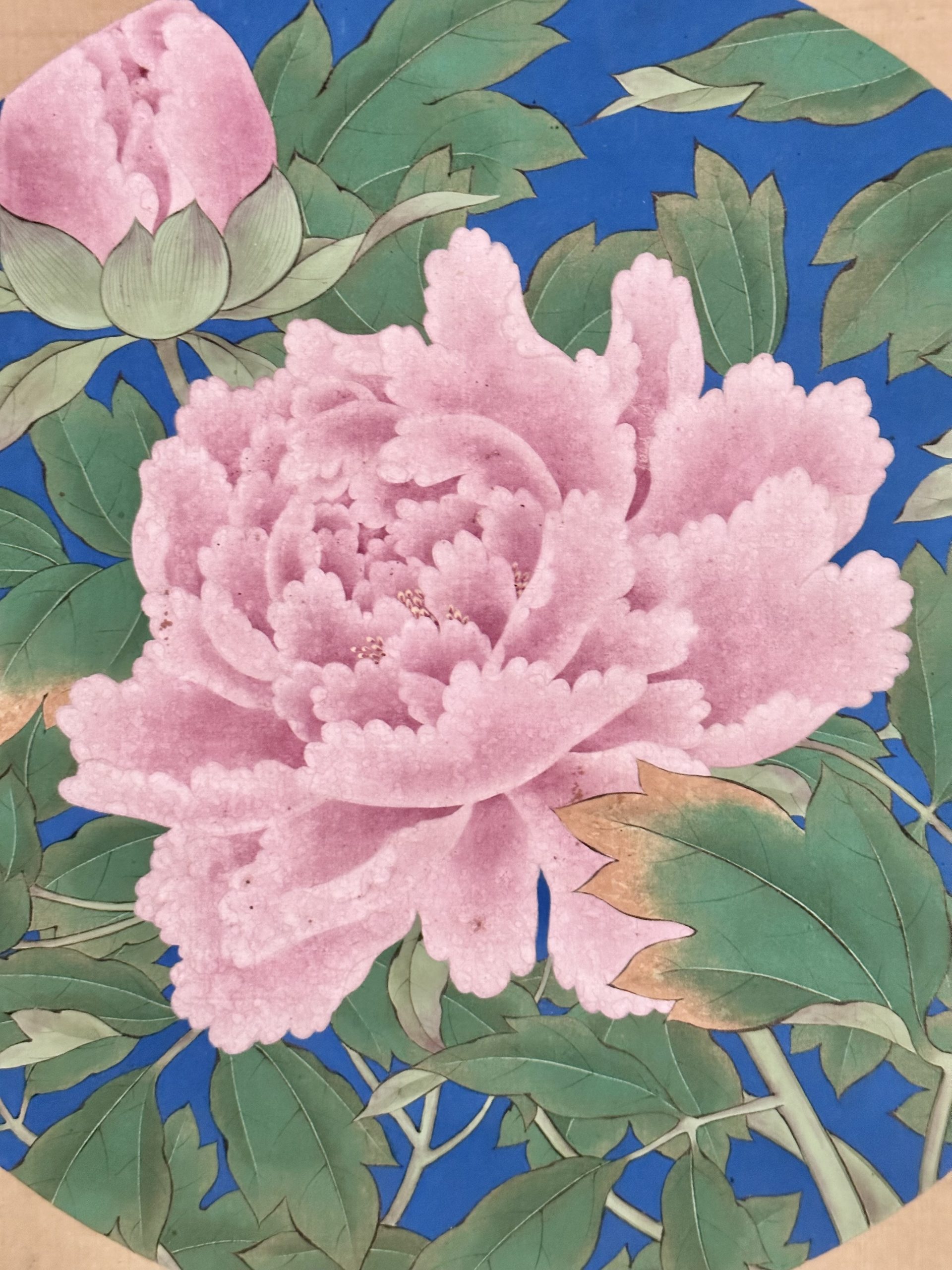
The peonies in light pink are not outlined prominently, but are instead gradated in peach to create a three-dimensional effect. The delicate coloring skillfully reproduces the soft texture of the petals as they shine through the light. The detailed depiction of the stamen, which peeks out slightly from the center of the petals, is also astonishing.
The exquisite and fragrant elegance of peonies, also known as the “king of the hundred flowers” for their luxurious and graceful appearance, is fully expressed on the painted silk.
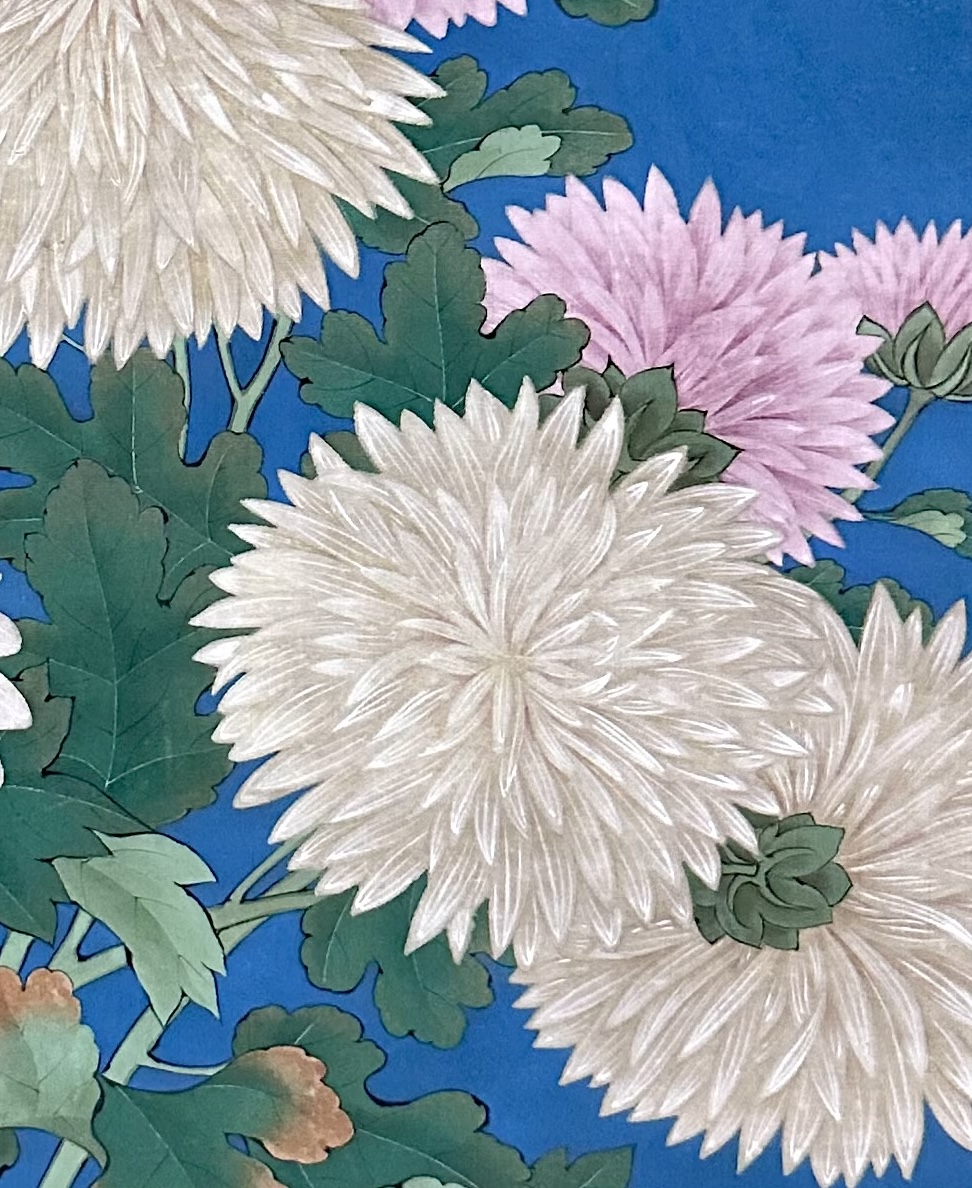
What is noteworthy about the chrysanthemums is that each petal and each leaf has a living expression in the painting.
For example, at first glance, the white chrysanthemum petals in the center right of the screen appear to radiate in a regular pattern. However, when you look closer, you will notice that each petal has a detailed expression, such as a slightly twisted petal that overlaps the one next to it, or a petal that is turned up to reveal its reverse side.
The same is true of the leaves: fresh and soft young leaves, brown and withered at the tips, and the texture of each leaf is skillfully depicted in different ways.
This painting is enchantingly beautiful even when viewed from afar, but when observed up close, one realizes that the beauty of this work is backed up by the artist’s solid descriptive ability.
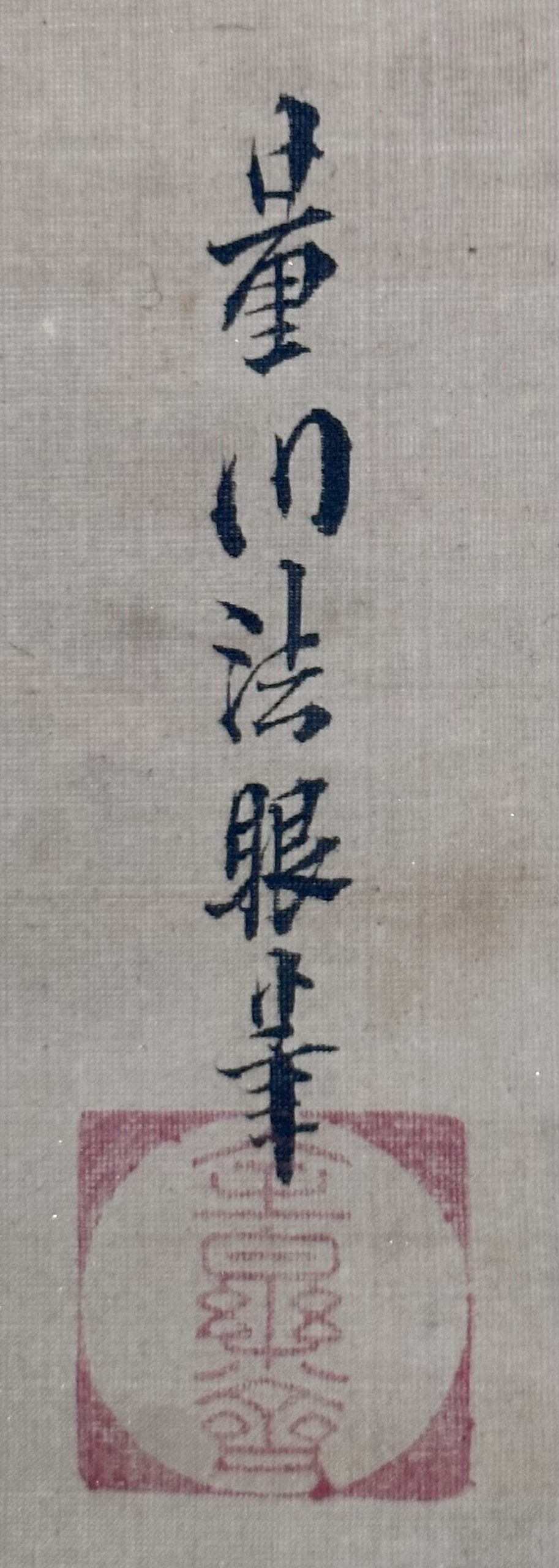
Kano Nakanobu (1811-1871) was the fifth son of Kano Isenin Eishin (1775-1828), who led the Edo art world at the end of the Edo period. He later succeeded to the eighth generation of the Oku-eji Hamacho Kano family, and was appointed Hogen in 1844.
As an antique, it may have some scratches or blemishes. We recommend that you visit our store to check the condition.
If you wish, we will send you detailed photos of the item, so please feel free to contact us.