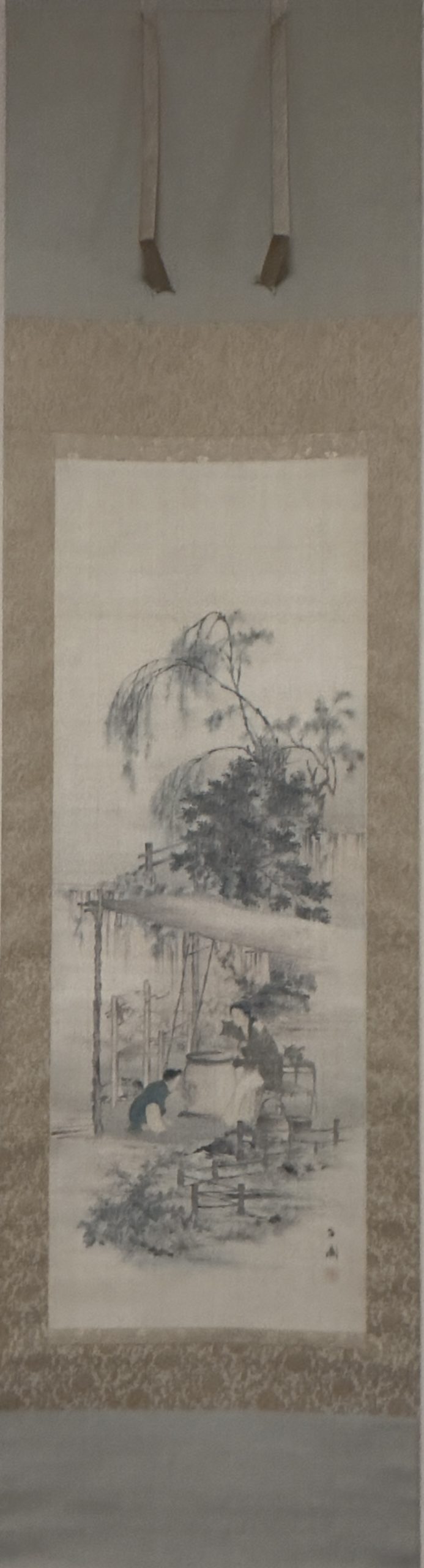
Nishiyama Hoen “Two Figures Spinning the Yarn”
- Home
- Our collection
- hanging scroll
- Japanese Painting
- Maruyama-Shijo School
- Nishiyama Hoen “Two Figures Spinning the Yarn”
Nishiyama Hoen “Two Figures Spinning the Yarn”
Enlarge image by clicking on the thumbnail.
| IItem No. | |
|---|---|
| Title | “Two Figures Spinning the Yarn”/color on silk |
| Overall size | 206.5cm×54.0cm |
| Artwork size | 101.5cm×40.0cm |
| Artist | By Nishiyama Hoen (1804-1867) |
| Date Created | 1804-1867 |
| Price | ¥600,000(excluding tax) |
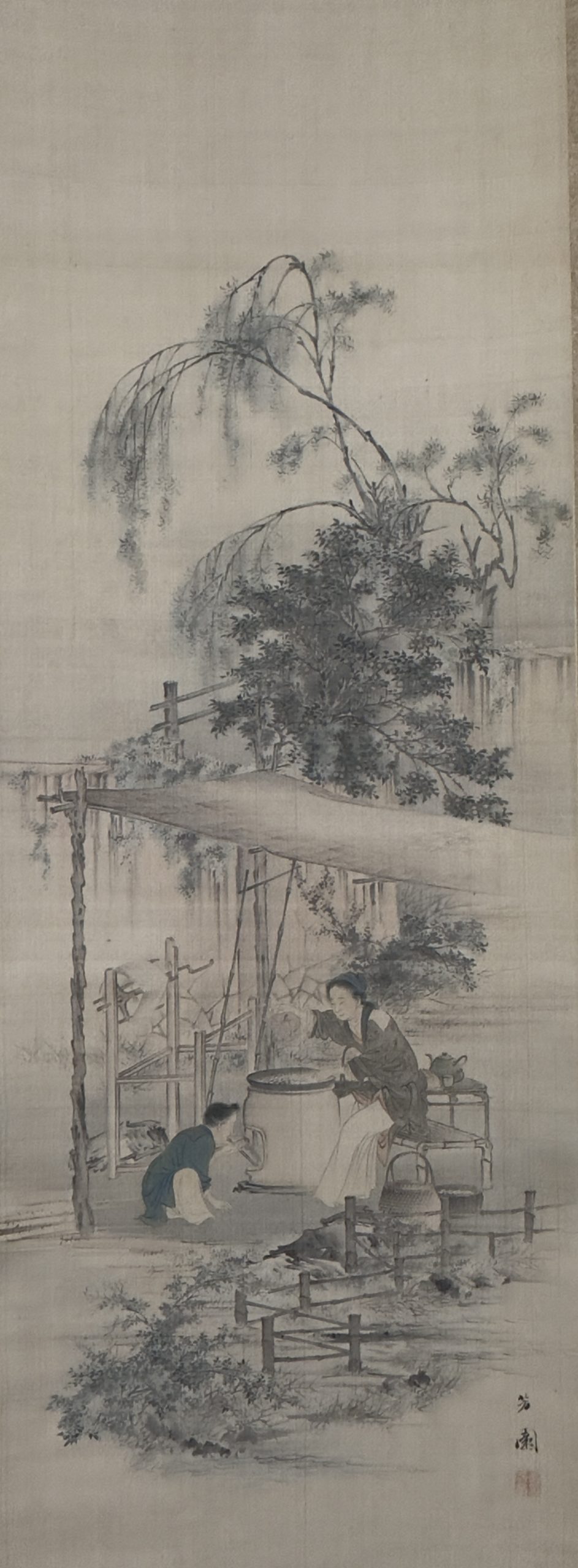
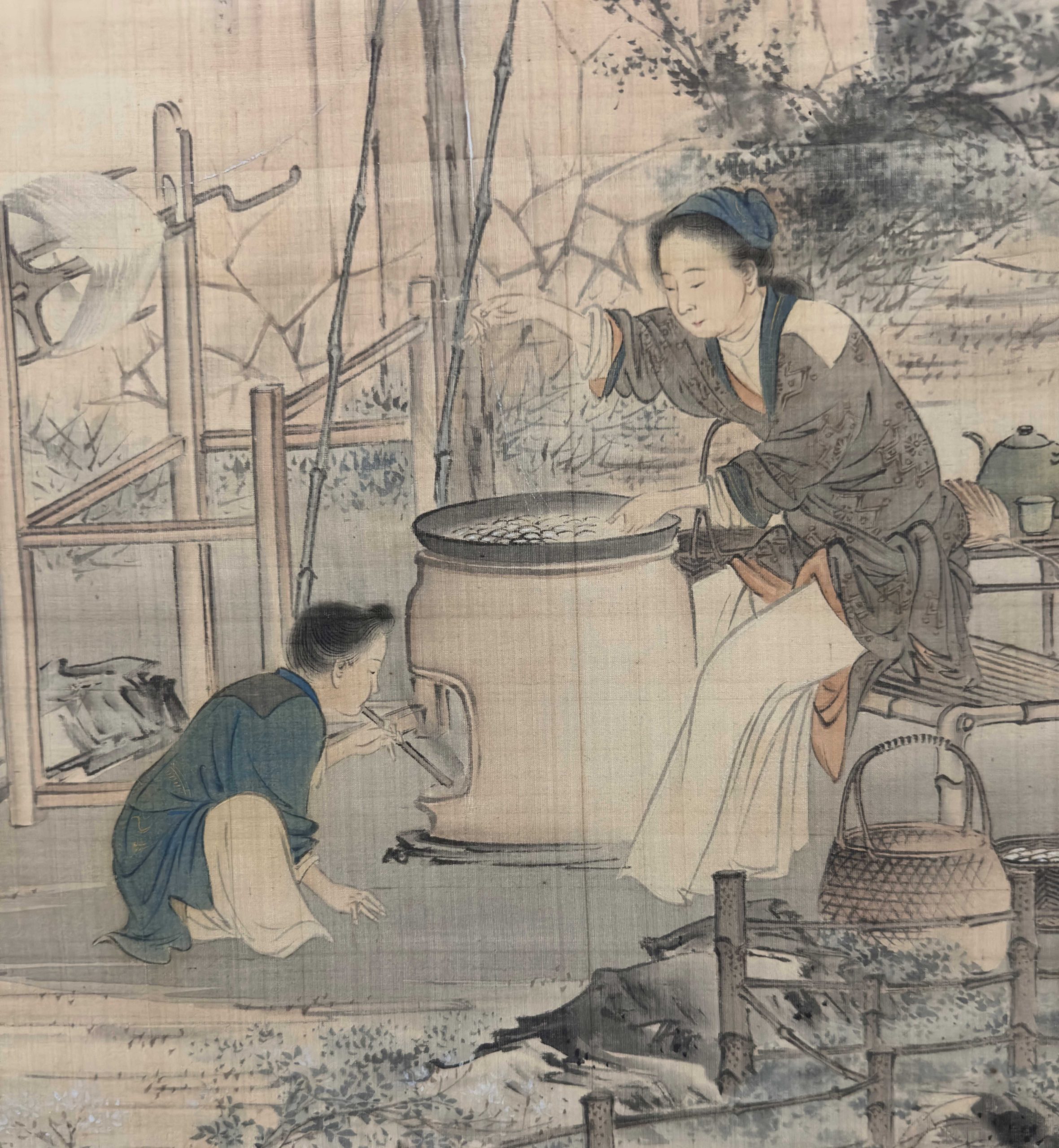
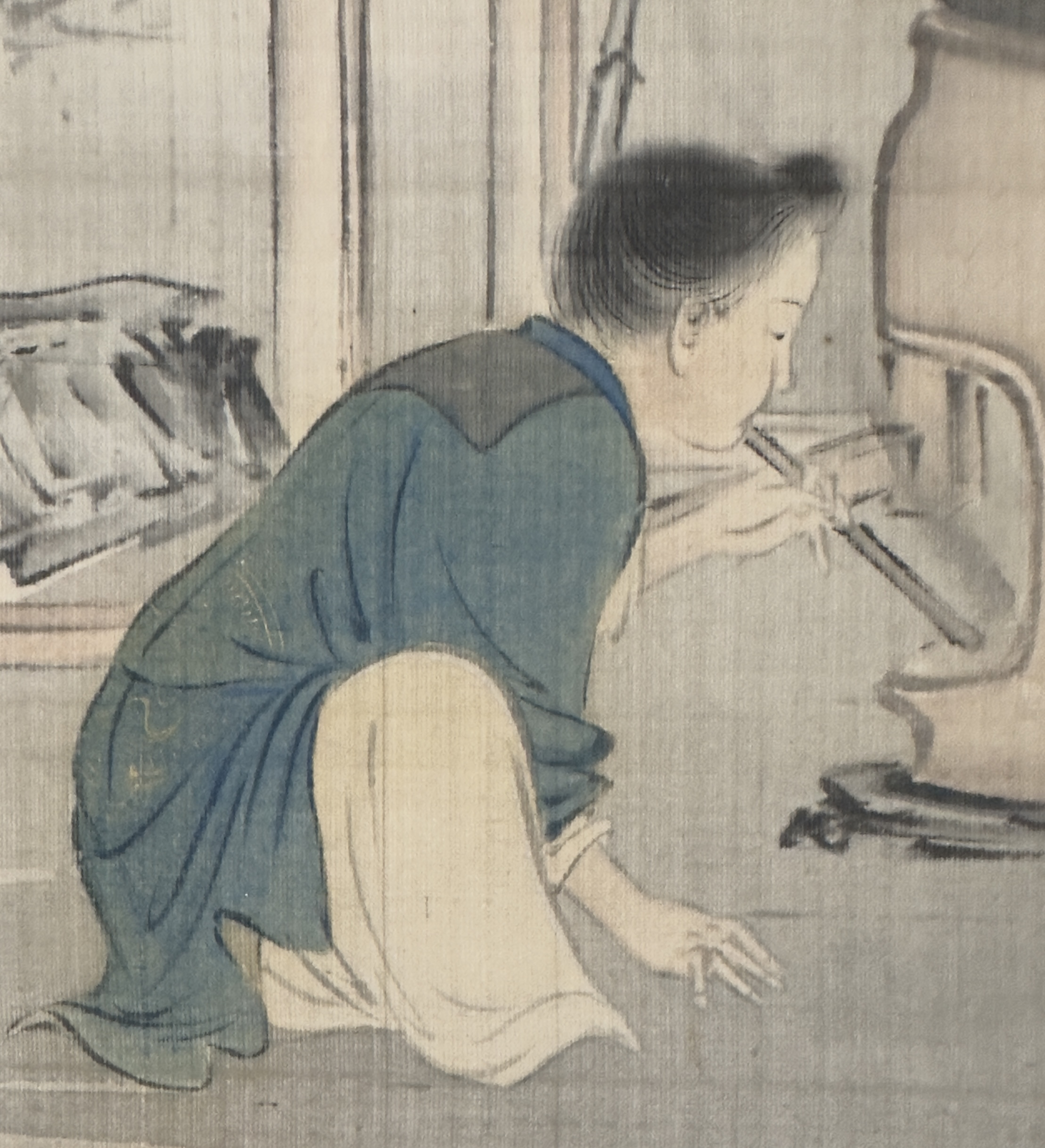
A Chinese-style woman and a boy are single-mindedly boiling cocoons and spinning silk thread.
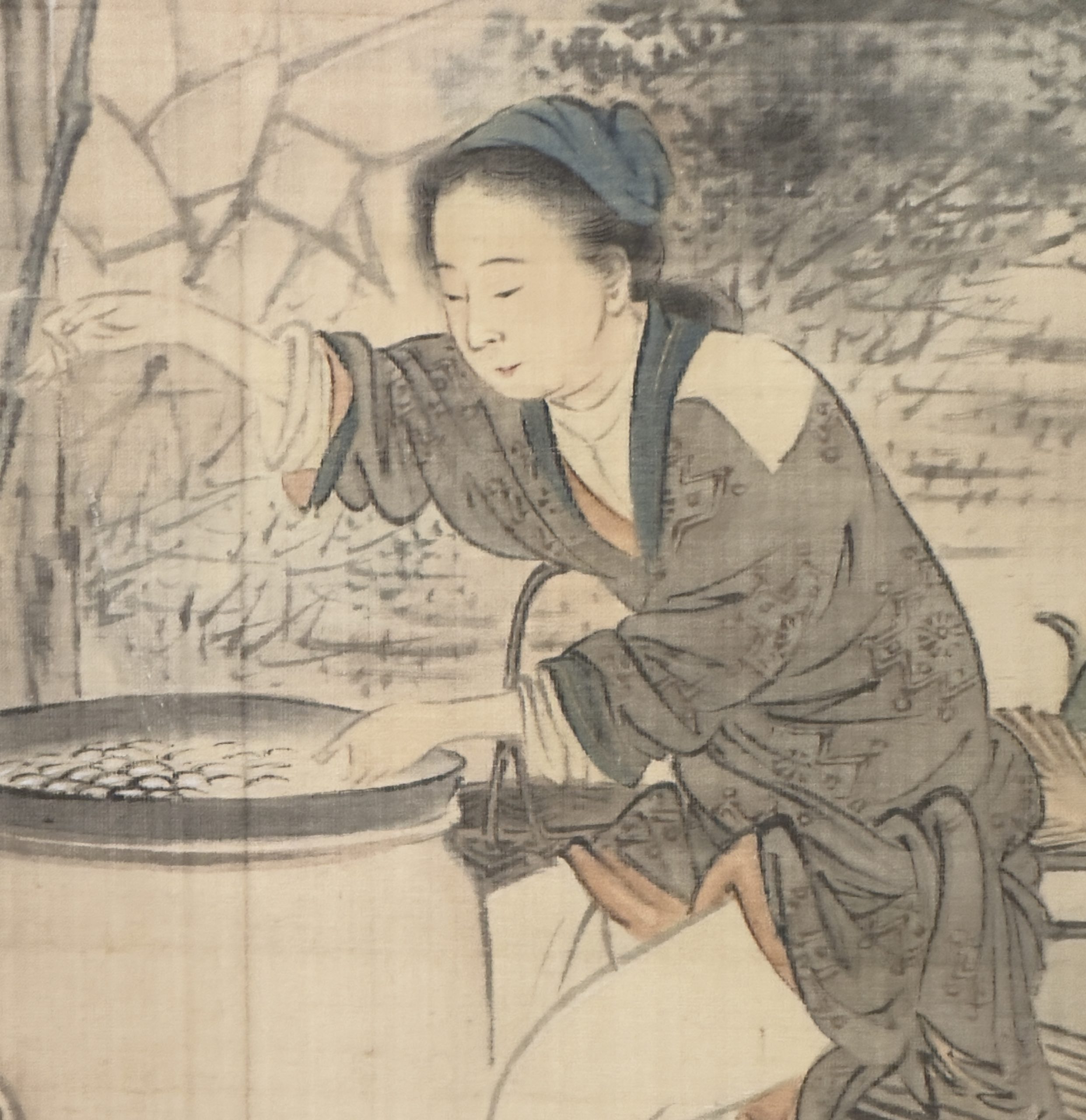
The woman is depicted with soft and delicate brush strokes, from the contours of her face to the tips of her fingers. Furthermore, a closer look at the woman’s face reveals that each strand of her hair is finished with fine strokes.
Note also the woman’s fingertips. You can see white silk threads that may or may not be faintly visible on the woman’s thin fingertips. The brand-new silk threads are gathered into the spinning wheel on the left side of the screen by the woman’s skillful technique. By using only a small amount of gofun, the artist has beautifully expressed the fineness of the silk threads, which look as if they might break at any moment.
The boy’s robe, which is hard at work blowing air through a fireblower, looks simple at first glance, but there is some sort of pattern painted in gold on the back of it. The painter Nishiyama Hoen’s meticulous attention to detail can be seen.
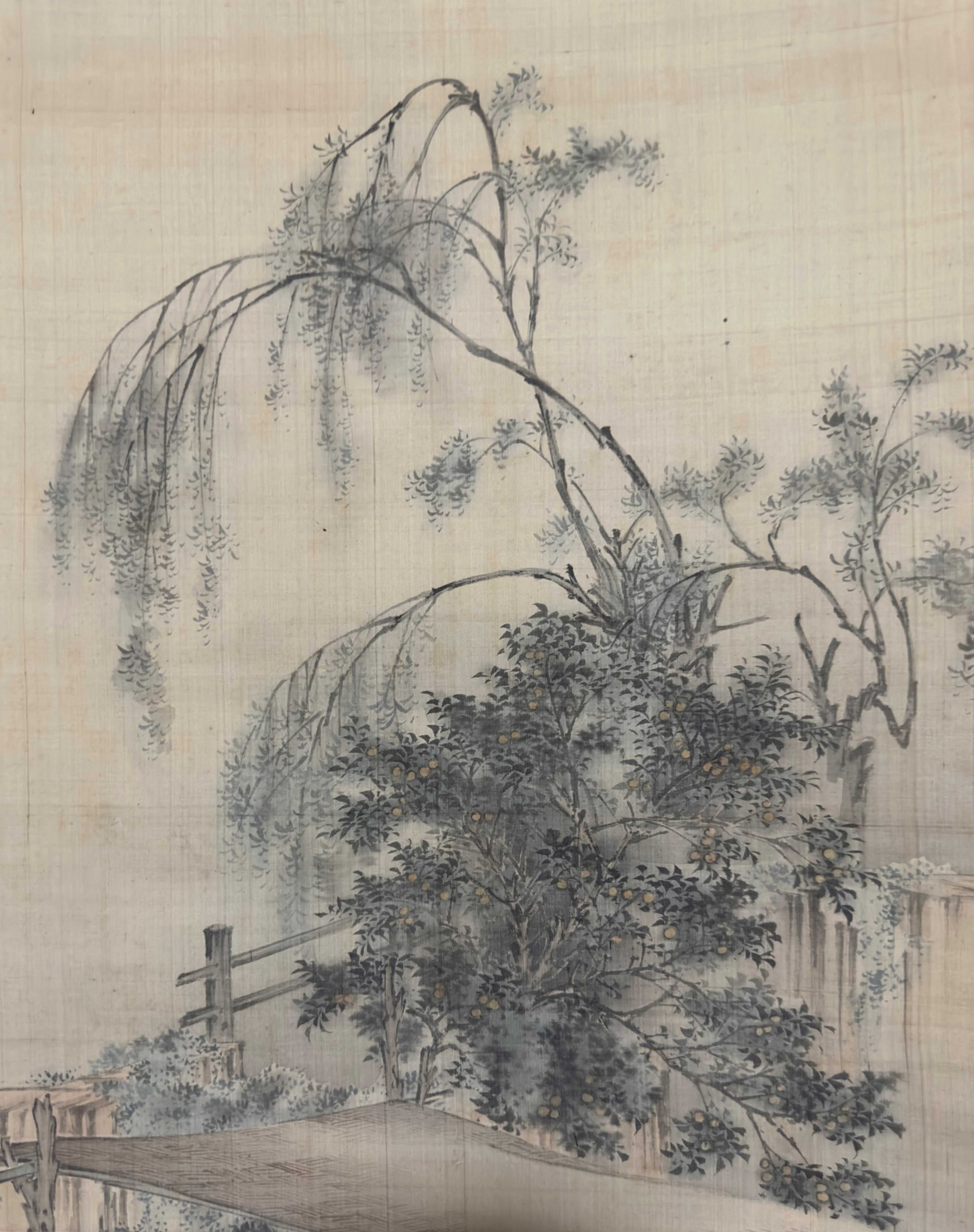
If you look at the plants and trees in the foreground and background of the painting, they are as accurate as if they were real. Up close, you can also see a number of very detailed dots.
Each motif has been painted carefully over a long period of time, and each time you see this work again and again, you will discover something new about it.
Nishiyama Hoen (1804-1867) is known as the person who studied painting under Matsumura Keibun(1779-1843) of the Shijo School and later spread the Shijo School in Osaka.
An example of a work very similar to this one is “Silkworms” (Kansai University Museum) by his son, Kanei Nishiyama. The two works are perfectly matched in every detail, not only in composition, but also in the way the figures and scenery are depicted, indicating that Kanei respected his father and tried to make his painting techniques his own. They are a glimpse of the strong bond between father and son as well as master and disciple.
As an antique, it may have some scratches or blemishes. We recommend that you visit our store to check the condition.
If you wish, we will send you detailed photos of the item, so please feel free to contact us.