Suzuki Kiitu “Sei Shonagon”
- Home
- Our collection
- hanging scroll
- Japanese Painting
- Rimpa school
- Suzuki Kiitu “Sei Shonagon”
Suzuki Kiitu “Sei Shonagon”
| IItem No. | |
|---|---|
| Title | “Sei Shonagon ”(color on silk) |
| Overall size | 150.0cm×43.0cm |
| Artwork size | 72.0cm×30.8cm |
| Artist | Suzuki Kiitsu(1795〜1858) |
| Date Created | 19th century |
| Price | ¥1,000,000(excluding tax) |
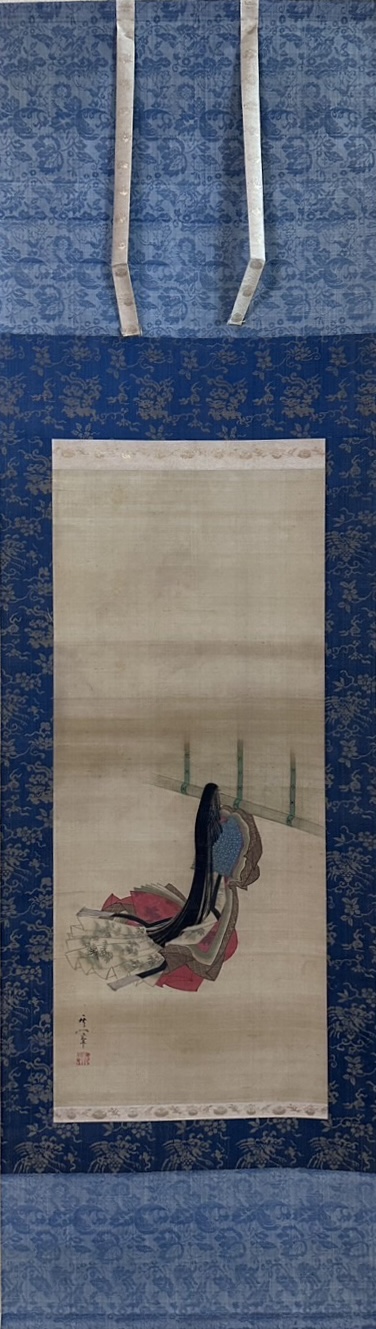
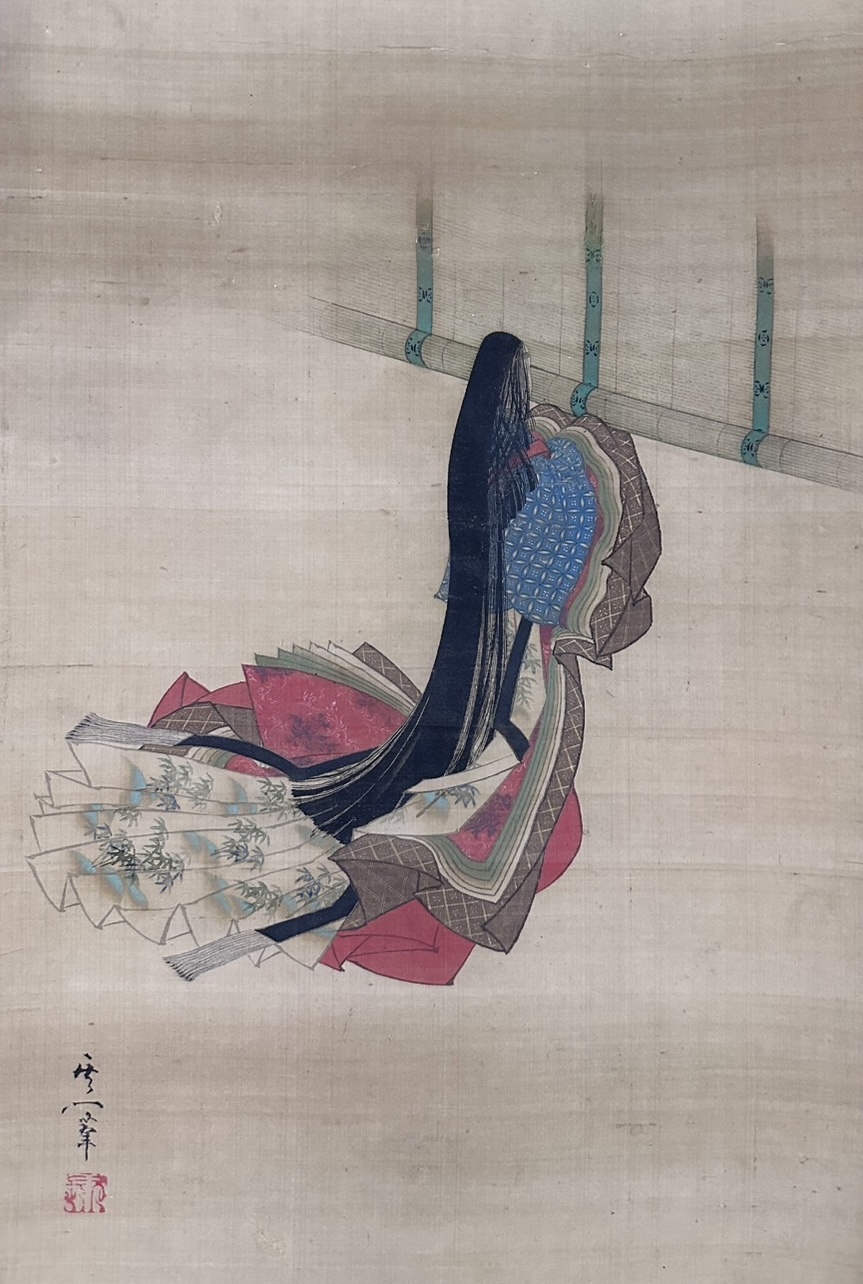
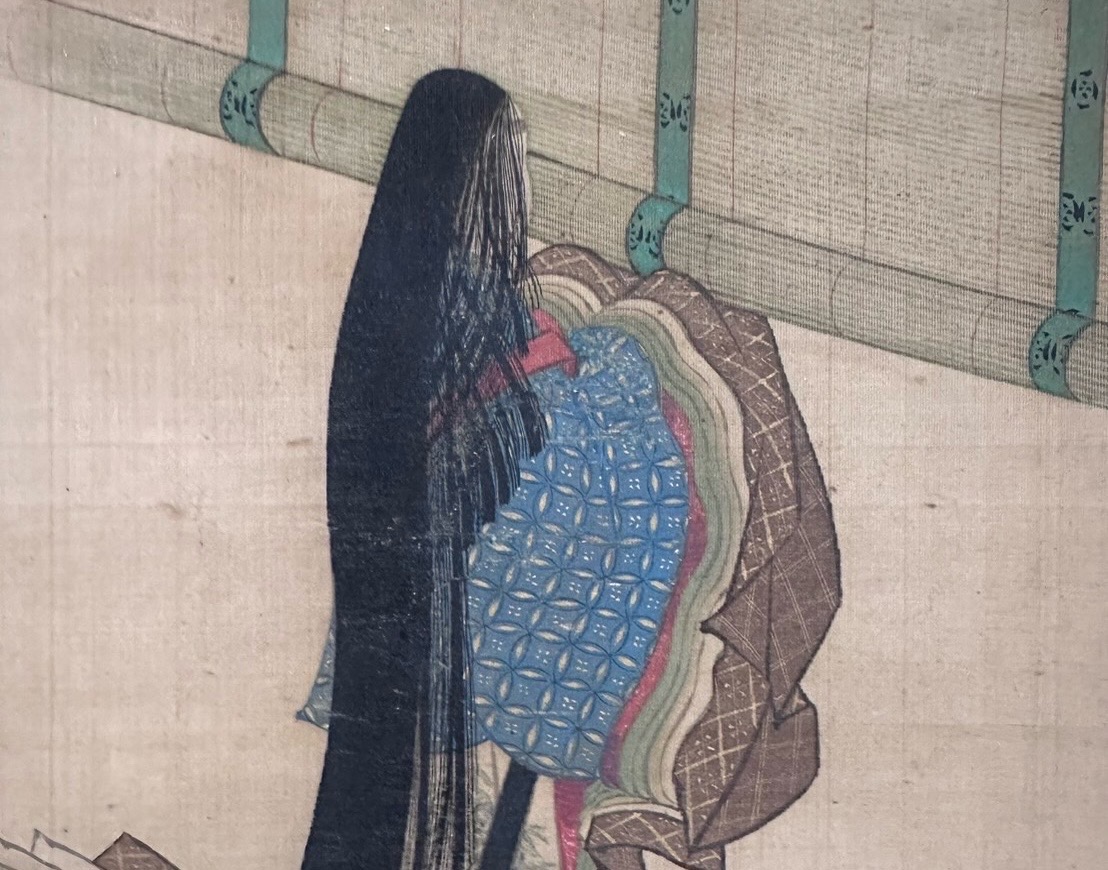
A woman gently lifts the curtain and peers out. She is Sei Shonagon, a brilliant woman of the mid-Heian period who served Emperor Ichijo’s wife, Teishi, and later wrote the essay “The Pillow Book”.
The subject of this work is the episode of “Snow on the Xianglu Peak” described in the 299th paragraph of “The Pillow Book. In a Chinese poem by Bai Juyi, one of the most famous poets of the Middle Tang Dynasty, there is a passage that reads, “The snow on Xianglu Peak is seen through a bamboo screen.”
Based on this, Teishi asked Sei Shonagon, “How is the snow on the Xianglu Peak?” For female aristocrats of the time, Chinese poetry was an essential part of their education. Teishi was probably trying to test Sei Shonagon’s knowledge.
Sei Shonagon responded by raising the bamboo screen to reveal the snow. Teishi was said to have laughed with satisfaction at Sei Shonagon’s cleverness in recreating the world of the poem before her eyes, rather than merely reciting the rest of the poem.
Kiitsu’s brush delicately and fantastically depicts such a scene in the inner court in winter. Although the figure of Sei Shonagon holding up a bamboo screen is often depicted in paintings, we can sense Kiitsu ‘s aesthetic sense in the way he dared to depict her from the rear without showing her face.
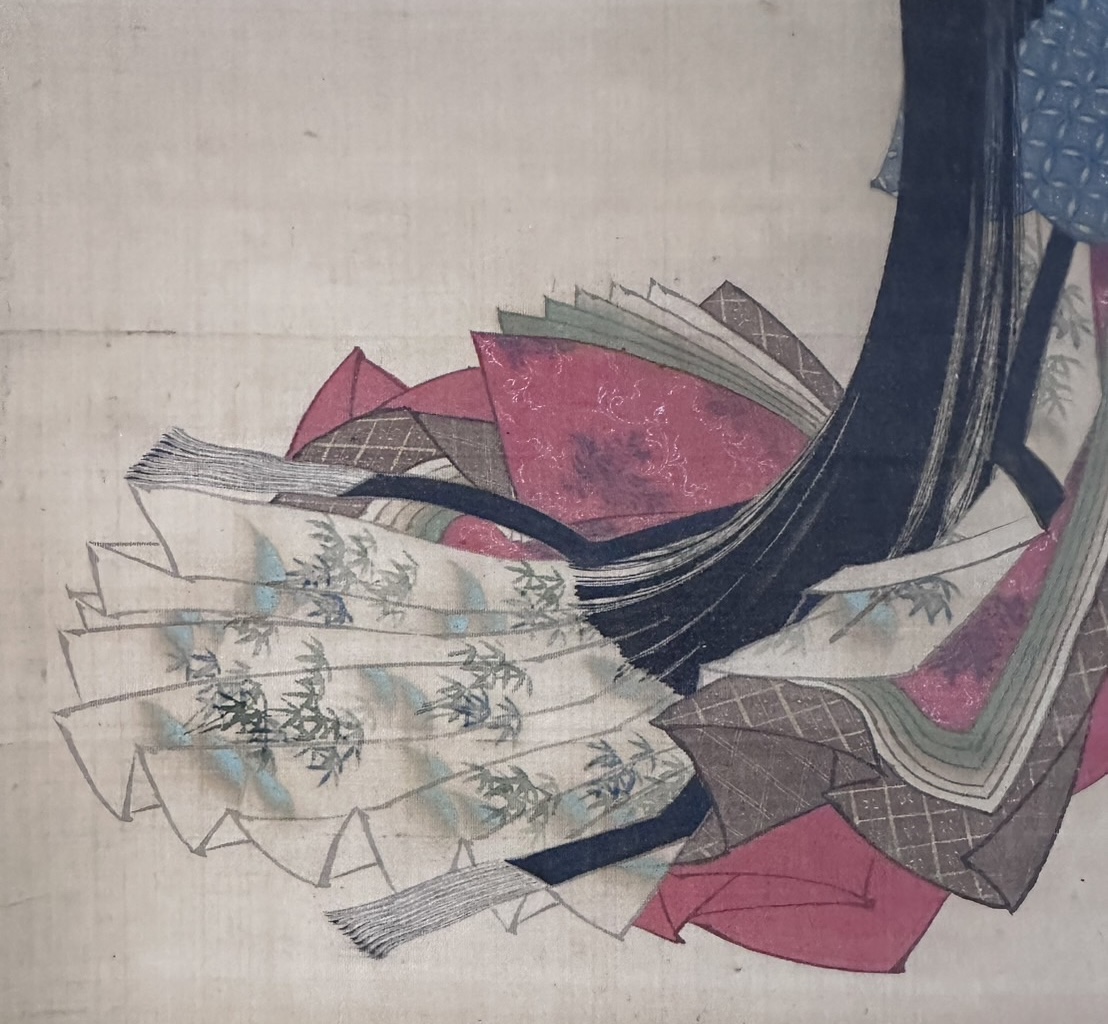
Another charm of this work is the elaborately painted costume pattern. The bamboo grass pattern on the uchigoromo (robe), which is sprinkled with greenish-blue, adds a sense of freshness to the painting. Bamboos do not lose their green color in winter, so kimonos with bamboo grass designs were popular from winter to spring.
This is an excellent piece with attention paid to every detail.
______________________
Suzuki Kiitsu(1795-1858) was a painter of the Edo Rimpa school. A disciple of Sakai Hoitsu (1761-1829), he is known as a substantial successor. In recent years, he has been the focus of increasing attention, with major retrospective exhibitions being held, and he is now recognized as a Rimpa painter along with Sotatsu, Korin, and Hoitsu
As an antique, it may have some scratches or blemishes. We recommend that you visit our store to check the condition.
If you wish, we will send you detailed photos of the item, so please feel free to contact us.