Suzuki Kiitsu “Iris”
- Home
- Our collection
- hanging scroll
- Japanese Painting
- Rimpa school
- Suzuki Kiitsu “Iris”
Suzuki Kiitsu “Iris”
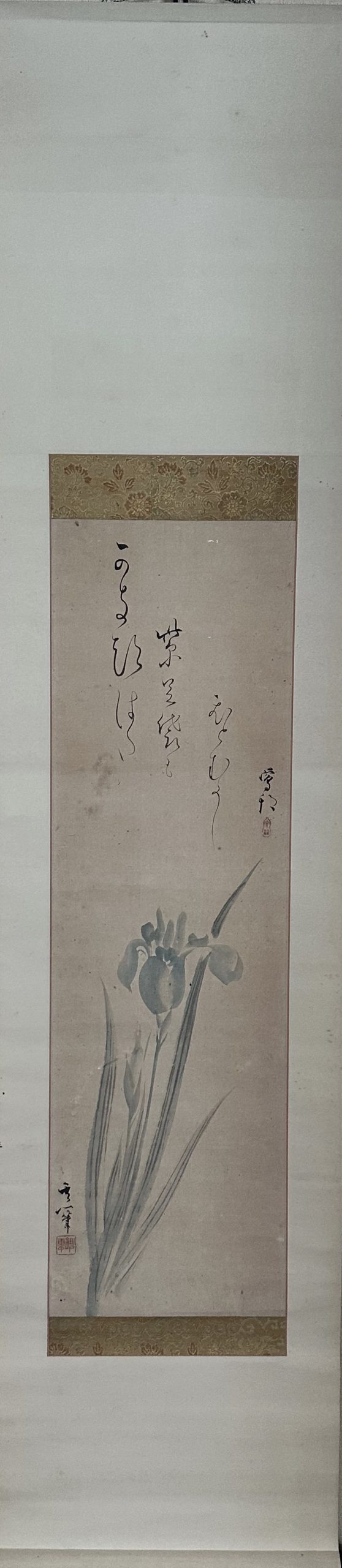
Enlarge image by clicking on the thumbnail.
| IItem No. | |
|---|---|
| Title | “Iris” |
| Overall size | |
| Artwork size | |
| Artist | By Suzuki Kiitsu (1796-1858) |
| Date Created | 1796〜1828 |
| Price | ¥1,500,000(excluding tax) |
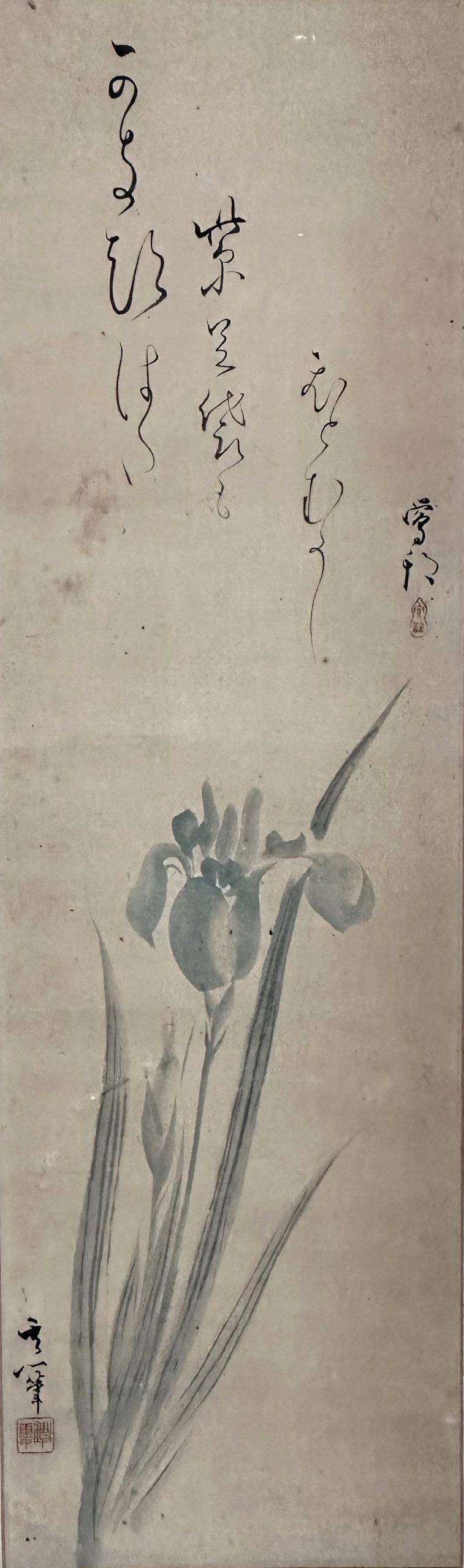
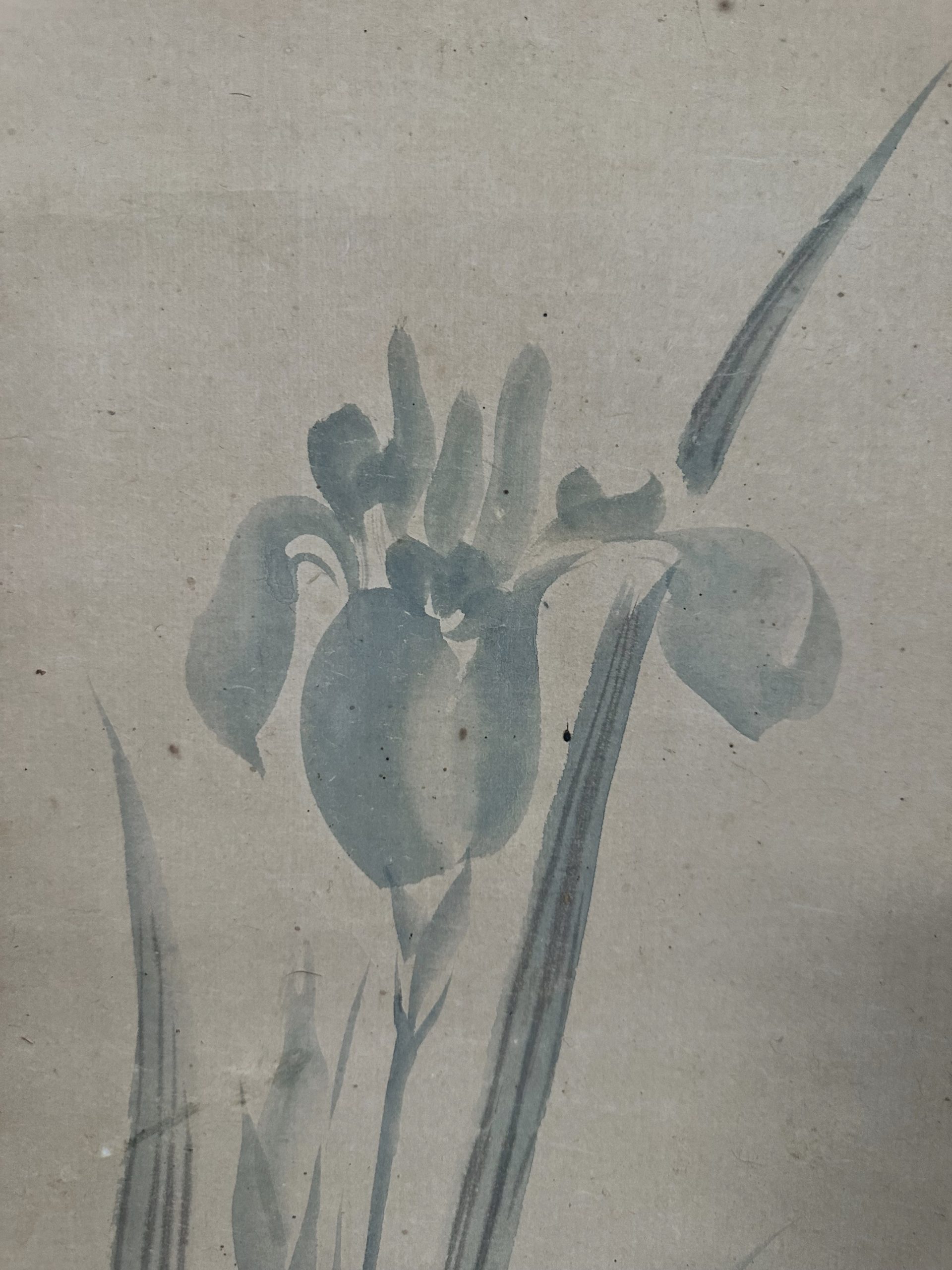
The combination of a single iris flower and an inscription is truly simple. The artist of this work is Suzuki Kiitsu (1796-1858), a leading painter of the Edo Rimpa school.
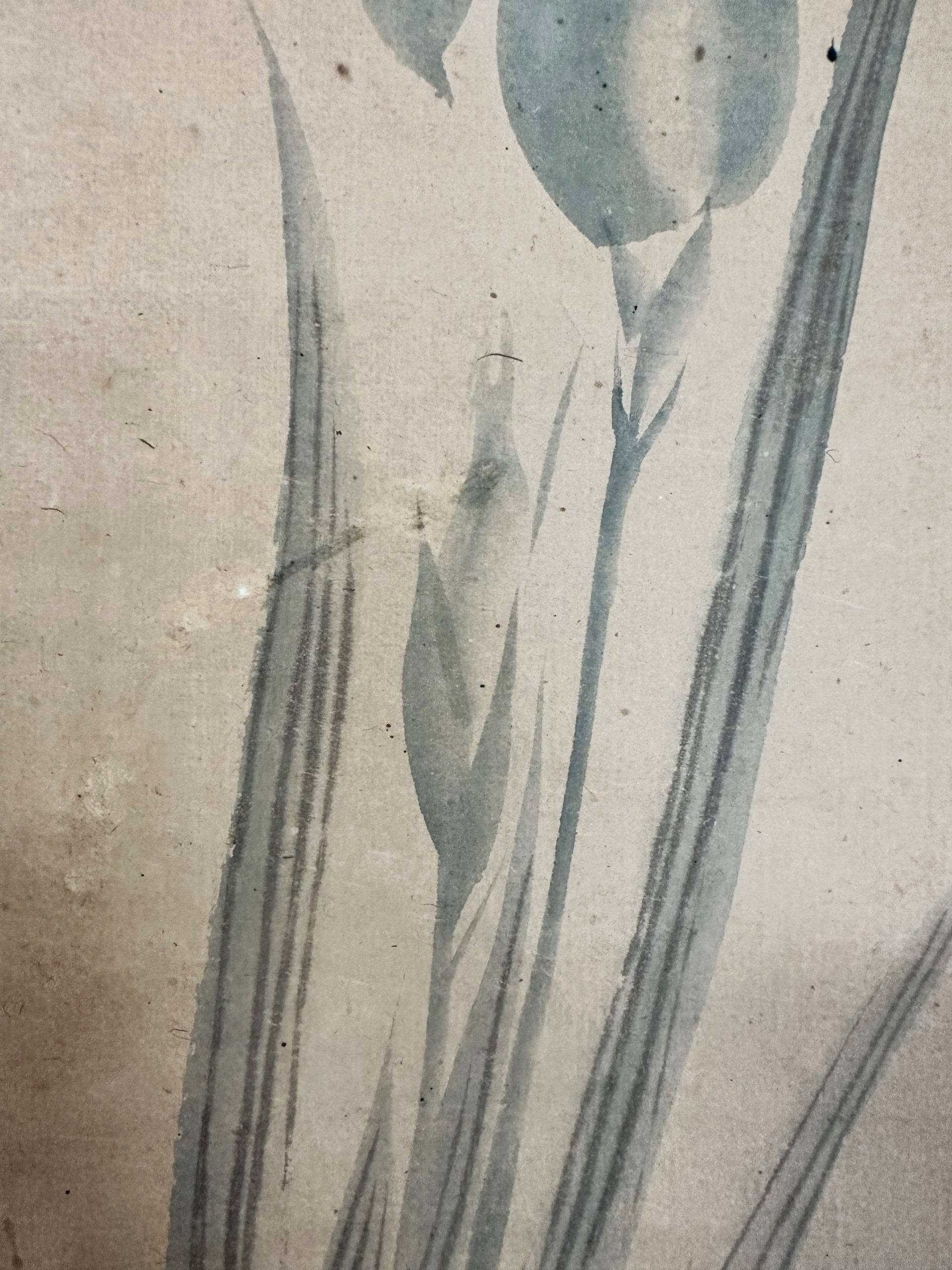
He used watery paints, and the entire work is done in light colors. The number of brush strokes is small, indicating that the artist painted quickly on the spot without spending much time. However, Kiitsu, who is a master painter, accurately captured the shape of the iris and depicted it beautifully even with a small number of strokes.
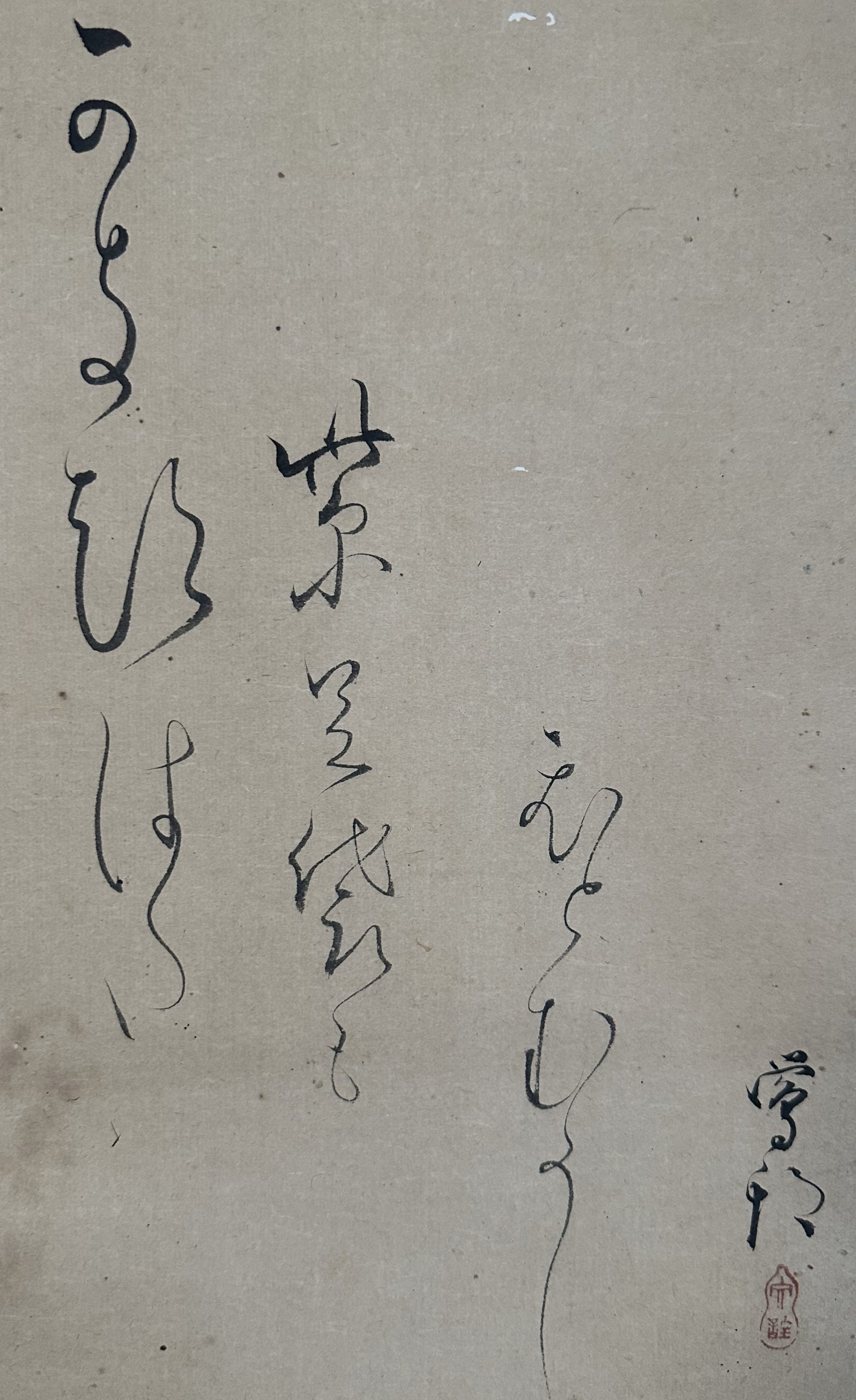
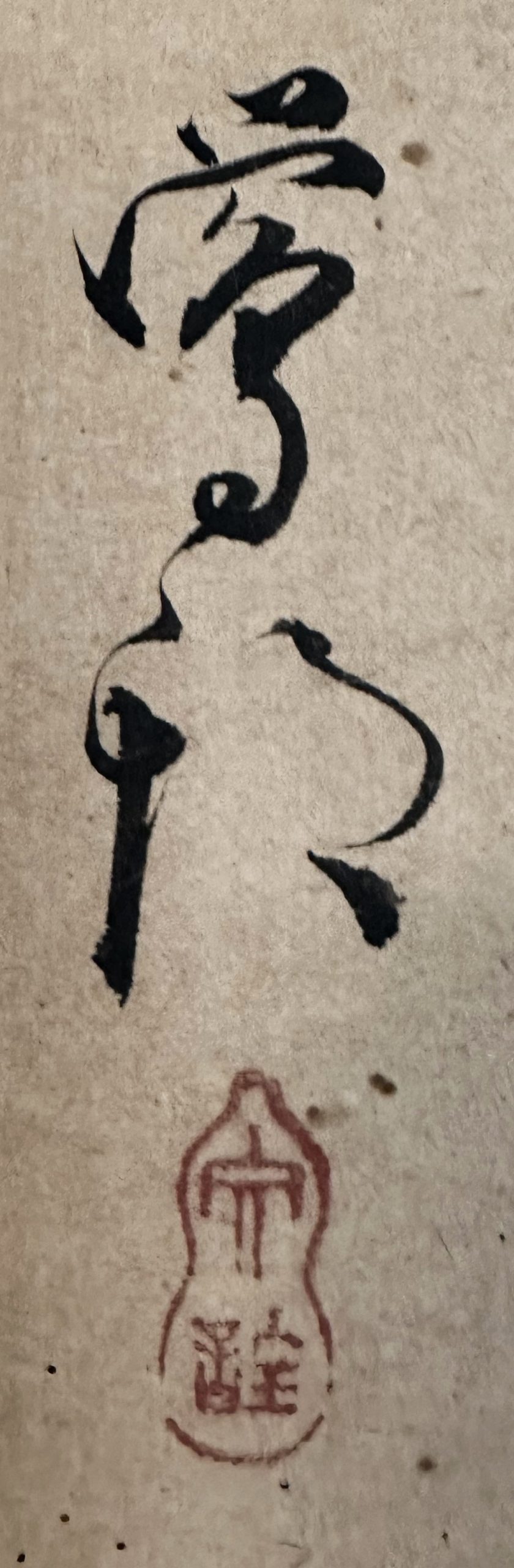
The phrase “かきつばた 紫足袋も ひとむかし 鴬村(Kakitsubata murasaki-tabi mo hitomukashi oson)” is written and stamped with a red gourd-shaped seal “文詮”. “鶯村” is one of the names of Sakai Hoitsu (1761-1828), who was the teacher of Kiitsu. Therefore, this work is a collaboration between master and disciple, with the admiration of Hoitsu and the painting of Kiitsu.
It is thought that this work was created in the later years of Hoitsu’s life, when he retired to “雨華庵” in Negishi, Shitaya. This work is a retrospective of the tumultuous life that Hoitsu and his beloved pupils left behind in the beautiful hermitage where nightingales used to sing.
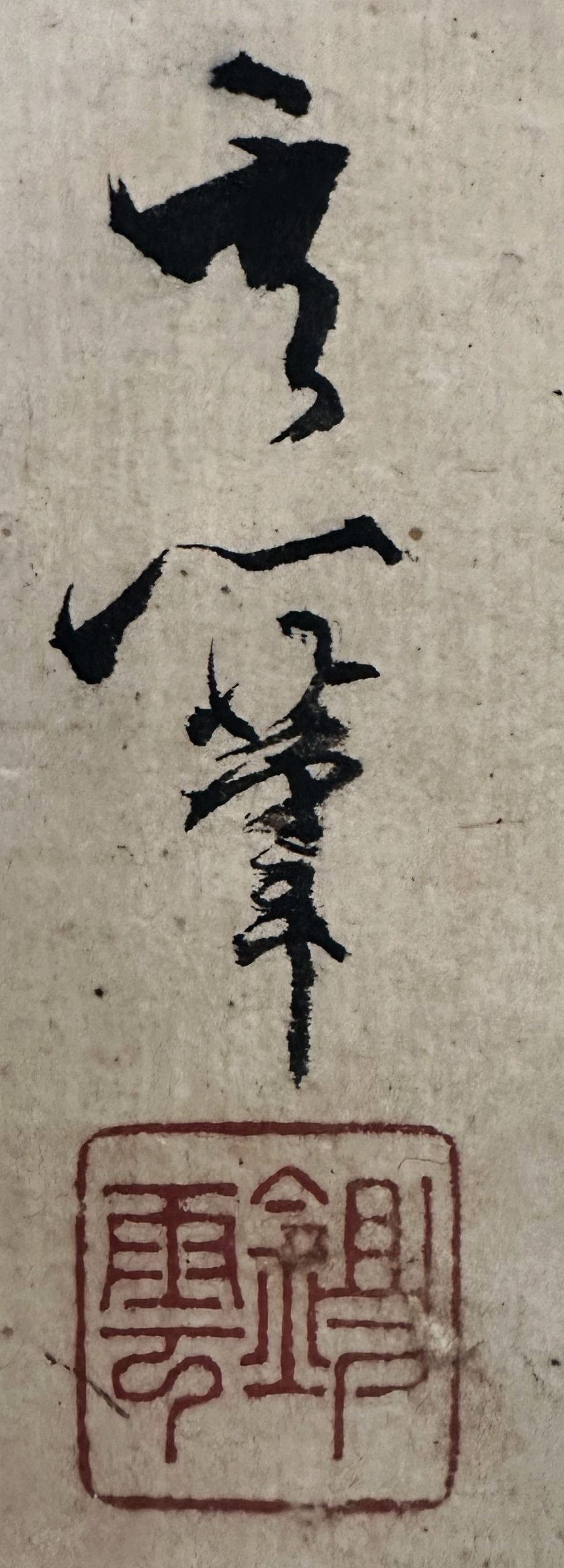
Suzuki Kiitsu was a disciple of Sakai Hoitsu, and is also known for having written for Hoitsu. Based on the various calligraphic styles of the signatures and the various types of seals, Kiitsu’s painting career can be divided into three main periods, but since the signature on this work is in cursive script, it is thought to be the first work he produced with his master Hoitsu.
The seal is signed “錫雲,” and an example of the combination of this seal and the cursive “其一筆” is “Butterfly with Peony,” owned by the Itabashi Art Museum. It is thought to be a work from the same period as “Butterfly and Peony,” as it shares the same style of light color painting using a Mokkotsu technique with watery pigments, as well as the use of brush planes and brush strokes.
As an antique, it may have some scratches or blemishes. We recommend that you visit our store to check the condition.
If you wish, we will send you detailed photos of the item, so please feel free to contact us.